 12 Aug 2014

To mark its 25th anniversary, international conservation charity World Land Trust (WLT) has launched a new, worldwide competition for trail camera images in association with The Times newspaper.
The competition opened on the 9th August to entries from organisations primarily concerned with conservation of wildlife and the environment. The World Land Trust International Trail Camera Competition has four categories, three for still pictures and one for moving pictures, and all must be no more than three year's old. Each of the winning entries will win a prize of £2,000 towards their wildlife conservation organisation and its project. The overall winner will collect an additional £3,000, making the top prize £5,000.
The three categories for still pictures are: classic animal portrait, unusual wildlife behaviour, endangered species and new discoveries. The moving picture category is for footage of wildlife behaviour.
“We are delighted to announce the World Land Trust International Trail Camera Competition in association with The Times,” said John Burton, World Land Trust Chief Executive. The competition will celebrate the extraordinary wildlife images captured by trail cameras in remote parts of the world. Prizes have been sponsored by Enterprise Plants, a longstanding supporter of the Trust.
Trail cameras do not involve expensive technology, nor do they cause any disturbance to wildlife, but the pictures recorded can have a tremendous scientific significance. “Such a simple piece of equipment, such profound results,” said John Burton.
The closes for entries is 31 January 2015 and the winning images will be announced in The Times shortly after this date. The competition judges are Sue Connolly (The Times Picture Editor), Jack Hill (The Times Photographer), David Bebber (freelance photographer) and Simon Barnes, wildlife journalist and WLT Council member.
“All the skill is in the location: in the camera-trapper's ability to read the environment and understand his target species,” explains Simon Barnes, a member of the competition judging panel.
“The random masterpiece is the everyday stuff of the camera-trap,” he continues. “If you can put together an arcane combination of the trapper's skill and knowledge, the light, the time of the day, the animal's mood and immediate requirements and of course, the most glorious and dumbest of luck, you will end up with a photograph that a human snapper would sell his soul for.”
For more information on World Land Trust, visit www.worldlandtrust.org
[ENDS]
For images and more information please contact:
McCluskey International Sarah Salord / Jessica Meins
T: 020 8747 2170 E: worldlandtrust@mccluskey.co.uk
NOTES TO EDITORS
About World Land Trust (WLT)
World Land Trust (WLT) is an international conservation charity, which protects the world's most biologically important and threatened habitats acre by acre. Since its foundation in 1989, WLT has funded partner organisations around the world to create reserves, and give permanent protection to habitats and wildlife. The mission of the World Land Trust is: To protect and sustainably manage natural ecosystems of the world; To conserve their biodiversity, with emphasis on threatened habitats and endangered species; To develop partnerships with local individuals, communities and organisations to engage support and commitment among the people who live in project areas; To raise awareness, in the UK and elsewhere, of the need for conservation, to improve understanding and generate support through education, information and fundraising. Patrons: Sir David Attenborough, David Gower, OBE and Chris Packham. Registered charity 1001291.
About the images
Captions preferred, credits essential
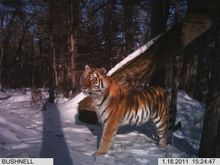
Above left: Amur Tiger. Captured on camera-trap by Linda Kerley for the Zoological Society of London's project in Russia's Far East. There are thought to be no more than 40 individuals surviving in the wild. © Linda Kerley
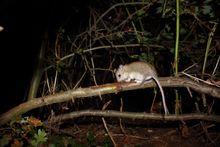
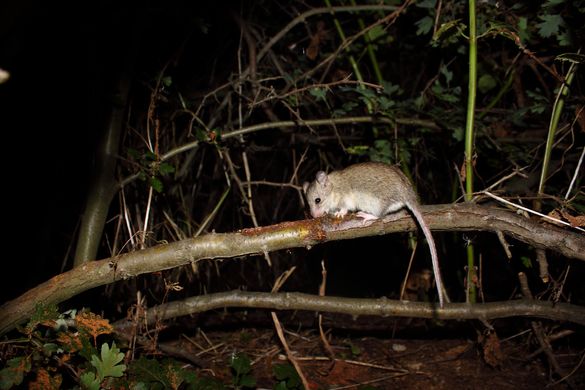
Above right: This was one of the first photos of Roach's Mouse-tailed Dormouse to be taken in the wild, and was captured by the Edirne Wildlife Research Association in Turkey. This rare dormouse is restricted to a few areas of Turkey and Bulgaria where old growth oak and walnut trees survive. © Halim Yalçin Diker