 08 Sep 2014

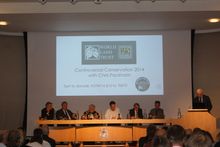
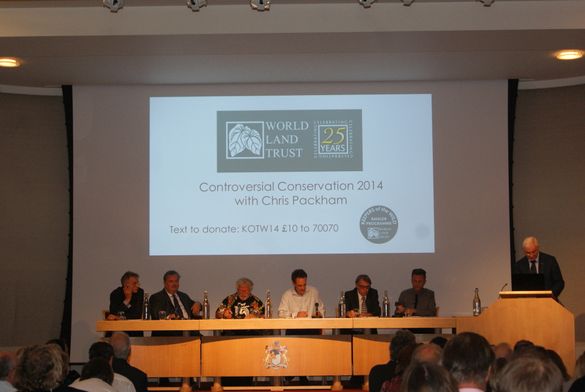
Rarely seen together at a public event, representatives of two often polarised sectors – the game lobby and the conservation lobby - met at the Royal Society on 2 September in a debate organised by international conservation charity World Land Trust (WLT).
The event provided a forum to discuss the impact shooting birds has on wildlife and conservation, with a particular focus on the persecution of birds from protected species in the UK and killing birds on migration, as well as the social and environmental implications of hunting.
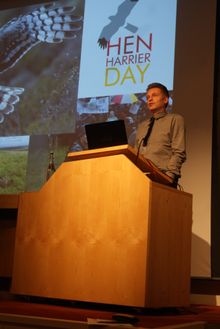
Promoting the conservation side of the argument were TV presenter and WLT Patron, Chris Packham, and Mark Avery, former Conservation Director of the RSPB. The two panellists condemned the illegal persecution of Hen Harriers by gamekeepers whose job it is to protect Red Grouse chicks from predation during the breeding season. Legally protected in Britain, the species is in decline, with currently just four successfully breeding pairs in England, where there is habitat for more than 300 pairs.
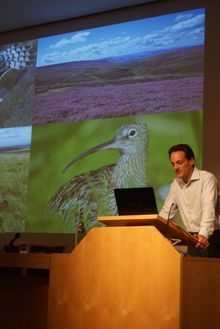
Speaking in favour of the conservation value of land managed for Red Grouse shooting was Andrew Gilruth, Director of Membership, Marketing and Communications at the Game & Wildlife Conservation Trust (GWCT), who confirmed that GWCT is keen to see Hen Harrier numbers recover.
The debate highlighted several key and important issues, with both sides of the panel agreeing that the illegal killing of Hen Harriers was a crime and that policing needed to play a key role in tackling wildlife crime. After much discussion, there was a general consensus that a target of 40 pairs of breeding Hen Harriers in England within 10 years was an achievable target.
TV Presenter and Conservationist Bill Oddie, also a WLT Council Member, discussed the controversial topic of shooting migratory birds including robins, cuckoos and golden oriole, calling for a ban on the spring hunting of these birds heading to the UK for the summer from Mediterranean countries, such as Malta.
A referendum is likely to take place on spring hunting in Malta during 2015, however in the meantime Chris urged members of the audience to take action by making their feelings known about the killing of migratory birds to their MP, MEP and the new European Commissioner for the Environment who will take up post in early 2015.
Chris also called on the shooting fraternity in Britain to join with conservationists to condemn the shooting of migratory birds in Mediterranean countries.
Other speakers at the event included John Burton, Chief Executive of World Land Trust, and Garry Marvin, social anthropologist and Professor of Human-Animal Studies at the University of Roehampton. John reflected on the impact of hunting on WLT's overseas conservation programmes and Garry discussed the different types of hunters in three broad categories including utilitarian (meat hunters), nihilistic (sport hungers) and nature hunters for whom the process of tracking quarry and the ethics of the chase are as or more important than the killing of the prey.
The debate was chaired by Alistair Gammell, a WLT Council Member and formerly RSPB's Director of International Issues.
For more information on World Land Trust, visit www.worldlandtrust.org
[ENDS]
BACKGROUND ON THE PANELLISTS
Alistair Gammell (Chairman) has been a leading figure in international convention drafting. His involvement in conservation work spans four decades and much of this time was spent working for the RSPB. Prior to his retirement he was RSPB's Director of International Issues. Between 2009 and 2014 he was director of the Pew Environment Group's Chagos campaign, which resulted in the declaration of the world's largest marine reserve (544,000 square kilometres) and he has worked on marine protection in a number of other UK Overseas Territories.He is a WLT Council Member.
Mark Avery says he is a scientist by training and a naturalist by inclination. Having worked for the RSPB for 25 years, he was their Conservation Director for nearly 13 years. He stood down in 2011 to pursue a freelance career and since then has been writing and commenting on environmental issues. The Independent calls him 'Britain's premier wildlife blogger'. The plight of the Hen Harrier is close to his heart and he is currently involved in an epetition to ban driven grouse shooting.
John Burton has more than 30 years' experience in international conservation, including working with Friends of the Earth and 12 years as Chief Executive of Fauna & Flora International. John set up the first TRAFFIC offices for IUCN. He founded World Land Trust in 1989 and has been its Chief Executive ever since.
Andrew Gilruth is Director of Membership, Marketing and Communications at the Game & Wildlife Conservation Trust (GWCT), which claims to be the UK's leading UK charity conducting conservation science to enhance the British countryside for public benefit. For over 80 years GWCT has been researching and developing game and wildlife management techniques, and using the findings to provide training and advice on how best to improve the biodiversity of the countryside. The plight of the Hen Harrier is also close to Andrew's heart and he is currently involved in an epetition to publish the Defra led Hen Harrier Joint Recovery Plan.
Garry Marvin is a social anthropologist and Professor of Human-Animal Studies at the University of Roehampton, London. He is particularly interested in how human-animal relationships are developed and how they are experienced by the human participants. He has conducted research into, and published on, bullfighting in Spain, zoos, foxhunting in England, the cultures of recreational hunting and hunters' trophies. He is particularly interested in the human dimensions aspects of conservation programmes and in human conflicts about animals. His latest individual publication is Wolf (Reaktion Books, London, 2012) – a book that explores historical, social and cultural issues of human-wolf relationships. He is the joint editor, with Susan McHugh (University of New England), of the Routledge Handbook of Human-Animal Studies, 2014.
Bill Oddie is one of the country's leading environmentalists and mixes his special brand of humour with the issues he feels passionately about. He is horrified by the spring hunting of migratory birds in Malta that happens every spring and this year joined ranks with the League Against Cruel Sports to make a film in support of Birdlife Malta's campaign to abolish the spring hunt through a national referendum. Bill has been an Ambassador for the World Land Trust for many years and a Council member for the past three years.
Chris Packham is a patron of the World Land Trust and has been instrumental in the development of the Controversial Conservation debates. Trained as a cameraman and a renowned wildlife photographer, today he is best known as a TV presenter. His career was launched in 1986 with the award winning Really Wild Show on children's television and he has become a household name through BBC2's Springwatch and Autumnwatch series. Chris often campaigns for the underdog and recently joined Mark Avery to promote awareness of Hen Harriers at Derwent Dam in the Peak District where there was a peaceful demonstration against the illegal killing of Hen Harriers. He has also been to Malta to campaign against the spring hunt.
For more information please contact:
McCluskey International: Judy McCluskey / Sarah Salord / Jessica Meins
T: 020 8747 2170 E: worldlandtrust@mccluskey.co.uk
NOTES TO EDITORS
Photo Caption 1: Alistair Gammell, Chairman of the Controversial Conservation debate and a leading figure in international conventions, says a few opening words and introduces the panel to attending guests.
Photo Caption 2: Conservationist and World Land Trust Patron, Chris Packham, discusses the plight of the Hen Harrier and the impact hunting has on other protected birds.
Photo Caption 3: Andrew Gilruth, Director of Membership, Marketing and Communications at the Game & Wildlife Conservation Trust (GWCT) discusses the value of game management to conservation.
About World Land Trust (WLT)
World Land Trust (WLT) is an international conservation charity, which protects the world's most biologically important and threatened habitats acre by acre. Since its foundation in 1989, WLT has funded partner organisations around the world to create reserves, and give permanent protection to habitats and wildlife. The mission of the World Land Trust is: To protect and sustainably manage natural ecosystems of the world; To conserve their biodiversity, with emphasis on threatened habitats and endangered species; To develop partnerships with local individuals, communities and organisations to engage support and commitment among the people who live in project areas; To raise awareness, in the UK and elsewhere, of the need for conservation, to improve understanding and generate support through education, information and fundraising.
WLT's 25th Anniversary Events
Controversial Conservation 2014 is just one of several events taking place this year in celebration of World Land Trust's 25th Anniversary of successfully protecting the world's most biologically important and threatened habitats. Other 25th anniversary events include David Gower and Friends on 3 September 2014 at Blackfriars Hall in Norwich and Nick Baker's Weird Creatures on 24 October 2014 at The Cut in Halesworth.