 06 Jun 2022

Sustainable, ecologically friendly, responsible travel. These are themes which are more important than ever this World Environment Day. Small World Marketing is proud to showcase just some of the work their enterprising and pioneering clients undertake in order to support positive and impactful change in their tourism operations in Eastern and Southern Africa.
Green Safaris
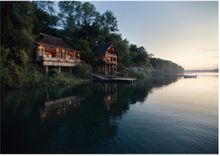
Green Safaris are an exclusive collection of six premium properties in Zambia and Malawi where the cornerstone has been to develop the lodges in a way which drives positive environmental and social impact, in areas where eco-tourism is needed most to preserve them.
With sustainability at the heart of their operations, Green Safaris pride themselves in being one of the first safari operators to completely neutralise their operational carbon emissions in 2021.
They undertook thorough analysis to identify the different sources of embodied carbon (-the carbon footprint of a building before it becomes operational) and operational carbon (– the carbon emitted while the lodge is in operation). This scrutiny has led to innovation in building materials, methods, and technologies, such as the sandbag building method, which emits zero emissions, used in the principal structure at the newly-launched Chisa Busanga Camp. This is then supplemented by the use of local and natural building materials for Chisa's 'nests'. This discipline has also led to a concerted drive to develop menus with the lightest possible footprint, both in terms of food type and sourcing.
With 80% of their annual electricity usage generated by solar power, Green Safaris are also champions in the development of the 'Silent Safari'. Not only has the development of electric bikes, vehicles and boats saved 29,200 litres of diesel annually, the guests' safari experience is enhanced, with the opportunity for closer, more intimate wildlife encounters, and minimal disturbance to the game.
With strong prioritisation on reduction, any remaining carbon is offset via Green Safari's Likoma Island Reforestation project. This offsets 161,360kg of C02 each year, with 31k trees planted by 2021, and by 2030, over 2,300,000 kgs of CO2 will have been captured. Green Safaris also undertake and support a range of community projects, many of which have a strong focus on conservation and the environment, including their flourishing Mukuni Community Farm in Livingstone.
Morukuru Family
Celebrated for their exclusive-use properties in the Madikwe Game Reserve and De Hoop Nature Reserve, the Morukuru Family have long embraced their environmental responsibilities. Fifteen years ago, the owners of Morukuru Family launched the Morukuru Goodwill Foundation inspired by 'Operation Phoenix', the original wildlife reintroduction programme in the Madikwe Game Reserve. The Morukuru Goodwill Foundation supports the Parks Board and is now an integral asset to the protection and conservation of the Madikwe Game Reserve, securing a sustainable future for the reserve.
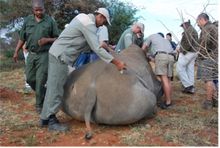
As rhino poaching has increased 10-fold during the last decade, the Morukuru Goodwill Foundation has implemented a wealth of initiatives to combat poaching, including rhino ear notching and rhino collaring allowing rhino movements to be determined. The foundation has sponsored Rob Harrison-White as he carries out vital predatory research in the Madikwe Game Reserve. In recent years, he has also taken charge of lion management, closely monitoring population growth, gene pools, contraception, and the exchange of lions with other reserves to ensure genetic diversity. As lions are vulnerable on the ICUN Red List and extinct from 26 countries they previously roamed, the efforts of this research are more crucial than ever.
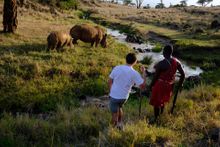
For guests who want to get a deeper insight into this essential conservation work, Morukuru Family operate 'Safaris with a Purpose'. This 3-day programme offers guests to the opportunity to experience first-hand the local community and conservation efforts of the Madikwe Game Reserve, with a primary focus on Rhino protection.
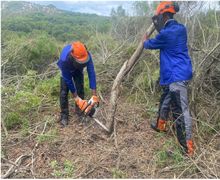
In the De Hoop Nature Reserve, the Morukuru Goodwill Foundation is also proactive in initiatives to improve the environment. This year it launched an Alien Vegetation Clearing project. Previously Cape Nature employed woodcutters to remove alien vegetation, but this was stopped during Covid and in this time it regrew rapidly. Morukuru Family's project aims to clear the Rooikrans, a highly invasive plant species originally from Australia, and introduced to South Africa in 1830s as a dune stabiliser. Rooikrans retards the fynbos from growing in the areas it dominates, and it is critical that the unique plant kingdom of fynbos is conserved.
Morukuru Family have invested in two additional staff members, who work full time on the project, as well as in supplying necessary equipment and training. The Rooikrans makes excellent firewood, which is used at the lodges for heating, and as an additional benefit, using local wood reduces the risk of bringing in destructive pest species such as the Bora Beetle. Any Rooikrans that can't be used for wood is made into a mulch, which in turn helps thefynbos to regenerate.
Furthermore, this May Morukuru Family De Hoop ran the second of its Beach Clean Ups, in collaboration with Cape Nature and De Hoop Collection. With a twin focus of clearing and education, the days also offer guests the chance to stay at the lodges for a much-reduced price in return for also getting behind this importantprotection of the marine ecosystem.
Lewa Wilderness
Pioneers in rhino conservation, and one of the first lodges in Kenya to welcome visitors in 1972, Lewa Wilderness is synonymous with time-honoured safari and skilful guardianship of the Lewa Wildlife Conservancy and its environment. Guests who stay at Lewa Wilderness are automatically supporting the conservancy which continues to run one of the most successful conservation operations in Kenya, through pioneering conservation and community initiatives.
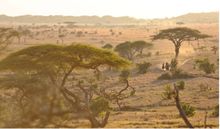
The Lewa Wildlife Conservancy boasts 62,000 acres of untouched wilderness, home to over 70 different animal species and 350 bird species, with maximum of three vehicles per sighting ensures that wildlife is not disturbed. The anti-poaching network of the Lewa Wildlife Conservancy is very large, consisting of the three security teams. The success of anti-poaching initiatives has resulted in over 200 black and white rhino on the conservancy, 14% of Kenya's black rhino population. Dedicated conservation efforts and protection measures have also been implemented to preserve the 400 migratory elephant population that live on Lewa. This has led to a 32% decrease in elephant poaching. The extensive protection and conservation efforts on the reserve has created a robust ecosystem for a multitude of species including the endangered Grevy's zebra (of which Lewa has 14% of the global population), elephant, lion, cheetah, giraffe and more.
Walking Wild, a partnership between the Lewa Wilderness and the Il-Ngwesi community was born out of the understanding that conservation cannot succeed without the support of the neighbouring community. The goal of the initiative is to provide guests with an authentic and education safari experience. Through this initiative, the post-colonial aspect of conservation is removed and ensures the longevity of the partnership between the lodge and the community as well as future partnerships.