13 Dec 2019

Alabama Tourism to launch The Year of Natural Wonders in 2020
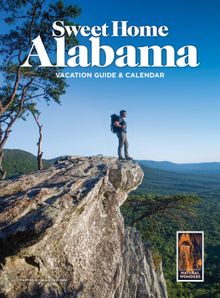
Alabama’s abundant water, varied ecosystems, dense forests and geology come together to create a land that is immensely biodiverse. In fact, Alabama contains more variety of animals and plants than any state east of the Mississippi River. To celebrate this variety of nature and natural areas, the Alabama Tourism Department has designated 2020 as the Year of Natural Wonders.
Make a vacation out of these wild treasures.
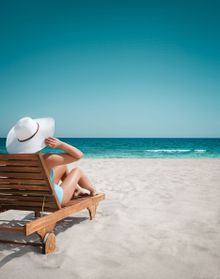
Sugar-white Gulf Coast beaches line the southernmost points of Alabama. The ultra-fine particles of quartz were washed down from the Appalachian Mountains and deposited into the turquoise waters thousands of years ago. Today, visitors explore 32 miles of sandy strands, including those shared with nesting sea turtles. Volunteers flag the nests every year to help sunseekers avoid crushing the turtles’ eggs. From May to October, walkers may be lucky enough to witness a “boil,” when an underground nest of baby turtles hatches at the same time, emerge from the sand and make their way to the water.
Just north of Mobile Bay spreads the 260,000-acre Mobile-Tensaw Delta, the second largest wetland of this kind in America. Rivers from the north flow into the flatlands and creep into lakes, marshes and bogs. The twists and turns of the delta’s rivers, creeks and tributaries house cypress swamps and bottomland hardwoods teeming with deer, turtles and alligators. More than 300 species of birds have been documented in the area. Much of the delta is remote and best explored by water, but you don’t have to venture into its deepest reaches to see its natural beauty. At the Five Rivers Delta Resource Center in Spanish Fort, you can view exhibits about the local flora and fauna, watch a nature film, and enjoy a view of the water from the decks. Stop in the Cypress Gift Shop to browse a selection of nature-related gifts, unique jewelry and wood crafts made by local artisans, such as Randi Evans.
Alabama’s longest free-flowing river, the Cahaba, features an annual spectacle so special it has a festival named after it. On the third Saturday in May, the town of West Blocton celebrates the white, graceful Cahaba Lily with guided tours during the Cahaba Lily Festival. The flower blooms in May and June and is found in only three southern states. It requires a specific habitat of swift-moving water and lots of sun, which is exactly what the rocky shoals of the Cahaba River provide. While the Cahaba River sustains the largest population, notably in large stands and smaller clumps, the lily can also be found in running shoals of Hatchett Creek and the Tallapoosa River.
At the foothills of the Appalachian Mountains rises Alabama’s highest natural point, Mount Cheaha, at 2,407 feet above sea level. In the fall, the mountain’s mix of oak and hickory trees interspersed with pines puts on a show of fall colors to rival those found in more northern states. Check it out from the 26-mile Talladega Scenic Drive, taking Highway 281 near Heflin, Alabama, until the road ends at Adams Gap Road and Forest Service Road 600. This route travels over the summit and through the Talladega National Forest, passing rural landscapes filled with rock outcroppings and rolling hills. Stop at Cheaha State Park for excellent views and to officially note the U.S. Geological Survey’s high point marker in front of Bunker Tower, one of several stone buildings built by President Franklin Roosevelt’s Civilian Conservation Corps (CCC). On a clear day, you can see for miles from the top of the observation tower. Down below, poke around the CCC museum to learn about the men who helped establish Cheaha State Park.
Northeast Alabama also harbors the Little River Canyon, a U.S. National Park site designated a National Preserve by public law. Formed by the erosion of water over millions of years, the canyon’s rock bluffs drop to more than 600 feet in some spots. The Little River, which flows atop Lookout Mountain and through the canyon, provides recreation for hikers, anglers and paddlers. Little River Falls marks the beginning of the canyon and is one of the highlights of the area, particularly after a recent rainfall. Although not usually associated with mountainous terrain, a bog exists in the canyon and garners interest for endangered green pitcher plants that grow here. This carnivorous plant traps insects in its tube-shaped leaves and digests them with enzymes. If you come across one, consider yourself lucky, and take only pictures. Learn about more of the canyon’s assets at the Little River Canyon Center located on Highway 35. The building houses exhibits, a theater and National Park Service staff who can answer questions and recommend hikes and observation areas.
Cathedral Caverns has been open to visitors since 2000 when it was declared a state park after purchase from a private owner. Although the above-ground amenities should not be ignored—camping, hiking and gem mining—the real draw here is underground. Step into the caverns’ 126-foot-wide entrance, accessible to wheelchairs, and embark on a 90-minute, guided tour of karst topography—sinkholes, underground streams and caves etched into area limestone. The tours, available year-round and multiple times per day, lead to one of the largest stalagmite columns in the world. At 45 feet tall and 243 feet in circumference, it is appropriately named “Goliath.” Other formations include a “frozen waterfall,” a “pipe organ” and “cave bacon.” A stop here is particularly welcome on hot summer days since the caves’ temperature hovers around a refreshing 60 degrees.
For a natural wonder above ground, visit Natural Bridge in Winston County. As its name implies, the rock arch spans 148 feet and 60 feet high to connect two land masses, resulting in the longest natural bridge east of the Rocky Mountains. The landmark formed as the sandstone washed away and left iron ore behind. Due to safety concerns, visitors cannot walk across the bridge, but you can observe its magnificence from below after paying a small entrance fee. Take a picnic and hike the one-mile loop. While in the area, keep your eyes open for eastern hemlock. The area is one of the few places in Alabama where this graceful, shade-tolerant conifer grows.
Located about 13 miles south of Russellville lies Dismals Canyon, a privately owned, 85-acre sandstone gorge with large rock formations and two waterfalls. Many years of moving water have sculpted the topography, which results today in rock shelters, natural rock bridges and a 16-inch-wide rock squeeze known as “Fat Man’s Misery.” Walk the 1.5-mile trail to see and feel the formations while also delving into the lush landscape of tulip poplars, beech trees, hemlocks, mosses and ferns. On nights in May and June, a unique element lights up the canyon. Dismalites, sometimes called a glowworm, are actually fly larvae (Orfelia fultoni) that emit a bluish light to attract prey. Special guided night tours are available to see these dismalites, the only bioluminescent insect in North America.
Historic antebellum hotel in Selma to open 1st Quarter 2020
Located in Selma's downtown historic district, the St. James Hotel will reopen in 2020 after extensive construction work. The St. James Hotel is the South's only remaining antebellum riverfront hotel. Plantation owners, Union soldiers, and the notorious, Frank and Jesse James, have slept there.
Located on the bank of the Alabama River in Selma, Alabama, the St. James Hotel anchors the Water Avenue Historic District. From the hotel, you can see the Edmund Pettus Bridge, a U.S. Civil Rights Trail site.
Built in 1837, the renovation of this grand hotel is in its final stages with a scheduled opening in the first quarter of 2020. Now with 55 guest rooms and a full-service restaurant, the hotel will be a Hilton branded property.
Eagle Cottages at Gulf State Park become newest member of National Geographic’s Unique Lodges of the World program
Eagle Cottages at Gulf State Park is the newest member of National Geographic’s Unique Lodges of the World Program. Eagle Cottages become the seventh in the U.S. with only 55 lodges in the program worldwide.
The National Geographic Unique Lodges of the World is a collection of lodges that invite guests to discover some of the most treasured places on the planet while helping to protect those places for future generations. Each property is hand selected and must share a strong commitment to sustainable practices and to protecting natural and cultural heritage. The guest experience at each lodge must be intimate and exceptional while inspiring guests to connect with the destination in a meaningful way and also to play a part in safeguarding it for future generations.
Eagle Cottages at Gulf State Park is a collection of 11 cottages contributing to Alabama Department of Conservation & Natural Resources’ commitment to define Gulf State Park as an international benchmark of environmental and economic sustainability demonstrating best practices for outdoor education, recreation and hospitable accommodations.
“I could not be more excited about Eagle Cottages becoming part of the National Geographic Unique Lodges of the World collection.” says ADCNR Commissioner Chris Blankenship. “This is an affirmation of Gulf State Park, the Department of Conservation and the State of Alabama. Teaming with National Geographic will help highlight the natural resources, culture and heritage of our state and it will benefit the people of South Alabama. National Geographic is a way to further expose all that we have to offer in Alabama including the Mobile-Tensaw River Delta, the Red Hills Salamander habitat, the Grand Bay National Wildlife Refuge, the Bon Secour Wildlife Refuge and many other unique treasures. Sustainable tourism is the fastest growing segment of tourism and will be a game changer for our state.”
For more information please see www.eaglecottagesatgsp.com.
Muscle Shoals Sound Studio recording session earns Grammy nod
Rival Sons recorded a portion of their album Feral Roots at Muscle Shoals Sound Studio. The album has been nominated for a Grammy Award for “Rock Album of the Year”. The Black Keys recorded their 2011 album “Brothers” at Muscle Shoals Sound Studio. The album was nominated for “Best Alternative Music Album”.
The Muscle Shoals Sound Studio in Northwest Alabama has reported record breaking numbers of international visitors. Executive Director Debbie Wilson says 2019 international visitor attendance is running at an all-time high of 25%. “We have seen growth in both overall visitor attendance and in the percentage of our visitors coming from other countries,” Wilson said. “It’s great to know that people around the world come to a remote area of Alabama to see where artist created some of the greatest hit records.”
Muscle Shoals Sound Studio at 3614 Jackson Highway in Sheffield, Alabama was formed in 1969 by four session musicians called The Muscle Shoals Rhythm Section whose nickname “The Swampers” became famous in the song “Sweet Home Alabama.”
The musicians had left Rick Hall's nearby FAME Studios in Muscle Shoals to create their own recording facility. Over the years, artists who recorded in Muscle Shoals area studios included The Rolling Stones, Aretha Franklin, George Michael, Wilson Pickett, Willie Nelson, Lynyrd Skynyrd, Joe Cocker, Levon Helm, Paul Simon, Bob Seger, Rod Stewart, Tamiko Jones, and Cat Stevens.
The four small adjacent cities; Florence, Muscle Shoals, Tuscumbia and Sheffield, form the Shoals area. Three of the cities have a population of less than 10,000. The largest city is Florence with approximately 40,000. In the 1960s, the area was self-proclaimed as “The Hit Recording Capital of the World.” Today there still remain several recording studios, the most famous, FAME Studios and Muscle Shoals Sound Studios both record and give public tours.
Alabama Tourism Department wins major international award
The Alabama Tourism Department has won an International Travel and Tourism Award – the first U.S. state tourism department to ever win that honor.
The office was presented with “Best Regional Destination” award recognizing its marketing campaign for the U.S. Civil Rights Trail. The trail promotes museums, churches and other African American landmarks across 14 Southern states. The trail includes sites from Kansas to Delaware, including all of the Deep South. Promotional materials include video interviews with civil rights participants from the 1960s and photos of landmarks.
Birmingham ad agency Luckie and Company created the U.S. Civil Rights Trail campaign, which links museums, churches and other African American landmarks. Alabama led the organization of the heritage trail two years ago in partnership with TravelSouth USA based in Atlanta and the National Park Service. The trail is a result of research to nominate civil rights landmarks as World Heritage Sites.
“This is an amazing honor,” said Alabama tourism director Lee Sentell, who accepted the award.
Sentell said that Alabama just making the final list of nominees was an honor since no state tourism agency had ever been a finalist in any of the International Travel and Tourism Awards 16 categories. But he said winning it was not only an honor but would be a huge help in promoting the U.S. Civil Rights Trail to international travelers. Almost a fourth of the civil rights landmark sites on the trail are in Alabama.
The state tourism department competed against finalists from all over the world, including Barcelona, Pradesh in India, the Canary Islands and Brabant in the Netherlands.
This is the second major award Alabama’s tourism department has won in the past two months. Six weeks ago the Alabama agency won its sixth Mercury Marketing Award in 12 years from the U.S. Travel Association. It was also for the civil rights trail. Awards in years past were for specialty campaigns for the arts, barbecue, music, outdoors and small towns.
Saw’s Soul Kitchen chef named World Chef Champion
As general manager at Saw’s Soul Kitchen in Avondale, Matthew Statham obviously knows his way around pulled pork, smoked chicken and Southern comfort food.
He proved that he can hold his own in just about any food genre.
Well, not just hold his own. Statham was named “World Chef Champion,” at the World Food Championships Oct. 22 in Dallas, Texas, a competition billed as the largest culinary competition in the world.
He and nine other chefs emerged from the World Food Championships Main Event each with a $10,000 prize and a berth in the Final Table round in Indianapolis this spring, where they’ll compete for $100,000.
In the chef category, Statham had to put together a “structured dish,” which was a savory roulade, using Minor’s Base, a type of pre-packaged meat-base flavoring.
After the initial round, each chef got to prepare a signature dish. Statham’s was seared scallops over McEwen and Sons stone ground grits, with Brussels sprouts chips, Wright brand bacon and a brown butter and lemon hot sauce.
Finally, the chefs had to make a brunch dish that incorporated Wamplers Omega-3 Sausage. Statham chose a sausage brunch tart with Parmesan herb tuile.
“The brunch tart is a take on a Southern-style play on Shakshuka,” a dish of eggs poached in a sauce of tomatoes, chili peppers and garlic.
Statham made his tart in a shell of croissant dough, filled with Wampler’s Omega 3 sausage gravy, sautéed mushrooms and lacinato kale, with a runny egg poached in the gravy as it baked.
The judges averaged the scores from the three rounds – with the brunch round weighted at 60 percent — and named Statham the champion.
At the Final Table competition in the spring, each of the 10 champions will cook against each other during timed events.
Statham, who will be transitioning from general manager of Saw’s Soul Kitchen to the role of corporate chef as the restaurant expands, said being named World Chef Champion “is still kind of surreal.”
“There were a lot of very talented chefs there and to come out on top in our first year was a great honor,” he said. “I am excited for the opportunities that will arise as a result of the World Food Championships relationships with so many great sponsors. Locally, I will continue to try and help lead Saw’s into the future.”
Jean-Michel Cousteau’s Ambassador of the Environment Program to start in Gulf Shores, Alabama
The City of Gulf Shores and the Gulf Coast Center for Ecotourism & Sustainability City have announced development is underway in partnership with Jean-Michel Cousteau’s Ocean Futures Society for a world class environmental education and ecotourism program; Ambassador of the Environment.
The first phase of the program started in 2019 with local school age children in grades 4-12. Spring 2020 is the target date for programs available for students and adults worldwide.
The program utilizes access the new State Park Learning Campus facility, as well as sites throughout the state park, including the pier, the Interpretive Center, the Nature Center, Lake Shelby, the beach and the Hugh Branyon Back Country trail system.
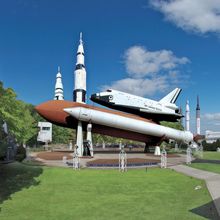
Gulf Shores Mayor Robert Craft has described the center as being similar to the highly successful NASA Space Camp located in Huntsville with a focus on learning about the environment and how to take better care of it.
“The program will bring students, teachers, tourists, business groups, and academic groups from around the country to participate in activities that support ecotourism and sustainability, and promote the stewardship of our natural resources,” city documents state.
For more information, contact Travis Langen, Executive Director, Gulf Coast Center for Ecotourism & Sustainability at info@gulfcenter.org or visit gulfcenter.org.
Alabama Tourism Department introduces new motorcycle tour to operators
The Alabama Tourism Department is in their second year of creating and introducing a motorcycle fly-drive product to operators. The route will begin and end in Nashville, highlighting the scenery of Alabama’s back roads along with some of the state’s most sought after attractions.
The route from Nashville down the Natchez Trace Parkway to Alabama’s music Mecca, The Shoals begins the journey with a treat. Riders will tour music studios that recorded top hits from the ‘60s & ‘70s and see how much Alabama artists and the artists who came to Alabama contributed to the Americana music we all know and love. From small-town America, riders will travel to Alabama’s largest city, Birmingham.
In Birmingham riders will find an array of entertainment districts boasting tasteful craft brews and unique fine dining experiences. Also, in Birmingham is the crown jewel of motorcycle enthusiasts, Barber Vintage Motorsports Museum. This museum houses nearly 1,000 motorcycles on display and is the Guinness World Record holder of “The Largest Motorcycle Museum in the World”.
From Birmingham travelers will ride up Alabama’s highest point, Mount Cheaha. From here take in the views of the rolling hills of the Appalachian Mountains. From the highest point to the most scenic road in Alabama, the Little River Canyon Parkway. Riders will enjoy switchbacks and elevation changes as they cruise The Little River Canyon National Preserve. From the most scenic road in Alabama to road with the most curves in Alabama, Jackson County Road 33. They will enjoy serene landscapes as they cruise the cotton fields and farmland of North Alabama.
The product is being supported by FAM tours organized by Graham Roderick. Tour operators and media from different European markets as well as Latin American markets have participated in the FAM tours thus far. In late 2019 RoadRUNNER Magazine will be sending a crew to video and photograph the route to be featured on their YouTube Channel as well as in their Sept/Oct 2020 Fall issue.
The promotion of motorcycle product will continue on into 2020 with the final FAM tour in October.
Point Clear’s Grand Hotel Golf Resort & Spa named America’s best historic hotel
The Grand Hotel Golf Resort & Spa in Baldwin County has beaten out five other finalists to be named America’s “best historic hotel.”
The honor was bestowed by Historic Hotels of America and Historic Hotels Worldwide at the 2019 Historic Hotels Awards of Excellence gala on Thursday night. The event was held at Pinehurst Resort in North Carolina.
The Grand, known as “The Queen of Southern Resorts,” is now king of the country.
The beautiful gem on Alabama’s gulf coast was named the top hotel for the loftiest category — hotels with over 400 guest rooms.
The Grand opened in 1847 and, as such, was the oldest hotel named a finalist in its category.
Lawrence Horwitz, executive director of Historic Hotels of America and Historic Hotels Worldwide, said in a statement, “Congratulations to the recipients of the 2019 Historic Hotels Awards of Excellence. These 2019 winners represent nearly 500 years of history and include the finest legendary and iconic historic hotels from across the United States of America and from around the world.”
“We are delighted to recognize these magnificent historic hotels and their historic hoteliers for their dedication, enthusiasm, stewardship, and leadership in preserving these iconic treasures and their stories for future generations,” he added.
Additionally, the Grand’s Susan Stein was one of six finalists in the “hotel historian of the year” category across hotels of all sizes.
Montgomery museum and memorial in first year has 400,000 visitors
The National Memorial for Peace and Justice and Legacy Museum operated by the Equal Justice Initiative received 400,000 visitors in its first year of operation. The memorial is part of the U.S. Civil Rights Trail.
The National Memorial for Peach and Justice acknowledges an era of racial terror in the United States when thousands of African Americans were lynched and publicly tortured, sometimes in the presence of thousands of people. Designed with hundreds of six-foot, Corten steel monuments aligned in a structure that sits above the city of Montgomery, the Equal Justice Initiative memorial features new sculptures from African and African American artists that explore slavery, segregation, and contemporary issues of racial inequality. The memorial includes a monument for every county in America where a racial terror lynching took place.
A few blocks away from the memorial, EJI opened The Legacy Museum: From Enslavement to Mass Incarceration, which explores slavery, lynching, segregation, and mass incarceration in America on a site where enslaved people were once warehoused. Located a few steps away from what was once one of the most prominent slave markets in America, and from a port and rail station that trafficked thousands of enslaved black people in the mid-19th century, the new narrative museum offers ground-breaking, interactive content that takes visitors on a journey through our nation’s difficult past.
Alabama State Parks earn 18 TripAdvisor awards for a record year
Alabama State Parks earned a record of 18 TripAdvisor.com Certificate of Excellence Awards for 2019.
These honors only go to about 10 percent of the attractions listed on the travel website and a record of 10 Alabama State Parks earned TripAdvisor Hall of Fame honors.
“We are very proud of all of our parks that received this recognition, especially because it is based on visitors’ impressions. It’s exciting that our parks received three first-time Certificates of Excellence and that Cheaha State Park was inducted into their Hall of Fame after earning a certificate for the fifth straight year. It is impressive that we have been able to maintain these positive impressions with guests even during periods of renovation and repairs to many parks’ amenities. It’s truly a positive reflection on the attitude and performance of these parks’ staff and leadership,” said Greg Lein, Director of the Alabama State Parks Division of the Department of Conservation and Natural Resources.
To qualify for a Certificate of Excellence, an accommodation, restaurant or tourism experience must maintain an overall TripAdvisor rating of at least four out of five, have a set minimum number of reviews and have been listed on TripAdvisor for at least 12 months. Certificate of Excellence winners for five straight years earn Hall of Fame recognition.
For more information please see www.alapark.com.
Stay at Zelda and F. Scott Fitzgerald's former home
You can sleep in the former home of Jazz Age celebrities F. Scott & Zelda Fitzgerald in Montgomery. The home is the last of four still standing that the couple resided in through the years; the rest are private residences, and this is the only dedicated museum to F. Scott & Zelda Fitzgerald in the world. The family lived here from 1931 until 1932, writing portions of their respective novels, “Save Me The Waltz” and “Tender Is The Night” during their time in Montgomery. After the family moved, the home was subsidized into four apartments.
Over the past year, the Fitzgerald Museum has been actively furnishing and preparing the vacant two-bedroom apartment located on the second floor of the home for a new writer's residency and an Airbnb lodging space open to the public.
The two-bedroom apartment features modern amenities, a full kitchen and half bath. The master bedroom includes a queen-sized bed; the secondary bedroom includes two twin sized beds. There is a separate living room, dining room and sun porch- all with views of the sprawling magnolia tree on the front lawn. Guests have access to a complimentary tour of the museum, located in the downstairs portion of the historic Craftsman style home.
Guests are also shown other local Fitzgerald landmarks. Zelda Sayre, a Montgomery native, grew up in historic Cottage Hill and was said to have danced in the Court Square Fountain. She remained in Montgomery until her marriage to Scott in 1920. Zelda, a Montgomery native, grew up one neighbourhood over in historic Cottage Hill, and was said to have danced in the Court Square fountain.
Zelda and Scott’s courtship in Montgomery would mark the beginning of the ‘Jazz Age’. After marriage, the Fitzgerald’s lived in a number of locations including New York, Paris, Italy, and Minnesota, but they returned to Montgomery several times and lived here from 1931 until Spring of 1932. Her father's death would propel her from Montgomery to the Phipp's Clinic in Baltimore and Scott & Scottie would soon follow. This would be the last home that the Fitzgerald’s lived in as a family.
She would eventually return after Scott's death in 1940 and live on Sayre Street, just a few blocks down from her childhood home on Pleasant Avenue, with her mother until 1946. Eventually, their daughter Scottie would return to Montgomery in 1975 and live here until her death in 1985. She has three surviving children; her two daughters continue to control the Fitzgerald Trust today. www.thefitzgeraldmuseum.org.