 24 May 2021
Tags: Canada, Explore Canada, Culinary, Food, foraging, Food Movement

24th May, 2021
What's the culinary buzz?
After a year of bread-baking, mushroom growing, and backyard farming, and as the world slowly emerges from lockdowns and home confinement, what dining trends will emerge?
Made locally, with love: Increasingly, it's looking to be hyper-local cuisine that employs fresh-from- the- wilderness ingredients and regenerative cooking techniques. Additionally, recent research shows that consumers are becoming more aware of, and interested in, food transparency, or the desire to know how their food is grown and distributed.
The local food movement has been around for a while. Process matters: “What's new is that people all over the world are not just thinking about where their food comes from, but actually becoming involved in the food system themselves,” says Jessie Johnston, founder and editor of Vancouver-based Asparagus, a magazine for sustainable living. The new normal: “It's not just about going to the farmer's market, but about trying to grow some of your own food. When life goes back to 'normal,' there's a whole new knowledge base that people now have. So, even if they go back to doing more farmers' market shopping or buying bread at a bakery, they'll understand what that process takes in a way they never had before.”
Canada is a natural leader in sustainable and regenerative food production: Foraging opportunities abound coast-to-coast in the ocean and forests, and farm-to-table dining has become an expectation in big cities and rural communities alike.
Leading the way: Now, the paradigm shift towards responsible consumption bolstered by the pandemic is leaving a lasting influence on Canadian food producers, tourism businesses and visitors.
Free samples: Read on for some delicious experiences across the country (and, if you want to bring the taste of Canada home with you, feel free to pack your luggage with local smoked salmon or artisanal maple syrup).
On the Water
For the love of cod: In Avondale, Newfoundland, Cod Sounds invites visitors to connect with the culture and cuisine of the land. The family-owned business hosts workshops (“Cooking with the Nannies,” “Wild Game Sausage”) and excursions that demonstrate how to respectfully hunt, fish and harvest.
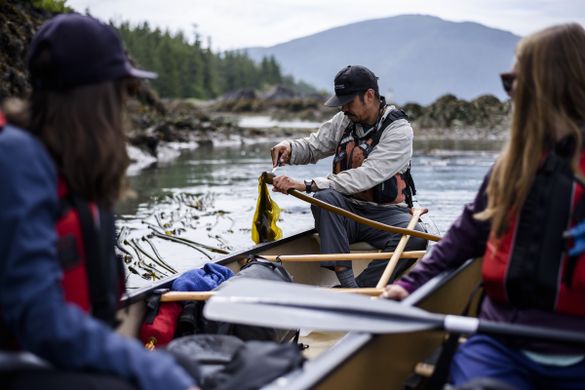
Seaweed salad: Starting each year in May, Dakini Tidal Wilds offers seaweed tours off the coast of Vancouver Island, BC, with a certified marine biologist. Participants are taught how to identify different varieties of local seaweed, explore ways to leverage its health benefits and discover how to incorporate seaweed into their daily meals. Speaking of seaweed: The world's first annual seaweed festival, presented by BC's Cascadia Seaweed, was held May 17 – 23. Seaweed Days celebrates the ocean ingredient's incredible variety of uses: human and pet food, livestock feed, bio-packaging, cosmetics, pharmaceuticals and biofuels, for starters.
Foraging for Goodness
Field guide: How to find din-din in Newfoundland's forests, bogs, cliffsides and shorelines? Pick up a copy of The Forager's Dinner, by Shawn Dawson, a professional forager. Know your shrooms: Robin Kort, owner of BC-based Swallow Tail Canada – and also a chef, sommelier and forager – has run wild mushroom foraging trips and cooking classes for six years. Recently, the company shifted to virtual foraging lessons that equip participants with the necessary knowledge to find delicious edibles in the wilderness.
Finds in the forest: Foraging Walks in Edmonton, Alberta, offers guided excursions in the boreal forest, or along the North Saskatchewan River Valley, in search of edible plants and fungi; guests identify up to 20 varieties and learn how to incorporate each into their kitchens. Participants also enjoy a demonstration and tasting courtesy of wild food guide (and filmmaker, hunter and James Beard Award nominee) Kevin Kossowan. Into the wild: Gourmet by Nature hosts gourmet foraging and dining experiences in the wild landscapes of Nova Scotia, with participants learning how to cook on outdoor fires, butcher and cook wild game, collect sap and transform it into maple syrup, forage in the winter, cook wild pizza and more.
Building Communities
Going viral, in a good way: Homesteading, backyard farming and beekeeping are all the buzz in a Newfoundland and Labrador Facebook group that has rapidly grown to more than 32,500 hobby farmers, homesteaders, berry pickers, mushroom foragers, brewers and beekeepers eager to promote food security and learn or teach DIY skills. Have questions about growing rhubarb, bottling maple syrup, or raising chicks? Someone in the group can help.
The Original Culinary Guardian
Ancient knowledge: In New Brunswick, Wabanaki Tree Spirit leads medicine walks and culinary experiences that teach participants how to recognize medicinal and herbal mushrooms, use medicinal plants and cook with ingredients found in the wilderness. The tours, which take place in Fredericton, also share knowledge and history of the Wabanaki peoples.
Innovative infrastructure: Inukjuak, Nunavut is embarking on a four-year initiative called The Pirursiivik Project (meaning “a place to grow”) to improve the community's well-being through a greenhouse and social art program that promotes healthy habits around water and nutrition. Supported by a $2.7-million community investment from RBC Foundation and One Drop Foundation, the project achieved a milestone in October: a hydroponic container farm adopted for the Arctic, which uses water instead of soil to grow produce. The program is the first of its kind in the North.
Teaching culture: Deep in Alberta's boreal forest, ReSkilled Life Folk School is an Indigenousowned off-grid homestead that educates visitors about traditional Indigenous culture. The school teaches skills such as beading and moccasin-making while expressing the importance of living in harmony with nature. In-person and online tutorials include raising animals and growing a garden; preserving food, foraging and hunting; and handcrafting medicines.
Container gardens: Identifying food security as a critical issue for people living and travelling in the north, a program called Rocket Greens delivers shipping containers turned greenhouses capable of growing local produce year-round in remote and northern locations. The innovation is an
initiative of the nonprofit Churchill Northern Studies Centre in Manitoba.
Imbibing Spirits
Local malts: Distillerie Fils du Roy is the only distillery in Canada that malts its own cereals from locally grown grains, which are used to produce beer and whisky. In 2021, the distillery will complete a new malt house and, by 2024, aims to expand production to 500 acres with the support of farmers across New Brunswick.
Good tonic: A former pilot, Jennifer Tyldesley went from cockpit to cocktails in 2016. Today, she crafts small-batch cocktail bitters and tonics using
homegrown and foraged ingredients in Whitehorse, Yukon, through her company, Free Pour Jenny's. She has also co-authored two cocktail cookbooks with the Yukon's renowned boreal chef Miche Genest.
Bread! Butter! Tortillas!
Support group for the bread-obsessed: Heather's Hearth offers virtual sourdough courses that help home bakers develop their skills, with on-demand video guides, dehydrated sourdough starter and access to Heather's support group. You can find Heather's coveted bread at shops and markets throughout Ontario's Ottawa Valley. Historical sourdough starter: Helmed by Catherine McInroy, formerly of the Royal Canadian Mounted Police, Well Bread Culinary Centre caters to home cooks with classes catering to pasta, pastry, butchery and beer tastings, among others. McInroy also sells authentic 1898 sourdough culture that travelled to Whitehorse, Yukon, during the Klondike Gold Rush.
Fusion cuisine: Maizal Tortilleria, a Mexican restaurant located in Toronto's Liberty Village, makes fresh tortillas daily using heritage maize grown on
a cooperative farm an hour north of the city. The restaurant's zero food waste policy is an example of closed-loop farming unusual for an urban eatery.
More butter: Recently opened,
Skye Glen Creamery is the first and only creamery processing cow milk on Cape Breton Island, Nova Scotia. The farm's retail shop promises to be a haven of temptation, with milk sold in reusable glass bottles, cheese in various forms, butter and other indulgent products.
Readers wanting more information should go to www.explore-canada.co.uk
PHoto Credit : A Lesson in Kelp, Credit: Destination BC/Andrew Strain
Media wanting news, images, story ideas should go to www.destinationcanada.com/media
For more information please contact Ms. Nim Singh, PR and Media Manager, Destination Canada, singh.nim@destinationcanada.com 0207 389 9983 (not for publication)