 11 Oct 2011

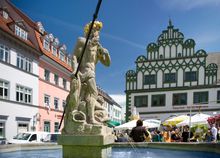
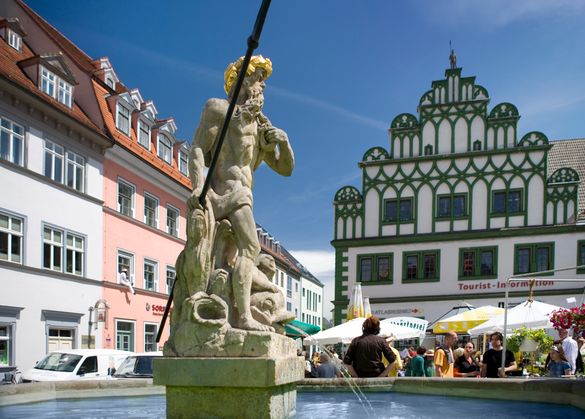
A town of understated elegance that looks back on an illustrious past Weimar. Not so long ago, a journalist wrote that "Weimar exudes an air of understated elegance, reminiscent of towns in northern Italy". Weimar is the home of Classicism and brings together some remarkable legacies of European history and culture in a surprisingly compact area. Its cultural importance has been formally recognised by UNESCO with two inscriptions on the World Heritage list, 'the sites of the Bauhaus' and 'Classical Weimar'.
Weimar has universal appeal. Those with an ear for classical music can go on the trail of Bach or Franz Liszt, the latter having spent eleven years in the town and a number of subsequent summers in the court gardener's house. Weimar is also strongly associated with the era of Modernism. When Walter Gropius founded the State Bauhaus in Weimar over 90 years ago, no one could have foreseen the international design revolution that would ensue. Plans are currently underway to build a new, bigger and more prestigious Bauhaus Museum for Weimar in the next few years that will be a fitting visual tribute to this remarkable era. Belgian artist Henry van de Velde had in fact laid the foundation for the Bauhaus concept in Weimar 15 years before Gropius.
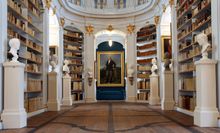
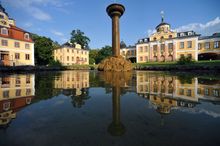
Despite this important chapter in Weimar's history, Weimar is still best known around the globe for its associations with Germany's 'national poets' Goethe and Schiller. In no other town can visitors learn so much about Classicism and the Humanist tradition that derived from it. Weimar's parks and palaces, and the houses of Goethe and Schiller are all included in the UNESCO World Heritage site. A new permanent exhibition entitled 'And I, I will always be Goethe' will open at the Goethe National Museum on 28 August 2012.
Weimar also has associations with a darker chapter in German history. The former concentration camp in Buchenwald bears testimony to the atrocities committed under the Nazi regime. Yet it is not only here on Ettersberg hill, ten kilometres from Weimar, that we find reminders of this time. Special guided tours in the town explain Weimar's role during the Third Reich.
More than 3.5 million visitors come to Weimar every year to spend time in this charming town with its many cafés, welcoming bars and chic restaurants. And many of them enjoy the slower pace of life they find here.
Among the highlights in 2012 are the Thuringian Bach Festival in April, the four-week Pèlerinages arts festival in August and September curated by Nike Wagner (Franz Liszt's great-great granddaughter and Richard Wagner's great granddaughter), performances and concerts at the German National Theatre, the 'Onion Market' in October - the biggest volksfest in Thuringia - and the Christmas market.
For more information, visit www.weimar.de or Tourist Information in Weimar, tel.: +49 (0)3643 7450 or tourist-info@weimar.de, dietrich@weimar.de /TravMedia.com/