 28 Mar 2014

25.03.2014
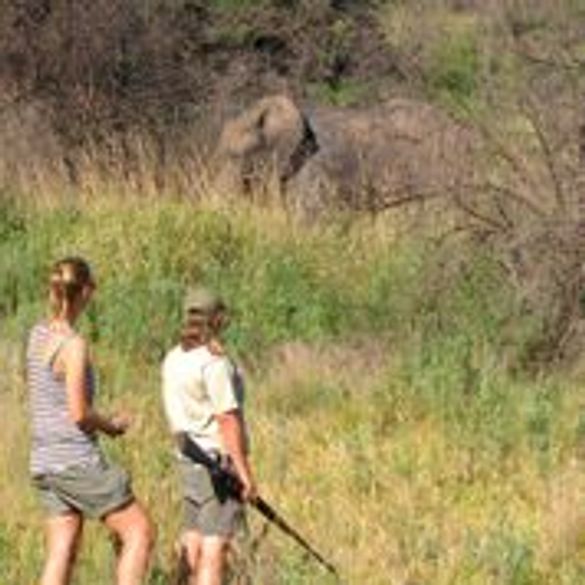
Walking with the Big 5 brings new perspective
An African bush holiday is a once-in-a-lifetime experience for many travellers, and seeing the wild from the safety of a game-viewing vehicle is more than enough for most. But a walking safari – where every rustle of the grass could reveal a lion or elephant – takes the experience to an entirely different level.
For some it's the adrenalin rush of knowing that a lion could be lurking unseen in the tall grass, being out of their comfort zone and vulnerable, or the realisation of the small place that humans occupy in the universe, while for others it's about an authentic and sensory experience immersed in the wilderness.
“From a vehicle you see Africa. On foot, you see, hear and smell Africa,” goes the saying that sums up the walking safari experience, or as one American walking safari enthusiast put it: “From a game vehicle you see the elephant. When you're out walking, you smell it. You hear the snort of the wildebeest and the cough of the hyena up close.”
Walking safaris tap into the growing global green consciousness, the desire to re-connect with nature and the need for travel to be a life-changing experience rather than a clutch of photographs on Instagram.
Travellers living fast-paced urban lives and chasing career success in today's always-connected world appreciate the opportunity to slow down, go “off the grid” and experience the wild in an up close and personal way.
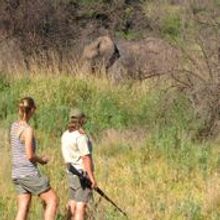
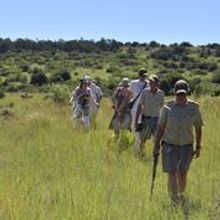
Walking safaris can be a bush hike of 10km a day over several days, accompanied by bearers with refreshments and a luxury mobile camp equipped with almost-home comforts, or stops at overnight rest camps. A guided walk of a few hours' duration off the beaten track in untamed bush is a more gentle introduction, offering the same prospects of encountering anything from birds, insects and small buck to a member of the Big 5.
“You taste the dust in the back of your throat, you feel the heat – it's hot! You see the path that ants have carved through the sand and you're reminded that we aren't just takers from the earth, we are an integral part of the global eco-system,” said Australian visitor Susan Price after a walking safari at Lalibela Game Reserve in South Africa.
American guest Judy Laing of Fort Lee, New Jersey, commented that she'd fulfilled a lifelong dream of an African safari at Lalibela: “Simply put, best safari experience. Saw the Big 5 up close and personal, tracked cheetah, and learned so much about animal preservation.”
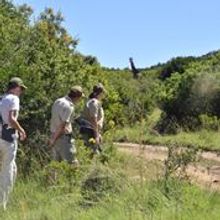
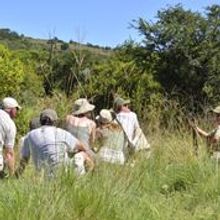
Lalibela, a 7 500 hectare reserve in the malaria-free Eastern Cape province, offers day “Walking with the Big 5” safaris and head ranger Kelly Pote says guests are relishing the experience of crawling through long grass to look at giraffe from the ground up, tracking cheetah spoor, decoding the messages in dung and droppings, and learning about the many uses that indigenous peoples make of the plant life found in the dense thicket.
“We walk through a valley where there's a good chance of a rhino approach, and the elephant like to hang out there too. Apart from a Big 5 encounter, what visitors are really enjoying is the chance to observe the small things that you don't always see from the back of a Land Rover – leopard tortoise, blue cranes (South Africa's national bird), chameleons and fascinating insects like dung beetles.
“We show them how to identify and follow the tracks of different animals, and how the animals leave messages and mark their territory, like the hyenas' anal pastings on tall grasses,” Pote said.
Aside from animals and plants, walking safaris give tourists the opportunity to explore and learn about other aspects of nature, from geological formations to fossils and cave paintings, from birds' nests to termite mounds.
“When you're on a game drive you tend to focus only on the big, iconic animals of Africa. You stop and see the small stuff when you're out walking. It's less of ticking the Big 5 off on a shopping list and more of an authentic wild adventure. Doing both at Lalibela just made our holiday more of an all-round – and very memorable – experience,” UK visitor Stan Davidson said.
The opportunity to get down and dirty in the bush, returning muddy, dusty and leg-weary to a welcoming beer at the lodge, left him with a feeling of having “truly been IN Africa”, he said.
Game rangers love conducting walking safaris too, said Pote, as it gives them the opportunity to put all their animal-spotting skills to the test and to tailor the outing to guests' interests, whether they be armchair botanists or dedicated bird-watchers.
The nervous can rest assured that walking safaris are always accompanied by two experienced, qualified (and armed) game rangers, she said, noting that although guests often set out with some trepidation, “after half an hour everyone relaxes and almost forgets they're in unfenced Big 5 territory”.
Out of Africa author Karen Blixen said “you know you are truly alive when you're living among lions” and safari-walking blogger “Where is Valli” echoes this feeling of being alive and viscerally connected to the earth: “Being at the mercy of Mother Nature and all her beautiful creatures has a way of really putting me in my place in the grand scheme of things… On foot, all of my senses become heightened … when I feel the ground beneath my feet, the wind on my face, and hear the rustling of dry grass as I walk through the bush I feel alive …
“The singsong of birds, the sound of hurried hooves hitting the dry earth as wildebeest and impala sense our arrival, and the musky, earthy smell of elephant grounds me in this place, this moment in time. I am reminded how we are far from being alone, far from being the most important living being on this great planet. We are only a thin thread of an intricate web encompassing all creatures, big and small, dangerous and unassuming, a web we must take great care of before it disintegrates.”
ENDS.
More about Lalibela Game Reserve:
Lalibela is a Big 5 game reserve on the Eastern Cape coast of South Africa, 90km east of Port Elizabeth, the nearest airport. In addition to the Big 5 (lion, rhino, elephant, leopard & buffalo), the 7 500 ha (about 18 500 acres) reserve is home to other predators such as cheetah, hyena, jackal and lynx, as well as numerous plains animals including giraffe, zebra, warthog, impala, wildebeest, blesbok and various other antelope species. Overlooking indigenous bush and watering holes, accommodation is in a luxury tented camp and cosy safari lodges. The reserve is known for its relaxed informality and warm hospitality, with buffet meals enjoyed at communal tables or under the stars in an outside dining boma.
Visit the website at : www.lalibela.net
Blog: lalibelablog.wordpress.com
For media questions please contact:
Gail Davis @ webadmin@lalibela.co.za