 31 Aug 2021
Tags: Canada, Explorecanada, salmon, Fishing, angling

31st August, 2021
Where the Salmon Run
Salmon holds an outsize place in the heritage of Canada, holding social and cultural significance going back millennia.
King of fish: Economically vital to many communities, these incredible fish with a unique life cycle play an enormous role in First Nation economies, religions and cultures. Indeed, for thousands of years, Coast Salish people depended on salmon as a staple food, as well as a source for wealth and trade. Indeed, local First Nations whose lives were deeply intertwined with Pacific salmon are known as “Salmon People” and built stories and legends around the salmon's return to coastal waters.
Keystone species: Salmon have a disproportionately large impact on their ecosystem relative to their overall number. When salmon die, their rotting carcasses transfer nutrients from the ocean to the land, supporting birds, bears, orcas and other wildlife. And their reach is prolific: scientists have traced nutrients from salmon bodies to mosses, herbs, trees, insects, bears and wolves, among others. Did you know? Salmon are considered “anadromous,” which means they live in both fresh and saltwater. They are born in freshwater before moving out to the ocean. When it's time to spawn, they head back to freshwater; few other fish can survive in such wide ranges of salinity.
Salmon is also a key part of the sports fishing industry on both of Canada's coasts. The East Coast is home to Atlantic salmon – also known as the “King of Fish” – which are bright silver when returning to freshwater to spawn. After spawning, they darken and are often referred to as “black salmon.” On the West Coast, visitors will find Pacific salmon in five species: chinook, coho, pink, sockeye and chum. Across Canada, notable areas to fish include Port Renfrew, Prince Rupert and Haida Gwaii in BC; Cascapédia River in Quebec; and Adlatok River, Cloud River and Eagle River in Newfoundland and Labrador.
Visitors to Canada can easily buy a box of delicious smoked salmon to bring home. But for a more hands-on experience, try one of the fishing experiences below – because nothing tastes better than a salmon feast you caught yourself.
British Columbia
➢ Campbell River is billed as the “salmon capital of the world,” with an enviable location where rivers meet the ocean. Sportfishing is available year-round, with all five species of salmon swimming in the waters. Campbell River is particularly popular among fly-fishers: its entire four-kilometre length is packed with salmon. Try Coastal Wilderness Adventures or Coastal Island Fishing Adventures for
guided fishing in the area.
➢ Haida Gwaii (once known as the Queen Charlotte Islands) is home to the Haida First Nation, who have gathered sustenance from the sea for generations. In Gwaii Haanas National Park Reserve, sustainable fishing activities support residents' livelihoods while connecting people to the land. For an unforgettable salmon fishing experience, book a package with Queen Charlotte Lodge, which includes return airfare to Vancouver, luxurious accommodations and epic fishing excursions.
Nova Scotia
➢ Boasting one of the best fly-fishing experiences anywhere in the world, Nova Scotia's Margaree River is home to several species of fish, though most visitors flock to the area to catch Atlantic salmon. Plan a trip to Big Intervale Fishing Lodge, situated in the Margaree Valley, for direct access to the waters. There's also Dry Fly Salmon for a guided experience.
➢ In Cape Breton Highlands National Park, Atlantic salmon angling is permitted on the Chéticamp River and its tributaries, with the season generally stretching between June and October. Remember, you need a salmon fishing license to fish for Atlantic salmon in Nova Scotia.
Newfoundland and Labrador
➢ Home to nearly 200 rivers stocked with Atlantic salmon, Newfoundland and Labrador welcomes anglers between June and September (in fall, fishing is catch-and-release on the Gander, Exploits and Humber rivers). Here, enthusiasts can hook mighty salmon weighing up to 30 pounds. Seek them out on a tour with Tight Loops Tight Lines, which offers guided salmon fishing for introductory and advanced anglers alike. The company also produced the film series Fish Hunt Feast, which celebrates the ritual of fishing and feasting.
Ontario
➢ Lakes Huron and Ontario are filled with various salmon species, though the Credit River – which flows into Lake Ontario 40 kilometres west of Toronto – is considered the birthplace of Great Lakes salmon fishing. Chinook swim into the area in late July, which also marks the start of the Great Ontario Salmon Derby – the largest freshwater fishing derby in North America. For a guided experience, try Dwindle's Dream Fishing Charters
or Epic Sportfishing.
➢ At the Sault Ste. Marie Canal National Historic Site, visitors will find an abundance of fish in the St. Marys River – in fact, the first inhabitants of the area settled upon the river's shores primarily due to its prime fishing spots. Chinook salmon start arriving in the area in late July; by August, they're spread throughout the river.
➢ The mouth of the Rouge River and surrounding marsh area are popular fishing spots in Toronto, with chinook and coho salmon emerging in late fall as they search for spawning areas before the ice freezes. Visitors can head to Rouge National Urban Park to cast their lines – but remember, you'll need a valid Ontario fishing license
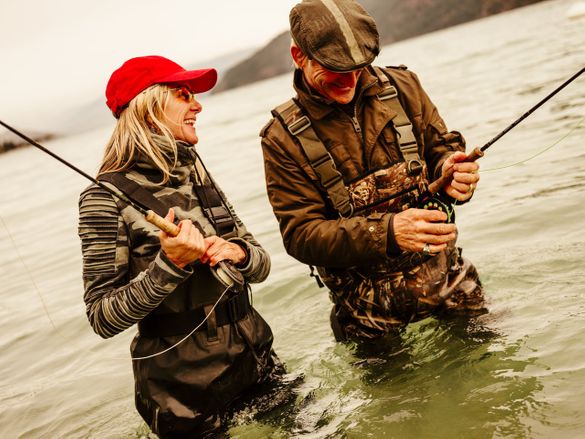
Image Credit : Destination Canada, Fishing in Kelowna, British Columbia
For more media information on Canada and images go to www.destinationcanada.com/media
Readers wanting more informatoin on holidaying in Canada should go to www.explore-canada.co.uk
For more information please contact Ms. Nim Singh, Media and PR Manager, Destination Canada, singh.nim@destinationcanada.com (not for publication)