 06 Nov 2013

Travellers to South East Asia want the tourism industry to take more action to protect children from exploitation, according to a new report issued by Project Childhood Prevention Pillar - an Australian aid initiative implemented by World Vision - in partnership with the University of Western Sydney.
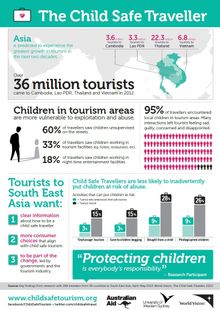
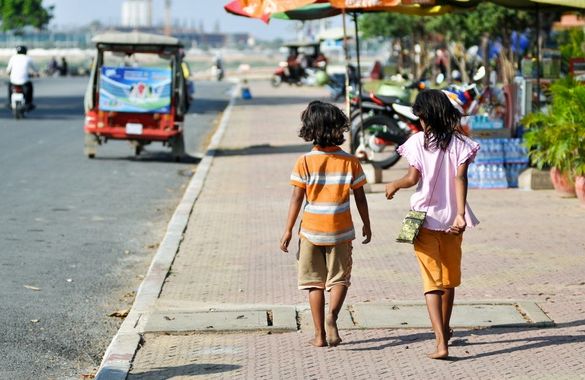
Last year, more than 36 million tourists travelled to Cambodia, Lao PDR, Thailand, and Vietnam and many encountered children in vulnerable situations. The key findings of the groundbreaking report "The Child Safe Traveller", released today to coincide with the observance of World Responsible Tourism Day, polled almost 270 travellers from 39 different countries. It found 95% of travellers surveyed encountered local children and many interactions with children left tourists feeling sad, guilty, concerned and disappointed.
"There is a growing awareness of the significant risks to children who are begging or selling things at tourism sites and those visited in institutional care as part of organised tours or 'voluntourism' experiences," said Aarti Kapoor, Program Manager of Project Childhood Prevention Pillar for World Vision.
Three quarters of travellers questioned were aware that children experience abuse or exploitation in connection with travel and tourism. While the majority of tourists said they want to help these at-risk children, the study showed many were confused about what actions they can take and wanted more information.
"With Asia tipped to receive the strongest tourism growth, globally, in the next two decades, it's critical to build child safe tourism environments," said Afrooz Kaviani Johnson, Technical Director of Project Childhood Prevention Pillar for World Vision. "Educating responsible travellers on how they can contribute is an essential part of this transformation."
The study also found that information about child safe tourism had a direct positive influence on the decisions tourists made. Travellers who were aware of child safe tourism were more likely to refrain from giving money to children begging, visiting children in institutional care, and buying from children on the street.
Many participants said they would be more likely to support travel and tourism businesses that operated within child safe principles. Many also expressed a desire for more consumer options that would enable them to travel as child safe tourists.
"What 'The Child Safe Traveller' shows is that we need a concerted, combined effort between travellers, the tourism industry and governments. National Tourism Organisations have already agreed to promote child safe tourism to tourists and companies," said Aarti Kapoor, Program Manager of Project Childhood Prevention Pillar for World Vision. "We each have a part to play to improve the quality of tourism in the Mekong and ensure children are safe and only positively impacted by tourism growth."
The full report "The Child Safe Traveller" will be released shortly on http://www.childsafetourism.org .
Visit http://www.childsafetourism.org for more information on the Child Safe Tourism campaign.
Follow the campaign on Facebook https://www.facebook.com/ChildSafeTourism and twitter https://twitter.com/childsafetravel.
Media enquiries:
Melissa Stewart
Senior Advisor - Child Protection & Trafficking in Persons
World Vision Australia
Phone: +61 2 9806 6313
email: melissa.stewart@worldvision.com.au
Mark Nonkes
Regional Communications Officer - East Asia
Mobile: +856 20 54721029
Email: mark_nonkes@wvi.org
Notes to Editors:
Project Childhood
Project Childhood is a $7.5 million Australian aid initiative to combat the sexual exploitation of children in tourism in the Mekong sub-region. Project Childhood builds on Australia's long-term support for programs that better protect children and prevent their abuse. Project Childhood brings together the UN Office on Drugs and Crime (UNODC), INTERPOL, and World Vision to address the serious issue of sexual exploitation of children in tourism. The project works in Cambodia, Lao PDR, Thailand and Vietnam. It takes a dual prevention and protection approach. World Vision works with Governments, the tourism industry, and communities to prevent children from becoming victims of sexual exploitation by raising awareness, building community resilience and building child safe tourism. Through the use of public campaigns, training and child helplines; governments, communities, and the tourism industry are better aware of the vulnerabilities of at-risk children to sexual exploitation in tourism and are equipped with tools to protect them. UNODC, in partnership with INTERPOL, is working with law enforcement agencies to protect children through strengthening law enforcement responses. Through the increased knowledge of law enforcement and stronger regional and international cooperation, governments are better equipped to identify and counter child sexual exploitation in tourism.