 07 Sep 2017

With the royal drama “Victoria” back on our screens, it's time to explore the origins of the woman who redefined Britain's monarchy: Join us on a tour of Thuringia, tracing back Queen Victoria's German roots, and discover the place where she “felt at home”.
Gotha - where Queen Victoria felt at home
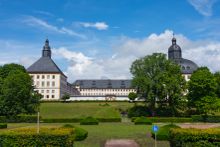
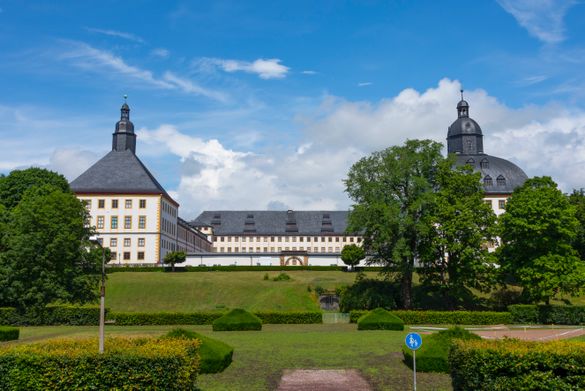
There are many reasons for visiting Friedenstein Palace in Gotha, not least because it's a splendid early Baroque structure. Not many Britons find their way here but especially if you're interested in history, you should put this small town only 15 minutes by train from Erfurt on your list. Gotha has strong historic links with the UK: The dukes of Saxe-Coburg-Gotha were Ernestines, a noble family that left its “traces” in several royal dynasties in Europe, including the UK. Victoria's mother, Victoire of Saxe-Coburg-Saalfeld, Duchess of Kent, had been an Ernestine offspring and so were many others in the British royal family, for example, Queen Caroline, Princess Dowager Augusta, or Victoria's favourite aunt, Queen Adelaide. And, of course, the man Queen Victoria fell in love with, Prince Albert of Saxe-Coburg-Gotha, was the son of Ernest I, Duke of Saxe-Coburg-Saalfeld, her mother's brother.
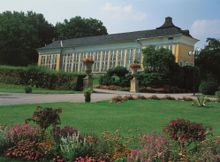
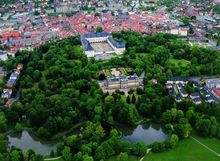
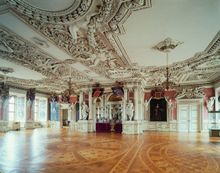
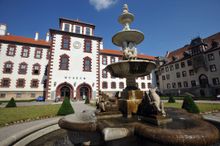
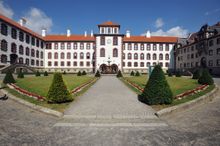
A museum inside Friedenstein Palace tells the story of the Royal relations but there's much more. You can spend hours wandering around the vast palace or take a stroll through the beautiful park, the first English-style park outside the UK and partly designed by the English landscape gardener John Haverfield the Younger. Exploring the palace's grounds, you will get an idea why, while on a visit in 1845, Queen Victoria wrote in her diary: “I feel so at home here.” Together with Prince Albert she participated in local activities, such as hunting parties, concerts and balls. Gotha for them was a place where they could relax and be with family. Friedenstein Palace was frequently the setting for family reunions and today's visitors can still get a vivid idea of what these festivities must have been like, in the former dining hall where a table is laid with Wedgewood porcelain for a festive dinner.
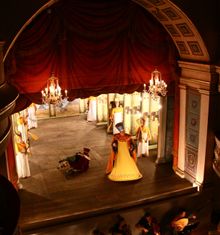
The castle complex houses various museums, including the ducal apartments, art collections and historical exhibitions. The Ducal Museum, founded by Ernest II, Prince Albert's brother, was built in the mid-1800s and is now home to a splendid art collection with paintings and objects from antiquity to the 19th century from Europe, China, Japan and Egypt. Tip: Don't miss peeking inside the Ekhof Theatre, the world's oldest Baroque theatre with still functioning stage machinery.
Meiningen – home of Queen Victoria's favourite aunt
Continue your Thuringian Victoria-trail about an hour south of Gotha in the small town of Meiningen where the Queen's favourite aunt, Adelaide of Saxe-Meiningen, was born in 1792. At the age of 26, she married William Duke of Clarence, later King William IV and brother of Victoria's father. Adelaide had a special relationship with her niece and Victoria once said that she trusted her aunt more than her own mother.
Adelaide is also the one who introduced the tradition of the Christmas tree to the British court. She was loved by many, left her traces throughout the British empire, not least by lending her names to geographical places such as Adelaide in Australia, and died in England without own surviving children in 1849. Elisabethenburg Palace, her home in Meiningen, is open to visitors today, and one room, the Blue Cabinet was restored to commemorate her. Pictures in the room show Adelaide and William with a Christmas tree. Meiningen itself is a delightful little town, also known as a “theatre town” because of the court theatre run by Duke Georg II in the late 19th century. The “theatre Duke” acted as creative director and the performances of his Meiningen Court Theatre attracted an audience all over Europe. The Royal Shakespeare Company, for instance, was founded on the model and principles of the “Meiningers”. Tip: Visit the “Magic World of Scenery” theatre museum in town and don't miss spending some time in Meiningen's beautiful English gardens.
For more information on Thuringia, please see www.visit-thuringia.com.
Note to the Editor
Thuringia Tourism, www.visit-thuringia.com, is part of the Cultural Heart of Germany, www.cultural-heart-of-germany.com, a tourism initiative of Saxony, Saxony-Anhalt & Thuringia Tourism. The neighbouring states of Saxony, Saxony-Anhalt and Thuringia feature a unique cultural heritage and rich musical tradition that the Cultural Heart of Germany promotes in the UK.
Travel information:
Easy access to the Cultural Heart of Germany: Ryanair to Leipzig and all major airlines to Berlin.
Facebook: www.facebook.com/CulturalHeartofGermany
Twitter: www.twitter.com/CulturalGermany
For press and image enquiries please contact:
B Connects. Barbara Geier Content Services
On behalf of Cultural Heart of Germany
barbara@bconnects.net, phone 07983 242 195