 17 Apr 2016
Tags: China, imperial springs, luxury hotel, Luxury, Culture, kingold museum

Dr Chau, the inspirational, pioneering businessman whose vision brought both the luxury Imperial Springs hotel and the Kingold Museum to life at a cost of £870 million, is an Australian/Chinese billionaire businessman and property developer.
Of his museum Dr Chau said: I am passionate about China's cultural relics and am gratified to know that I have been able to make a small contribution in protecting, unearthing and propagating China's historic culture.
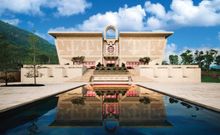
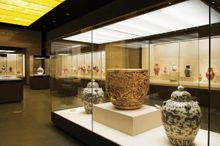
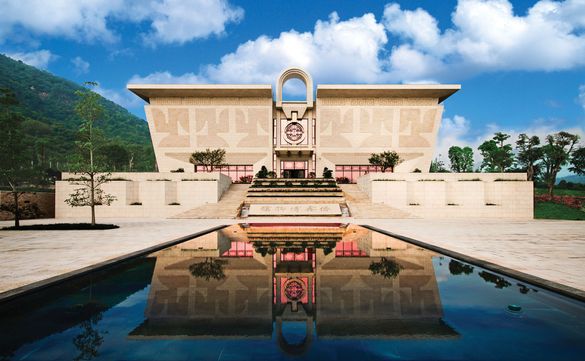
Some 400 items of this collection are beautifully displayed and professional curated in the specially designed Kingold Museum, the architectural design of which was inspired by the shape of an ancient Chinese cool box. In the same way that a cool box preserves its contents, so this museum was designed to preserve centuries of Chinese history and culture. Some items date back 5,000 years BC.
Curated in chronological order so as to explain China's cultural evolution, there is pottery and jade, bronze and enamel, calligraphy and ceramics displayed over three floors and across 7,319 square meters. Discerning guests staying at Imperial Springs, who seek a rewarding and educational experience, can undertake a free personal guided tour of the Museum.
Here is a list of the curator's top six items which provides an indication of the range and calibre of this extensive collection:
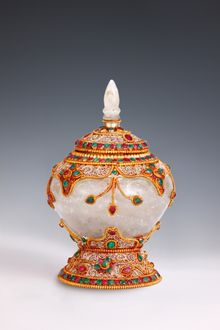
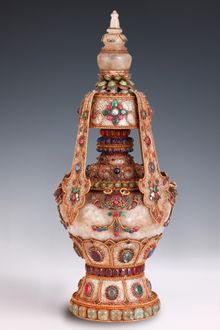
- Buddha Saria Stupa
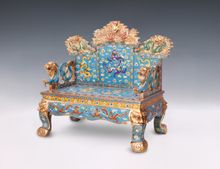
- Ceremonial Birthday Throne of Emperor Qianlong of the Qing Dynasty
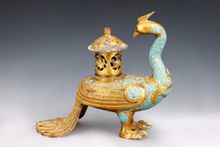
- Phoenix Shaped Bronze & Gold Lamp from the Warring States Period
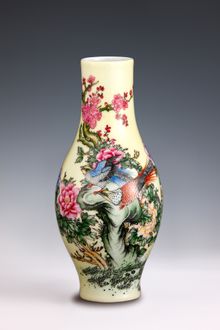
- Enamelware Olive Shaped Vase with Qianlong reign mark
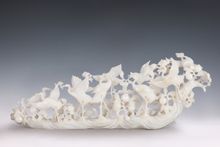
- White Jade Dragon Boat from the Qing Dynasty
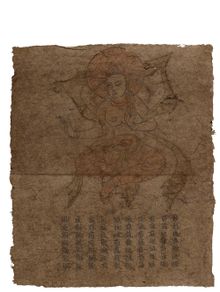
- Cross-legged Bodhisattva from the Western Xia Dynasty
Buddha Saria Stupa – After his death, Buddha was cremated, his ashes and body relics (saria) were divided, enshrined in stupas and worshipped. This saria stupa containing ten pieces of saria, was excavated from a site in Dunhuang, China. It consists of two nesting containers made of crystal, gold and silver, and inlaid with thousands of jewels including rubies, sapphires, emeralds, cat's eyes, turquoise and corals. This artefact is considered by the Kingold Museum to be the jewel in its crown.
The Ceremonial Birthday Throne of Emperor Qianlong of the Qing Dynasty
(1736AD-1795AD) – Traditionally, the whole nation would celebrate an emperor's birthday, known as the Wanshou Festival. In a lavish ceremony, the imperial throne among other items, would be placed in the Hall of Supreme Harmony where the emperor would go to receive his presents. This imperial throne is cloisonné enamel with a copper alloy body. It is decorated with dragons, phoenix birds and flowers, all representing a peaceful and harmonious world.
Phoenix Shaped Bronze and Gold Lamp from the Warring States Period
(475 BC – 221 BC) – This 36.5cm high and 40cm long lamp is embedded with rubies, topaz, emeralds and sapphires and is a unique holy lamp of the Qing imperial court. It was kept in the Qing Palace during the Republic of China period, but was moved south during the Second Sino-Japanese War. It has passed through many hands before being acquired by the Kingold Museum.
Enamelware Olive Shaped Vase with Qianlong reign mark
(1736 AD – 1795 AD) – Enamelware flourished and improved in the Qianlong period boasting splendid designs, exquisite shapes and stunning colours. This vase has a translucent thin body and is well glazed. The painting is exquisite and the images of a peony, plum blossom, lakes and rocks are vivid and beautiful. This vase, which also features a Qianlong reign mark, is a classic item from the Imperial household from the Qianlong period of Qing Dynasty.
White Jade Dragon Boat from the Qing Dynasty
(1736 AD – 1795 AD) – Made of Hotan white jade, this item is decorated with the designs of jumping fish and birds paying homage to the phoenix. The jade texture is subtle, the patterns are excellent and the workmanship exquisite. This exceptional work, once collected in the Imperial Court, comes from the ancient western regions and was given to the emperor as a birthday gift.
Cross Legged Bodhisattva from the Western Xia Dynasty
(1038 AD – 1227 AD) – Cattle hair fibre paper and ink constitute this scroll painting of a topless Bodhisattva with her legs crossed showing Mudra (hand-seal) by hands, in the style of the Northern Dynasties. It may be an imitation of a fresco made by a painter of Western Xia Dynasty.
The Kingold Museum boasts a truly world class collection of ancient Chinese artefacts on a scale and calibre that guests would not expect to see on a private luxury hotel estate. In fact, the entire building and its displays would not feel out of place in any major city in the world. Enthusiasts and the inquisitive would certainly be happy to pay to see this exhibition, yet this collection is available exclusively to Imperial Springs' guests on a complimentary basis. The added bonus is the lack of crowds and an infinite length of time to properly explore and learn.
Imperial Springs, located at the foot of the Phoenix Mountains in southern China in the Guangdong Province near Guangzhou, was built in the regal architectural style of the Tang Dynasty, a period (618-907) when China was the most powerful and prosperous country in the world.
Guangzhou can be accessed from Heathrow on direct daily flights with China Southern, via Dubai on Emirates, or can be connected through Hong Kong, Singapore or Bangkok with various airlines including Cathay Pacific, Singapore Airlines and Thai Airways.
Steppes Travel offers a five- night stay at Imperial Springs Prices for accommodation in a deluxe room, transfers and international flights start from £1,295 per person. Steppes Travel can also include Imperial Springs as part of a tailor made holiday. Tel: 01285 600116
Please contact Jovanka Ristich on +44 (0) 7889 425 725 or Jovanka@ipr-online.co.uk