 01 Nov 2013

Budding photographers with a passion for wildlife and nature, will love this photography masterclass from the official judge of the prestigious South West Coast Path Photography competition.
Former Wildlife Photographer of the Year winner, Ben Osborne, has put together his top five tips to capture the wildlife and nature found along this stunning coastline. Such a diverse mix of landscapes naturally offers up a variety of natural habitats, making it the ideal study ground for those wishing to follow in his footsteps.
By entering the competition, photographers will be in with a chance of winning a £700 voucher towards a stay with Cornish Cottage Holidays - plus their picture will grace the front cover of the annual South West Coast Path calendar.
Previous winners have gone on to achieve great success, including award-winning landscape photographer Adam Burton and former Landscape Photographer of the Year Antony Spencer, whose image of Corfe Castle in the winter mist wowed the critics to reach the top spot.
Here's Ben Osborne's top five tips for photographing nature and wildlife on the Coast Path - from the best lens to use to capture the beauty of a butterfly on a flower to advice on how to photograph birds in action.
- Photographing animals
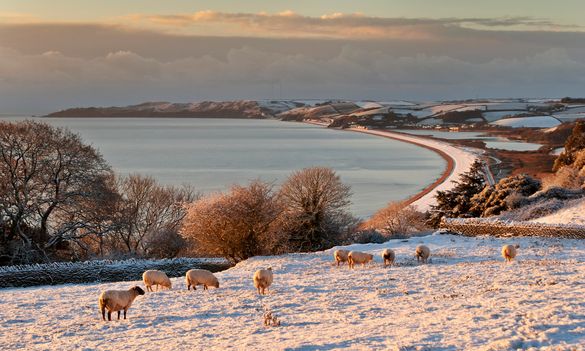
You can capture them as part of a landscape, as can be seen in the winning image from last year's competition, or individually in a portrait. But if you try the latter, it has to be dramatic. With tame animals (or an animal just over a fence - i.e. where you can get close without being in danger), use a wide angle lens.
- Stay safe and understand an animal's anxieties. Don't get too close to animals you are unfamiliar with - use a longer lens!
- Take your time - all wildlife photography is time-consuming.
- Local knowledge and a knowledge of the subject are critical
2. Photographing birds
- For photographing birds you will usually need a longer lens.
- Capturing the bird in action makes for a more interesting image than if it is just static, perched on a branch or a cliff.
- Never disturb wildlife in order to get your picture - the best pictures are of natural, undisturbed behaviour.
- Patience and knowledge of the animal and its movements are critical.
- Birds that are used to humans and therefore less timid are easier to photograph - seagulls in a harbour area, for example, make for good subject matter.
3. Butterflies and insects
- Don't rush around disturbing everything. Take your time to get your shot.
- Stay still in a suitable place - a flower meadow makes a good location. Maybe lie down and wait with a particular nectar source in focus and see what arrives.
- Do your research - some plants are more attractive to insects than others. In urban areas, for example, a buddleia is likely to attract lots of butterflies.
- Macro lens is useful if you use a dSLR camera (a 105mm better than a 55mm because you can work from slightly further away - alternatively, some 70-300mm zoom lenses have very good close focusing options). Most compact cameras also have excellent close-up capabilities, so they might be a better option (and are cheaper and more portable).
4. Wild flowers and trees
- Trees are good subject matter all year round. Winter silhouettes make great images, spring leaves have a wonderful sense of life returning, summer trees look good after rain, and autumn provides spectacular colour interest.
- Flowers can be good as individual specimens or swathes of colour.
- Try a wide angle of a clump of flowers so that the background setting is featured in the image.
- Consider something abstract - massive close-up details, blurry long exposures of flowers waving in the breeze, etc.
5. Sea and rivers/streams
- Atmosphere is all-important. The sea and its beautiful, reflective quality makes the South West Coast Path a special place to photograph.
- Interesting light - almost certain that lovely bright sunny day isn't going to create anything too dramatic (unusual, maybe, but not photographically!).
- Long exposures can create blurry water and give a sense of movement - only really possible when using a tripod (you only want the water blurry - everything else should be sharp). Dull conditions at dawn or dusk are good for this - or use neutral density filters if the conditions are too bright.
- Late evening and early morning are the best times for seascapes or overcast rainy days for streams and rivers.
- Head out to the coast when the weather is at its worst. But remember to stay well protected from the elements and wear the right clothing! Make sure you are comfortable in the weather - never compromise your own safety.
Ben Osborne biog
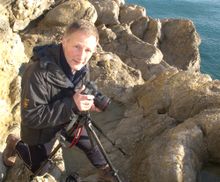
Award-winning photographer Ben Osborne, who specialises in wildlife and landscape photography, is best known for his images of Antarctica in the book of the BBC series "Life in the Freezer". Ben's work has been published in numerous magazines including National Geographic, BBC Wildlife, Geo and Radio Time, and in 2007 he was awarded Overall Winner of The Wildlife Photographer of the Year, the biggest wildlife photography competition in the world. In 2008 he was awarded an honorary fellowship from the Royal Photographic Society. He is also recognised for his recent Jurassic Journey Project, an audio-visual journey along the World Heritage coastline, bringing together photography, music, poetry and sculpture made from flotsam and jetsam. Ben has been named as one of the competition judges for this year's annual South West Coast Path photo competition
If you would like to enter the South West Coast Path photographic competition, visit www.southwestcoastpath.com/photo-competition for information about how to submit your entries, terms and conditions and a full list of prizes.
This year's winning photographs will feature in the 2015 South West Coast Path calendar. First prize will win a £700 voucher towards a stay in any of Cornish Cottage Holidays' stunning holiday homes.
Deadline for entries: December 31st
-Ends-
For further information please contact:
Alex Green
Tel: 01392 382683
Email: alex.green@devon.gov.uk