 20 Apr 2004

For those vacationers seeking neither rest nor relaxation, Montana is filled with outdoor challenges: fishing, hiking, whitewater sports, mountain biking, rock climbing and more. Even better, none of them has to be a team sport (unless one wants to bring a friend), because Montana�s vast size keeps adventure travelers well spread out.
Exactly how big is Montana? With a land area of 145,392 square miles and 1,402 square miles of lakes and streams, Montana is America�s fourth-largest state. From towering mountain ranges in the west to rolling grasslands in the east, Montana�s lands include thousands of acres of publicly accessible lands, including two national parks Yellowstone and Glacier), ten national forests, 17 wilderness areas and 43 state parks.
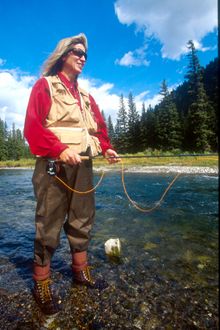
FISHING In the minds of many anglers, Montana is the fishing capital of the universe. Norman MacLean�s novel A River Runs Through It (and Robert Redford�s movie of the same name) are set in Montana. And, some of the most legendary bodies of water in the world flow through Big Sky Country.
With clear, cold water fed by high mountain runoff, many of Montana�s streams are filled with rainbow, brown, brook and cutthroat trout. Big Sky Country�s legendary blue-ribbon trout streams include the Madison River, the Yellowstone River, the Big Hole River and the Bighorn River. Other streams stake their fishing claim to fame in Montana as well: the Beaverhead, Missouri, Jefferson, Clark Fork, Bitterroot, Flathead, Kootenai and Stillwater rivers; Rock Creek; and the Nelson and Armstrong spring creeks.
Many of the deep lakes on the Blackfeet Indian Reservation bring anglers hoping to lure record-size trout. Other mountain lakes include Canyon Ferry, Flathead, Hebgen and Lake Koocanusa. Along with trout, these lakes may hold kokanee salmon, yellow perch, largemouth bass and northern pike. But anglers cannot live on trout alone, so Montana also has lakes with warmwater species such as sauger, smallmouth bass and channel catfish. The huge reservoirs of Fort Peck Lake and Bighorn Lake are known for large walleye and other species. In the lower Yellowstone and Missouri rivers, giant prehistoric-looking paddlefish still spawn, reaching weights of more than 100 pounds. (The city of Glendive even has a thriving business harvesting paddlefish eggs for caviar.) Log onto Travel Montana's website at www.visitmt.com for all the fishing possibilities.
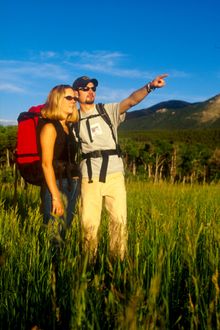
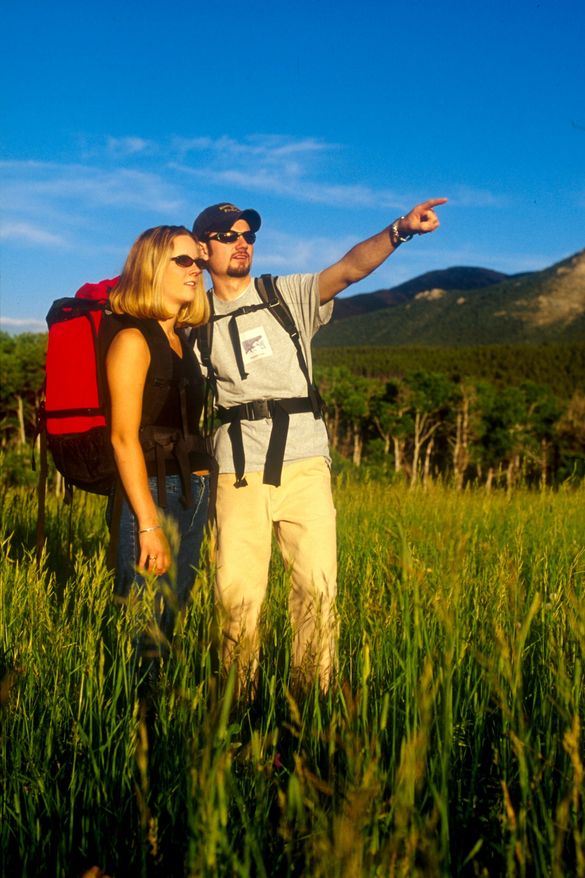
HIKING Montana is home to perhaps the most famous hiking park in the country: Glacier National Park. Created in 1910 to preserve more than one million acres of nature, Glacier features more than 700 miles of hiking trails. Hikers can see everything from dense cedar forests on easy, disabled-accessible trails (Avalanche Creek) to mountain goats on strenuous multi-day adventures that literally climb the sides of mountains (Highline Trail).
But Glacier doesn�t get all of Montana�s hiking glory. Big Sky Country is also home to numerous state forests, national forests and 17 wilderness areas. Together, these form millions of acres of backcountry hiking. Among the most famous is the Bob Marshall Wilderness, which straddles the Continental Divide. Together with the Great Bear and Scapegoat wilderness areas, it forms 1.5 million contiguous acres with about 1,800 miles of trails. Montana is even home to a specially designated hiking area: Jewel Basin, 15,349 acres of mountains, lakes and forests. Looking for hiking opportunities? Log onto www.visitmt.com
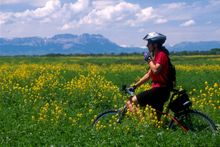
MOUNTAIN BIKING Talking about mountain biking in Montana is something like talking about grains of sand on a beach: there�s just too much for an �overview.� Montana is home to numerous �mountain bike commuters,� especially in areas such as Bozeman and Missoula (in fact, 65 percent of Missoula residents own bikes). Mountain bikes are allowed on all national forest lands, national parks and state parks, but not in wilderness areas. Make sure you check regulations before you start pedaling. Because Montana offers such a variety of landscape and terrain, you�re going to find a lot of different kinds of trails with varying degrees of difficulty from steep mountain climbs to rocky badlands. A few favorite trails around the state include: � Strawberry Lake Trail in Bigfork (3.5 miles, rated Hard in Technical Difficulty) � The Summit Trail in Whitefish (7.9 miles, rated Medium) � Hanging Valley in Helena (20 miles, rated Hard) � Duck Creek in Glasgow (14 miles, rated Easy) � Mystic Lake Trail in Bozeman (15 miles, rated Medium) � Pipestone Area in Butte (various trails, rated Easy) � Line Creek Plateau Trail in Red Lodge (18 miles, rated Difficult) � Rattlesnake Recreation Area in Missoula (various trails, rated Easy to Difficult).
GOLFING Montana is home to more than 70 public, semi-private and resort golf courses, where golfers can swing through a few rounds for most of the year; typically, golf courses open in the spring months and stay open through the fall. An added benefit to golfing in Montana: the sun loves to stick around. During the warm summer months, Montana enjoys up to 16 hours of sunshine a day thanks to its northern latitude. Daylight persists until 10 o�clock in the evening (and so do many golfers). Montana is home to many premier courses, including courses ranked among the top 50 public courses in the United States, as well as courses designed by golfing legends such as Jack Nicklaus. The Flathead Valley in particular is a popular golfing destination, with 15 courses available. Log onto Travel Montana's website at www.visitmt.com to find all the different courses.
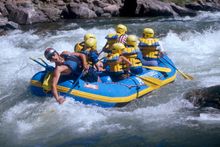
WATER ACTION Montana is a natural for rafts, kayaks and canoes; miles of streams provide everything from churning whitewater to calm blue water. Thirty-five Montana streams have been whitewater rated, with sections of stream rated Class I all the way up to Class VI. Montana�s whitewater has even starred on screen in the Meryl Streep film The River Wild. At the opposite extreme, calm stretches of river and many mountain lakes provide a relaxing and peaceful scenic tour on water. While you�ll find just about all of Montana�s lakes and streams perfect for rafting, kayaking or canoeing, some of the more popular rivers include stretches of the Flathead, Stillwater, Gallatin, Yellowstone, Clark Fork and others. Guided adventures range from quick trips of less than a few hours to multi-night excursions with campouts and gourmet dinners each night. Is your appetite wet? Check out all the opportunities at www.visitmt.com.
ON THE RANCH Stressed out? Looking for some new scenery? Ready to horse around? If you've answered yes to at least one of these questions Montana has a trip for you. A dude ranch vacation helps people unwind in this pressure cooker age.
Dude ranching got it's start in the late 1800's to provide safe, comfortable lodging for the many visitors from the cities of the East and from Europe who hoped to experience the romance and wonder of the West. A dude ranch vacation is said to be contagious. So if you're ready to change out of your business suit and slip into some jeans and cowboy boots one of Montana's dude/guest ranches and working guest ranches may fit your style. Ready to cowboy up? Log onto Travel Montana's website at www.visitmt.com for a complete ranch listing.
###
Media Contact: Donnie Sexton +1 406-841-2897 donnie@visitmt.com