 13 Sep 2016
Tags: florida keys, travel, eco-tourism, environment, Coral reef, Healthy Coral, underwater

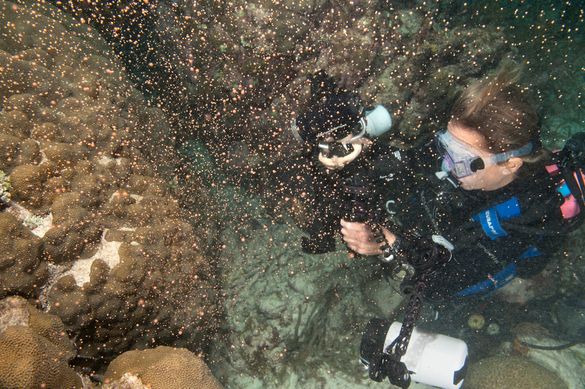
FLORIDA KEYS — Hopeful night divers are to take to the Florida Keys reefs for a chance to witness a delicate reproductive phenomenon that occurs when coral polyps release millions of gametes (eggs and sperm) in synchronized mass-spawning rituals. The event generally occurs around late summer's August and September full moon cycles.
The fantastical underwater exchange of gametes means the continued survival of coral reefs, including boulder corals such as brain and star corals as well as protected branching species of elkhorn and staghorn corals.
Typically, the eggs and sperm enter the water in massive quantities, a spectacular white excretion that covers a broad geographic area, designed by nature to maximize chances of fertilization and overwhelm nearby predators with more food than they can consume.
When egg and sperm do unite, the newly formed larvae or “planula” ascend to the surface to free-float in the current. Within a matter of days or even weeks, the planula settle to the bottom to grow into polyps and eventually form coral colonies.
The coral spawn is observed by scientists each year and is thought to be a correlation between seasonal lunar cycles as well as multiple environmental cues such as water temperature, tidal and 24-hour light cycles — yet it remains largely a wondrous and mysterious underwater phenomenon.
Keys professional dive operators schedule coral spawning night dives on or after the Aug. 18 and Sept. 16 full moons so divers can view the undersea spectacle.
Florida Keys visitor information: www.fla-keys.com or 1-800-FLA-KEYS
Florida Keys diving: www.fla-keys.com/diving
Social: Facebook.com/floridakeysandkeywest • Twitter.com/thefloridakeys • Instagram.com/thefloridakeys • Youtube.com/FloridaKeysTV • Keys Voices blog