 14 Oct 2015

Pixar's “The Good Dinosaur,” set to open in theaters on Nov. 25, follows the journey of an Apatosaurus named Arlo. In Nevada, you can take your own journey to see fossils from the dinosaur age as well as the more recent ice age.
Here are a few places to learn about dinosaurs in the Silver State:
Las Vegas Natural History Museum, 900 Las Vegas Blvd., North Las Vegas, 89101, 702-384-3466
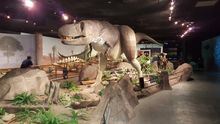
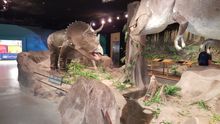
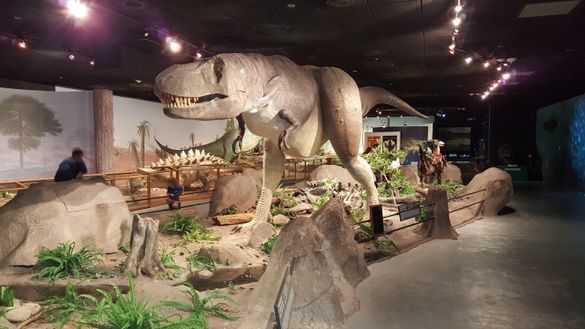
Check out three animatronic dinosaurs —Tyrannosaurus rex, triceratops and Ankylosaur —in the museum's Englestad Family Prehistoric Life Gallery. Also represented in this gallery is the ichthyosaur, Nevada's state fossil, a marine reptile that swam in the waters of Nevada during the time of the dinosaurs. The museum also has the Dinosaur Mummy CSI: Cretaceous Science Investigation, which showcases the science and technology used to study the world's most preserved dinosaur in the flesh, Leonardo. Leonardo was a 23-foot-long plant eater from the Cretaceous period, and was naturally mummified before turning into a fossil.
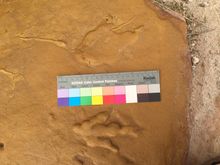
Those interested in Nevada dinosaurs can learn about fossils found at nearby Spring Mountain Ranch State Park in 2013, the remains of a metoposaur, according to Josh Bonde, a paleontologist at the University of Nevada, Las Vegas. Bonde, who sits on the museum's board of directors, said visitors also can learn about dinosaur footprints found in southern Nevada and dating back 190 million years. The first of those footprints was discovered in 2011 in nearby Red Rock Canyon National Conservation Area.
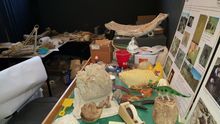
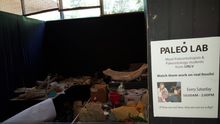
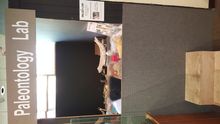
Bonde also runs the museum's Paleo Lab, which is open on weekends and allows visitors to see Bonde and graduate students clean, investigate and prepare fossils. Currently, they are working on fossils from nearby Tule Springs National Monument. Those are fossils from the ice age of the past 250,000 years, a period of time that came well after the dinosaur era. Tule Springs was named a national monument in 2014; the area is prized for its wealth of ice age fossils.
Nevada State Museum, Las Vegas, 309 S. Valley View Blvd., Las Vegas (on the Springs Preserve campus)
Dinosaur bones found in southern Nevada in 2005 are on display at the museum — this collection includes the fossils of crocodylomorphs, fish and several types of turtles, indicating that this area was a freshwater inland sea about 100 million years ago. This exhibit includes the painting “Morning After the Storm: A Cretaceous Floodplain Comes Alive,” which illustrates what the Nevada landscape might have been like at the time.
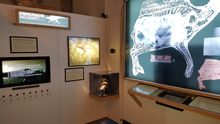
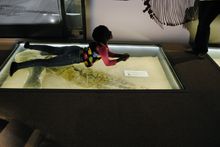
The museum also has an exhibit on the ichthyosaur, Nevada's state fossil, a giant marine reptile that swam in the waters of Nevada during the time of the dinosaurs. The front paddle of an ichthyosaur is on a floor display, as well as a portion of the ichthyosaur body made up mostly of ribs.
As with the Las Vegas Natural History Museum, the Nevada State Museum, Las Vegas has a display of fossils from nearby Tule Springs National Monument.
Springs Preserve, 333 Valley View Blvd., Las Vegas
One hundred sixty million years ago, a dinosaur walked along the edge of a body of water, leaving a set of muddy footprints. That piece of Jurassic Aztec Sandstone now sits in the Natural Mojave gallery at the Springs Preserve. The set of partial and complete casts are considered to be among the best examples of this type from southern Nevada.
Berlin Ichthyosaur State Park, in central Nevada, about 160 miles southeast of Reno
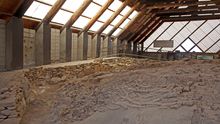
Central Nevada, 225 million years ago, was covered with a warm ocean that was home to ichthyosaurs, marine reptiles that were fish-like in appearance and locomotion. In 1928, fossils of these creatures, some of the largest specimens known, were discovered in what is now Berlin Ichthyosaur State Park. Today, 40-minute tours of the fossil shelter are offered Memorial Day through Labor Day. Here, you can learn not only about this fascinating creature, but also view the actual excavation conditions encountered in modern paleontology.
W.M Keck Museum on the University of Nevada, Reno campus, inside the Mackay School of Mines building
A display about the ichthyosaur, Nevada's state fossil, a giant marine reptile that swam in the waters of Nevada during the time of the dinosaurs, can be seen at the W.M. Keck Earth Science & Mineral Engineering Museum. The Keck also displays fossils from more recent geologic eras, including the remains of a 3-million-year-old mastodon found in northern Nevada.
***
The Nevada Division of Tourism (TravelNevada) is part of the Nevada Department of Tourism and Cultural Affairs. It promotes and markets Nevada as a tourism destination for domestic and international leisure and business travelers through its marketing and advertising programs and by coordinating partnerships between public and private entities. TravelNevada also administers grant programs for local entities to market travel and tourism offerings and publishes Nevada Magazine.