 02 Sep 2004

With more than 100 million visitors since its opening on March 21, 1964, SeaWorld is San Diego�s No. 1 tourist attraction and one of the most popular marine parks in the world. The founding principles of education, entertainment, research and conservation make SeaWorld San Diego an ideal place to learn about, enjoy and gain an appreciation for some of the ocean�s most fascinating creatures.
Spread out over more than 189 acres on beautiful Mission Bay Park, SeaWorld is known for spectacular animal shows, interactive attractions, aquariums, rides and dining facilities.
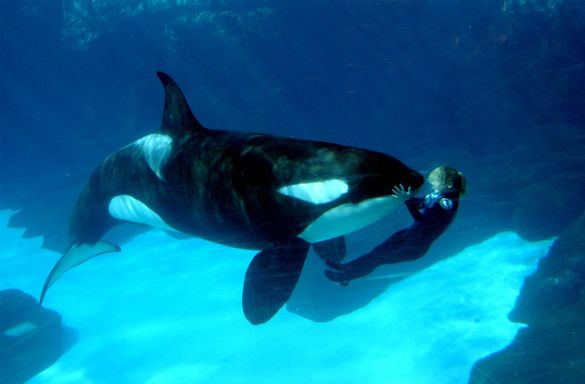
Over the years, the park has grown from a small display of marine animals into one of the largest and most respected marine zoological facilities in the world. The highest standards of animal husbandry, education and marine-life display have earned SeaWorld San Diego accreditation from the American Zoo and Aquarium Association (AZA). SeaWorld is now home to more than 20,000 animals, including 16 species of marine mammals, more than 430 species of fishes and more than 100 species of birds. The world-famous killer whale Shamu has been thrilling guests from around the world since 1965 as the star of The Shamu Adventure show. California sea lions Clyde and Seamore, Dolly Dolphin and O.P. Otter are among other beloved SeaWorld animals that have entertained audiences over the years.
SeaWorld San Diego was founded in 1964 by four fraternity brothers from the University of California Los Angeles. Originally planned as an underwater restaurant, the concept grew into the idea of a marine zoological park on 22 acres along Mission Bay. With an initial investment of $1.5 million, 45 employees, several dolphins, sea lions and two seawater aquariums, SeaWorld drew more than 400,000 visitors its first year, a clear indication of the public�s curiosity and fascination for marine animals.
In the earliest years, the park was held as a private partnership. Then in 1968, SeaWorld offered its stock publicly, enabling the company to grow. In 1970, a second SeaWorld park was built in Aurora, Ohio. A third park in Orlando, Fla. opened in 1973 and the largest park in San Antonio opened in 1988. Harcourt Brace Jovanovich, Inc. (HBJ) owned and operated SeaWorld San Diego from 1976 to 1989. Anheuser-Busch Companies, Inc. purchased the SeaWorld parks from HBJ in 1989 (In January of 2001, the Ohio park was sold to Six Flags Entertainment.) The SeaWorld parks are owned and operated by Busch Entertainment Corporation (BEC), the family entertainment subsidiary of Anheuser-Busch.
SeaWorld and Anheuser-Busch are dedicated to much more than just entertainment, as evidenced by their involvement in groundbreaking scientific research, wildlife preservation, marine-life education, environmental stewardship and rescue and rehabilitation programs:
Research Established in 1963, the Hubbs-SeaWorld Research Institute is a public, nonprofit research foundation that conducts scientific investigations on the world's living creatures and natural resources. Its mission encompasses bioacoustics, aquaculture, physiology, conservation and ecology studies with an emphasis on marine and coastal ecosystems. A long-time partner of SeaWorld, H-SWRI provides scientific information that is invaluable to the development of appropriate environmental management decisions, conservation programs and the understanding and protection of our ocean resources.
SeaWorld San Diego has achieved several unprecedented research milestones, including those in the field of artificial insemination: SeaWorld San Diego was the first marine zoological institution in the world to successfully conceive marine mammals through artificial insemination, marked by the birth of a killer whale on Sept. 1, 2001, followed by the May 2003 births of bottlenose dolphins conceived through artificial insemination using frozen-then-thawed semen.
Wildlife preservation For more than 40 years, Anheuser-Busch Adventure Parks have worked with and supported conservation organizations around the world that share their vision and commitment. Partners include the National Wildlife Federation, The Nature Conservancy, World Wildlife Fund and the Ocean Conservancy.
In 2003, Busch Entertainment Corporation created a private charitable foundation to substantially increase its current financial support for environmental, research, education and animal rescue programs. The SeaWorld & Busch Gardens Conservation Fund allows, for the first time, SeaWorld and Busch Gardens guests to contribute to the parks� efforts to preserve endangered wildlife, support worthy conservation and research organizations worldwide, and to aid ill, orphaned, injured or stranded animals.
Donations also are accepted from individuals and organizations not affiliated with BEC or its parks. Visitors to all nine Anheuser-Busch Adventure Parks may donate to the fund at more than 35 park gift shops and other outlets. A donation mechanism has been built into the parks� popular season- and annual-pass program, allowing Passport Members to help protect the same species they encounter during their park visits. For more information visit www.swbg-conservationfund.org.
Education Since beginning formal instruction in 1972, SeaWorld San Diego�s education programs have benefited more than six million students through activities such as Sleepovers, classroom outreach, Instructional Field Trips in the park and Adventure Camp programs. In the summer of 2003, SeaWorld celebrated the grand opening of SeaWorld Adventure Camps San Diego, a facility that allows the park to accommodate 128 campers per week, compared to 24 campers per week in past camp seasons.
Rescue and rehabilitation The SeaWorld Animal Rescue and Rehabilitation Program is an important part of the park�s commitment to conservation, research and education. The program�s main objective is to return healthy animals to the wild. Through this program, SeaWorld San Diego�s animal care and aviculture specialists have rescued, treated, sheltered, rehabilitated and released thousands of ill, injured and stranded animals.
With an average 200 rescues a year, the animal rescue team successfully rehabilitates and returns nearly 65 percent of the animals to the wild. Marine species treated by the SeaWorld San Diego team include sea turtles, pelicans, seabirds, whales, dolphins, seals, sea lions and sea otters.
The most well-known of SeaWorld San Diego�s successful rehabilitations is J.J. the gray whale. On Jan. 10, 1997, a dehydrated, hypoglycemic and comatose, three-day-old calf weighing 1,500 pounds was found off the coast of Marina del Rey, Calif. The calf was transported to SeaWorld where animal care specialists provided round-the-clock care for J.J. during her rehabilitation at the park. Fifteen months and nearly 20,000 pounds later, J.J. was restored to health and returned successfully back into the ocean. J.J.�s recovery allowed SeaWorld researchers many discoveries, including the creation of an infant formula, gray whale vocalization patterns and whale growth rates. Knowledge gained by caretakers and researchers at SeaWorld is also shared with other zoological parks, rescue organizations, universities and government agencies worldwide.
Environmental stewardship Since 1993, Anheuser-Busch�s commitment to wildlife conservation, animal care, education and research has earned the company more than 100 environmental awards for waste reduction, conservation, education, energy efficiency, recycling and animal protection.
SeaWorld Adventure Parks are in San Diego, Orlando, Fla. and San Antonio. In addition to the SeaWorld Adventure Parks, St. Louis-based Busch Entertainment Corporation operates Busch Gardens in Tampa Bay, Fla. and Williamsburg, Va.; Adventure Island in Tampa Bay; Water Country USA in Williamsburg; Sesame Place near Philadelphia and Discovery Cove in Orlando. The nine parks entertain more than 20 million guests a year and employ more than 15,000 people.
Leaders in conservation and education, SeaWorld, Busch Gardens and Discovery Cove care for the largest animal collection in the world and offer an education Web site especially for students and teachers at www.seaworld.org. Information on how to contribute to the SeaWorld & Busch Gardens
Conservation Fund is at www.sw-bgconservationfund.com. General park information is found at www.seaworld.com.
--SeaWorld-- For more information contact: SeaWorld San Diego Public Relations, (619) 226-3929.