 12 Apr 2012

With less than 400 California condors in existence, this endangered species is still an uncommon sight. Even rarer is the opportunity to watch condor parents incubate an egg, and raise a chick. That is, until now.
Visit the San Diego Zoo Global Wildlife Conservancy's new web camera, Condor Cam (www.sandiegozooglobal.org/video/condor_cam), to see Sisquoc and Shatash, the first condor pair ever to be observed by the public, raising a chick on a live web camera set up in an off-exhibit area for condor care at the San Diego Zoo Safari Park. For decades, field biologists, behaviorists and zookeepers were the only people able to witness a condor's parental behavior. This behavior has never been available for public viewing.
"For decades we've had the opportunity to work with this remarkable species behind the scenes," said Michael Mace, San Diego Zoo Safari Park curator of birds. "Beginning today, this rare experience is no longer for a select few. We invite you to watch, for the first time, this fantastic experience, the beginning cycle of a California condor's life, from the egg until it fledges."
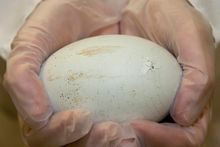
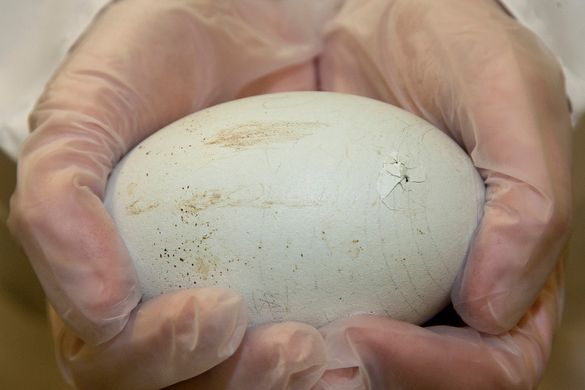
Shatash, the female condor, laid the egg on Friday, Jan. 13. As a standard practice at the Safari Park, every condor egg laid is moved to an incubator for safe keeping, and the parents are given an artificial egg to incubate. The incubation behavior of the parents continues as it would with their own egg, with the male and female taking turns incubating the egg.
In the incubator, keepers monitor the egg for embryonic development. In the last few days of incubation, the artificial egg is removed from the nest and replaced with the fertile egg, allowing the parents to help the chick hatch and immediately begin their parental duties.
The chick hatched in early March. Condor Cam viewers have witnessed rare moments such as the chick emerging from the egg with its white down feathers and a light pink, bald head and the parents tending its needs from feeding to clean up. When the chick is 5 to 6 months old, observers may also witness the chick's first flight! The chick continues to be tended to by its parents until it is approximately 1 year old. These are moments in the life an endangered species that very few people have ever seen.
Since the recovery program began in the 1980s, when there were only 22 condors left in the world, the Safari Park has hatched 171 chicks and released more than 80 birds in the wild. There are now more than 390 condors, half of which are flying free in California, Arizona and Baja California, Mexico.
The California Condor Recovery Program is implemented by the U.S. Fish and Wildlife Service, zoos in the U.S. and Mexico, and U.S. and Mexican government agencies. Although listed by the federal government as an endangered species in 1967, the California condor population continued to decline, reaching a critical low of less than two dozen birds. In 1982, the condor breeding program was successfully established at the San Diego Zoo Safari Park and Los Angeles Zoo. Today, two additional breeding centers are assisting with the recovery of the species at The Peregrine Fund's World Center for Birds of Prey and the Oregon Zoo. In addition, condors are part of an education program that allows guests at the San Diego Zoo, Santa Barbara Zoo and Mexico City's Chapultepec Zoo to see North America's largest bird up close.
The San Diego Zoo Global Wildlife Conservancy is dedicated to bringing endangered species back from the brink of extinction. The work of the Conservancy includes onsite wildlife conservation efforts at the San Diego Zoo, San Diego Zoo Safari Park, San Diego Zoo Institute for Conservation Research, and international field programs in more than 35 countries. In addition, San Diego Zoo Global manages the Anne and Kenneth Griffin Reptile Conservation Center, the Frozen ZooTM and Native Seed Gene Bank, the Keauhou and Maui Hawaii Endangered Bird Conservation Centers, San Clemente Loggerhead Shrike Breeding Facility, Cocha Cashu Biological Research Station, the Desert Tortoise Conservation Center, and a 900-acre biodiversity reserve adjacent to the San Diego Zoo Safari Park. The important conservation and science work of these entities is supported in part by The Foundation of the Zoological Society of San Diego.
WEBSITE: www.sandiegozooglobal.org
CONTACT:
SAN DIEGO ZOO GLOBAL
PUBLIC RELATIONS
+1 619-685-3291