 22 Jul 2005

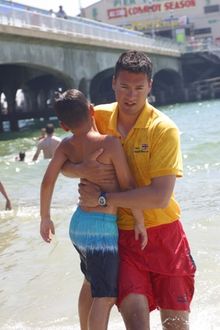
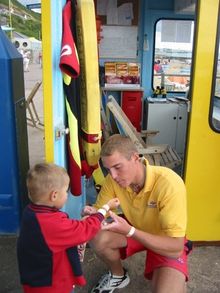
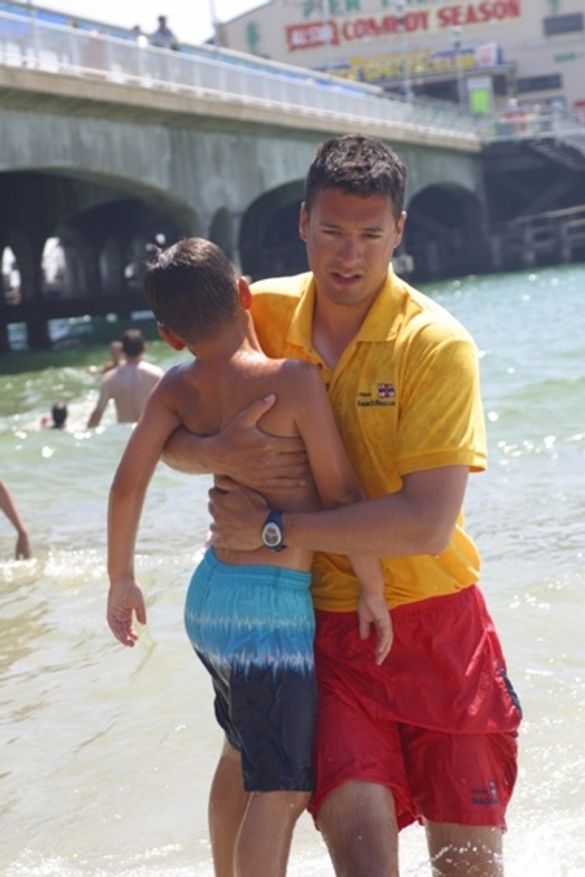
RNLI Beach Lifeguards are issuing simple but vital beach safety advice to children and grown ups to spare them the trauma of getting into danger this holiday.
The warning is given as many people from all over the British Isles are expected to visit a beach sometime during the school summer holiday � whether the beach they visit is in the United Kingdom, Ireland or perhaps further afield.
In particular, this advice comes in the light of the 2004 RNLI beach lifeguard rescue statistics. These show that RNLI lifeguards, who operate in the south and south west of England, helped at least 5917 people from as many as 1077 different postal addresses throughout the United Kingdom and Republic of Ireland.*
Statistics** show that around 60 children lose their lives annually, with many more � around 1,500 � endangering themselves when in the water.
Steve Wills, RNLI Beach Safety Manager explains,
�It is incredibly frustrating that some people feel if they live inland, or a distance from the popular seaside resort, that beach safety isn't relevant to them - that if certain areas don't have nice sandy beaches or lifeguards, or that its too cold to ever go to the local beach � the assumption is that there is no need to learn about beach safety. This is untrue, the sea does not respect your nationality or your postal address � as the RNLI Beach Lifeguard 2004 statistics illustrate.
�Before visiting a beach, please check out the RNLI website, www.rnli.org.uk/beachlifeguards, for practical advice and tips on how to stay safe, or email beachsafety@rnli.org.uk or telephone 0800 328 0600 for free beach safety literature.
�Find out about the beach being visited � go to the Good Beach Guide website, www.goodbeachguide.co.uk, produced by the Marine Conservation Society (MCS), in partnership with the RNLI.
�Think about the safety on the beach � RNLI research shows that only 4% of people consider safety when choosing a beach to visit, looking at whether the beach has lifeguards or whether there are safety signs that can give vital information about any beach hazards.
�Hopefully most people, especially those with children, will visit a lifeguard patrolled beach � that will be flying safety flags. But before setting off, learn what the different coloured flags mean � frighteningly only 54% understand the red and yellow flag, and worse still only 28% know what a black and white flag signifies � a surf craft zone. Fortunately more people understand the red flag, 89% � perhaps by guessing that red usually means danger. However, the implications of a child not understanding what the flags mean and swimming into the wrong area could end in tragedy.�
Red & Yellow Flag: mean lifeguards are on patrol. Two red and yellow flags at the waters edge designate a bathing / body boarding zone supervised by lifeguards.
Black & White Flag: the quartered black and white flag indicates the area zoned for surf craft. It is not safe for swimmers and bathers.
Red Flag: the red flag means it is dangerous to bathe or swim and you should not go into the water.
In addition the RNLI recommends that children and adults learn FLAGS:
F Find the red and yellow flags and swim between them
L Look at the safety signs
A Ask a Lifeguard for advice
G Get a friend to swim with you
S Stick your hand up and shout for help if in difficulty
And finally, if you see anyone in trouble, DO NOT enter the water to rescue them, ring 999 or 112 and ask for the Coastguard. If lifeguards are on the beach advise them immediately.
Steve, concludes:
�And whichever part of the world you go to please take care with inflatable toys � they can be great fun in a pool, but we strongly advise you not to use them in the sea. They are vulnerable even to slight gusts of wind, and using these toys in surf conditions can be extremely hazardous. One particular danger is where a wind blowing off the land makes the sea look calm, flat and apparently safe, but it can actually sweep an inflatable � along with your child � out to sea very swiftly.�
If people insist on taking inflatable toys into the sea, they should take the following precautions to minimise the risk to life:
� Never use an inflatable toy in the sea when the wind is offshore (when the wind is blowing from the shore out to sea) � check flags, smoke and clouds to spot the direction the wind is blowing.
� Children�s inflatables should always have a strong rope connected � held securely by an adult on the shore.
� Make sure children are visible and within easy reach at all times.
� If possible, only use inflatables between the red and yellow flags.
� Always follow the advice given by the lifeguard.
� Never use inflatables in strong winds or when you see large waves, or near rivers or inlets with strong currents. ENDS
*Based on collected information � not everyone rescued by RNLI Lifeguards provided postcode addresses so the actual incident numbers will be higher. (In fact the total number of incidents was 8010, with 9041 people aided by RNLI Beach Lifeguards during 2004 � details available from the RNLI press office).
**Source: Royal Society for the Prevention of Accidents
Notes to Editors
1. Arriving with this email, as separate attachments, are seven spreadsheets. These list the number of people, by their postal address, rescued by RNLI Beach Lifeguards.
2. RNLI volunteer lifeboat crews have 180 years� experience of saving lives while RNLI lifeguards have been patrolling beaches in the south of England since 2002.
3. The RNLI provides the best possible equipment and training to ensure volunteer lifeboat crews and lifeguards can do their job in the safest and surest way.
4. The Marine Conservation Society (MCS) is the UK Charity dedicated to the protection of the marine environment and its wildlife.
For more information about beach safety / RNLI beach lifeguards and, or to arrange interviews please telephone the RNLI press office on 0845 122 6999 and ask to speak to Julia Sylvester (Senior Press Officer), Hayley Paterson or Dale Northey (Press Officers).
Anyone interested in visiting an RNLI Beach Lifeguards patrolled beach during the summer season can do so by contacting the above press officers.
www.rnli.org.uk