 09 Feb 2022

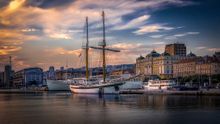
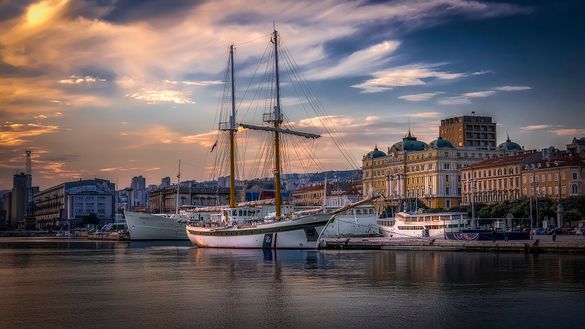
Open-air art, such as large-scale murals (graffiti) and installations as well as sculptures by contemporary artists, on the mainland and island coasts (project »Lungomare Art«), were indeed possible in the pandemic-constrained cultural capital Rijeka and continue to enhance its public spaces. Though in the long term, the legacy for this bustling port city and its visitors will be far greater still. Culture manager Irena Kregar Šegota confirmed that RIJEKA 2020 represented »the biggest investment in Croatian culture since 1945«, with the restoration and transformation of the Benčić industrial complex, which had been abandoned for many years, indisputably the most valuable legacy of the city's title. Amongst other things, it is now home to the City Museum in the former sugar factory, a cradle of progress back in the 19th cent. The old tobacco factory now houses the Museum of Modern and Contemporary Art – a vibrant, variety-rich, family-friendly location (mmsu.hr). Next to the Molo Longo, a promenade along the breakwater of the city harbor, Tito's wondrous yacht of state, the »Galeb«, begins its 5th life, now as a museum (small photo above during restoration in Kraljevica), while ceiling paintings in the Croatian National Theatre are freshly restored.
The »Sugar Palace« knows the answer
What made Rijeka the »Silicon Valley« of Croatia in the 19th century? What role did sugarcane play in Rijeka becoming a port of international importance? Why were products from the local paper factory so coveted in fifty countries on all continents, and why was invention of the torpedo important for peaceful progress? Is it true that Rijeka had a disco two years before Germany? – If you are interested in the history of this city, the world and curious facts, you might well spend a long time in the 30 rooms of the City Museum. www.muzej-rijeka.hr
Photo: Arsen Miletić