 03 Jun 2015

SeaWorld Parks & Entertainment inspires millions, through the power of entertainment, to celebrate, connect with and care for the natural world. Through up-close animal encounters, educational exhibits and innovative entertainment, guests to the company's SeaWorld® and Busch Gardens® parks leave with a heightened sensitivity to the world around them and an awareness of the plight of animals in the wild.
SeaWorld is one of the world's foremost zoological organizations and a global leader in animal welfare, training, husbandry, and veterinary care. The company collectively cares for one of the largest animal collections on the North American continent and has helped lead advances in the care of species in zoological facilities and in the conservation of wild populations.
Our global commitment to animal welfare and conservation is focused in three areas:
- The rescue of ill, orphaned, and injured animals;
- Research and conservation projects to help protect animals in the wild; and
- Inspiring the next generation of conservationists and animal care experts.
Wild Animal Rescue, Rehabilitation and Return
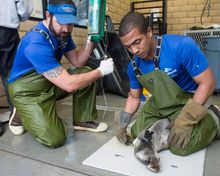
SeaWorld's legacy of animal rescue spans more than 50 years and has benefited more than 25,000 animals. Our SeaWorld Rescue Team is on call 24/7, 365 days a year, and is always ready to help an animal in need.
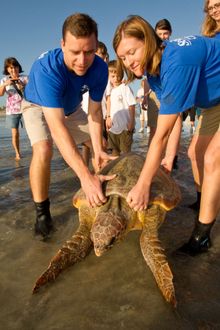
Working in partnership with state, local, and federal agencies, we help animals that are orphaned, ill, injured or in need of expert care. Our goal for every animal we rescue is to successfully rehabilitate and return it to the wild. The small percentage of animals with conditions that would prevent them from surviving in the wild are given lifelong care at SeaWorld or another accredited facility.
Rescue Stories:
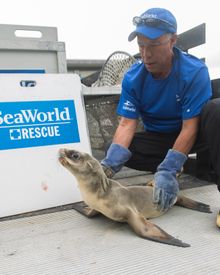
The 2015 California Sea Lion Crisis; Record Number of Sea Lions Rescued
Prior to this year, the highest number of marine mammal rescues recorded was 474 by SeaWorld San Diego in 1983. That record was broken early in 2015, and by May SeaWorld San Diego had rescued more than 800 marine mammals, mostly sea lions.
Work continued in late May when an oil pipeline ruptured off the coast near Santa Barbara, California, impacting wildlife and the delicate coastline. Experts from SeaWorld's Oiled Wildlife Care Center were called upon to assist in both clean-up efforts and caring for oil impacted animals.
The Rescue of 19 Manatees from a Florida Drain Pipe
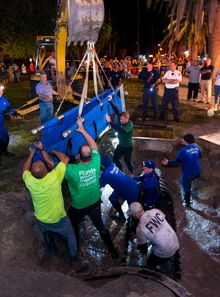
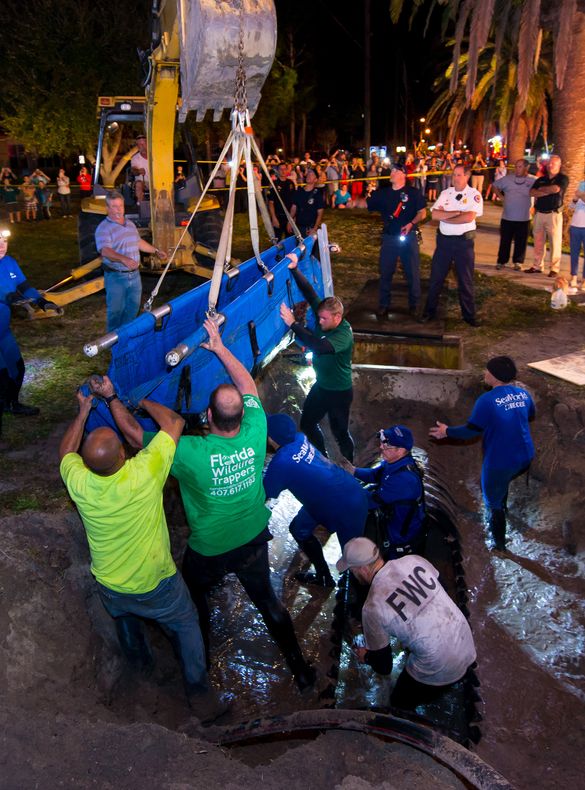
SeaWorld Orlando's animal care team received a phone call that there were six to eight animals stuck in a storm pipe, only to find 19 manatees trapped, including a mother and a calf. After several hours, the team was able to rescue and successfully release all 19 manatees into open water, after thoroughly checking and photographing each one in order to deem that they were healthy enough for release.
Sully's Story: A Whale Tale
Sully was a young pilot whale found stranded and starving on a Caribbean beach. He was rehabilitated, but attempts to return him to the wild failed. He repeatedly followed the release boat back to shore. SeaWorld suspected Sully had a hearing deficit, which may have explained both his initial stranding and his unwillingness to return to the open sea. Sully is one of the handful of animals who found permanent home in our parks.
Protecting Animals in the Wild through Research and Conservation
Our parks provide a unique environment that allows our team and outside researchers and scientists to better understand marine mammals. SeaWorld's animal health professionals contribute and publish meaningful science learned through the care of these animals. Additionally, we are deeply integrated with universities and research organizations and provide access to our animals for scientists conducting studies on a variety of subjects. These studies complement and strengthen research efforts in the field.
Research at SeaWorld Benefits Killer Whales in the Wild
The killer whale research we conduct has direct benefit for science as the animals in our care allow researchers, biologists and conservationists to better understand and conserve these remarkable animals in the wild.
As part of its vision for the future, the company has pledged $10 million in matching funds for killer whale research focused on threats to killer whales in the wild. The matching funds will be in addition to killer whale research conducted by SeaWorld's scientists, which includes 50 studies to date.
As a part of this pledge, SeaWorld has partnered with the National Fish and Wildlife Foundation through the Killer Whale Research and Conservation Program, which is dedicated primarily to providing support to aid in the recovery of the endangered Southern Resident killer whale population found in the coastal waters of Washington State and surrounding areas, known as the Salish Sea.
Killer Whale Research Stories:
Determining the Nutritional Needs of Wild Killer Whales
Research on SeaWorld's killer whales' milk composition will help scientists understand the nutritional requirements for mothers and calves. In the Pacific Northwest, killer whales face the challenge of not enough salmon. By understanding how much energy goes into producing milk and having a better handle on how calves grow, we can determine if available prey are sufficient to meet the nutritional needs of the killer whales in the wild.
Breakthrough Nutritional Assessments Using Unmanned Aerial Drone Technology
Scientists from the National Oceanic and Atmospheric Administration (NOAA) took a series of precise body measurements of the killer whales living at SeaWorld, including pregnant whales. Now they are using drones to photo-document wild killer whales, and based on the images collected at SeaWorld, are able to monitor the wild population's nutritional and reproductive states.
Understanding How Killer Whales Metabolize Toxins
Research into pregnancy and lactation will help scientists understand how killer whales metabolize toxins. This study is looking at how toxins are transferred during pregnancy and lactation to offspring. Toxins are identified as a major health concern for wild killer whales. They have been proposed as causes for reduced pregnancy success and increased health issues in wild whales. By studying the whales at SeaWorld, we can create an effective model to better understand how these toxins impact wild killer whales.
Conservation around the World
Our SeaWorld & Busch Gardens Conservation Fund supports projects focused on conserving wild animals and wild places. Since its creation in 2003, the SeaWorld & Busch Gardens Conservation Fund has awarded $11 million in conservation grants to more than 800 organizations. With the administrative support provided by SeaWorld Parks, 100% of the funding raised goes toward these conservation projects.
Conservation Fund Stories:
Protecting Sea Turtles in the Caribbean through Education
Community involvement is the key to provoke a long term positive impact on sea turtle conservation. The sea turtle rescue and conservation center in Pacuare beach, Costa Rica, enhances conservation efforts through the protection of nesting females and their nests as well as raising awareness about the critical situation of marine turtles and their habitat. With the Conservation Fund's support, WIDECAST developed and implemented educational outreach in coastal communities that reduced the human threats for sea turtles in the area and recruited participation in beach monitoring and habitat protection.
Sustainability for Marine Ornamental Fish
Coral reefs face numerous growing threats including ocean acidification, pollution and over-exploitation. Additionally, many colorful marine inhabitants are collected in ways that are not environmentally friendly and can impact the entire reef ecosystem. Rising Tide Conservation was initiated by SeaWorld Parks & Entertainment™ to protect reefs by developing techniques for rearing marine ornamental fish. The program promotes commercial production as an alternative to reef collection.
Stopping Rhino Poaching
The Wilderness Foundation and the Fund have partnered to take a three pronged approach to rhino conservation in South Africa. First, the Wilderness Foundation is tracking rhinos in the Eastern Cape and maintains a DNA database of the population. This both assists in population studies but also provides evidence that can be used against poachers. Secondly, we are increasing the capacity of veterinarians to care for rhinos injured by poachers in Kruger National Park. Finally, the Fund's support provides a dedicated anti-poaching unit in the Stanley and Livingstone Private Game Reserve to protect the only viable rhino population in the area against potential poachers. These programs, along with several other projects conserving rhinos throughout Africa, may just be saving this species from extinction.
Education and Inspiration
Over the past 50 years, more than 400 million guests have visited a SeaWorld park and experienced attractions, shows and habitats designed to educate and inspire them to care about the world. Hundreds of thousands of students have visited the parks to participate in instructional field trips, and tens of thousands of teachers have participated in our teacher workshop programs.
In addition to our extensive in-park efforts, SeaWorld's educational impact also extends into homes and classrooms across the world through innovative online sites, national television programs and teacher resources. We were one of the first zoological institutions to develop an online animal information database, provide distance learning programs live to schools, and create zoological residential programs that provided week-long, intensive programs for youths interested in zoological careers. Our programs speak to students from pre-school age to senior adults.
Our Animal Care Standards
At SeaWorld Parks & Entertainment™, we proudly care for one of the largest animal collections in North America. Our more than 50 years of world-class care, state-of-the-art animal habitats, and commitment to animal welfare have earned our parks recognition as global leaders in the zoological community.
- Our animals live in safe, sophisticated habitats and receive world-class care.
- Our more than 1,500 zoological team members are committed to the care of all of the animals in our facilities.
- Our advanced programming includes behavioral enrichment, preventive health, veterinary medicine and facilities design and management.
Our programs and policies are recognized by many federal and state laws, including the Animal Welfare Act, Endangered Species Act, Marine Mammal Protection Act and other comprehensive regulations.
The quality of care we provide these animals is further evidenced through the stringent accreditation process of two of the foremost professional zoological organizations to which we belong: The Association of Zoos and Aquariums (AZA) and the Alliance of Marine Mammal Parks & Aquariums (AMMPA). Fewer than 10% of the animal exhibitors in the U.S. are AZA accredited. The accreditation process for both these organizations is rigorous, and includes a detailed accreditation application as well as a multiple day on-site inspection by a team of experts from around the country. According to AZA, SeaWorld is “meeting or exceeding the highest standard of animal care and welfare of any zoological organization in the world.”
-SeaWorld -