 25 Feb 2015

NY1 Highlights the Cool Environmental Destination of SouthWest Germany and Gets Nominated for a prestigious Emmy Award for “Is Renewable Doable?”
Time Warner Cable's 24 hour news and information channel was selected for an Emmy nomination for its prime time report “Is Renewable Doable” featuring the German state of Baden-Württemberg, also known as SouthWest Germany.
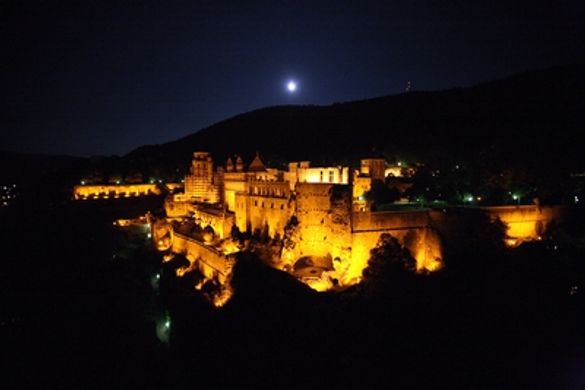
Baden-Württemberg is not only home to the Black Forest, beautifully maintained castles, and the cultural treasures of Lake Constance, Heidelberg and Baden-Baden, but is also the birthplace of the Green Party in Germany. And, true to these origins, the state incorporates green practices in all areas of life, including tourism with green hotels, electric cars, regional access cards and a new national park.
Germany has a desire to rid itself of nuclear energy for many reasons and the motivation behind the development of alternative energies is wide spread. “In Baden-Württemberg, tourism is an important industry and it is booming. At the same time, the topic of climate change is so important that we are supporting alternative energy and green practices in all areas of our work,” said Cornelia Bressem, head of the tourism division at the Ministry of Rural Affairs and Consumer Protection of Baden-Württemberg.
“The resolute commitment to sustainable technology and practices is really exemplary and quite evident on the part of everyone in SouthWest Germany from farmers to top scientists,” said Thomas Farkas, Director of Local Programming at Time Warner Cable and Executive Producer of the feature show along with Patrick Henderson, Producer and Adam Balkin, Host. The TV team traveled fast and far from Freiburg, at the southern end of the Black Forest, which is SouthWest Germany's scientific and cultural stronghold for renewable technology to Heidelberg, a rapidly developing center for urban renewal.
The Fraunhofer Institute for Solar Energy Systems (ISE) in Freiburg is on the forefront of developing solar energy and the growing solar capabilities of the city. The focus on environmental sustainability, photovoltaics and biotechnologies has given Freiburg a decisive edge in technology. The district of Vauban is practically self-sustaining, and is home to the Heliotrop, or round solar house, that revolves on its axis capturing the sun's rays throughout the year. Recently Freiburg constructed the first self-sustaining solar soccer stadium in the world. And, on the hospitality front, the Best Western Premier Eco Hotel Victoria, is admired for its solar roof and wood chip-burning furnace.
Sustainable design and energy efficiency are also brought to life in the Passivhaus projects in Heidelberg´s newest city section Bahnstadt, currently one of Germany´s largest urban development projects. It covers an area larger than 200 football fields, with the estimated investment volume in excess of two billion euros. With its high standards in sustainability, Bahnstadt is a highly respected model by urban planners around the world. Mayor Dr. Eckart Würzner has already presented the concept as a guest speaker at various international conferences.
A visit to SouthWest Germany's beautiful countryside and charming towns shows that environmental production is not limited to city centers. The Bio Energy Town of Freiamt in the Black Forest demonstrates how renewable energies, including wind power, biomass and even hydropower can electrify and heat entire towns profitably. The tourism agencies representing the Black Forest are actively integrating sustainable practices, including the creation of visitor cards (Konus Card and Black Forest Highlands Card) allowing visitors free access to E-Cars, mass transit and light rail along with many additional benefits. At the very beginning of this year, the state has approved the creation of its first national park, the Black Forest National Park.
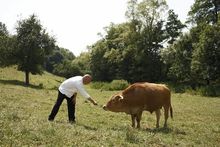
Visits to the Hohenlohe region of SouthWest Germany, just southeast of Stuttgart, show that farmers and people in small towns are on the cutting edge of environmental practices. Bretzfeld-Siebeneich is one of the leading bio energy towns in Germany heating the entire town from biomass. At Schwäbisch Hall, there is the Rural Production Association of Schwäbisch Hall e.V. (BESH), that is able to facilitate many of the organic farming practices. Gourmets and gourmands source their meat and sausage from the region as well as many other products as they are well known for their adherence to strict organic guidelines as well as strict rules on raising and feeding the animals.
To watch the NY1 Report online, please click here.
For further information, please contact:
Victoria Larson
Press Representative, US and Canada
State Tourist Board SouthWest Germany
917-678-7689 mobile
212-362-3421 telephone
victoria@vklarsoncommunications.com
www.tourismus-bw.de