 08 Mar 2004

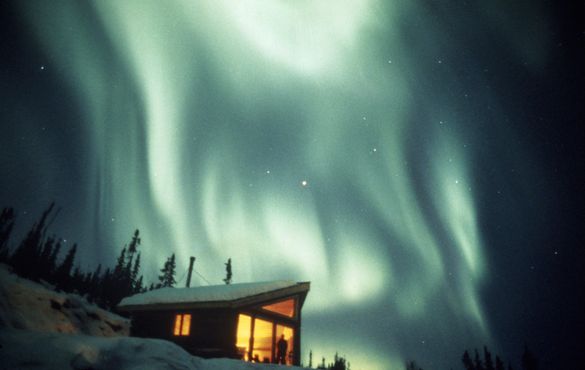
An Interior Alaska winter is a parade of wonders. Artists from across the globe gather here to carve majestic sculptures out of some of the clearest ice in the world, and hardy mushers race dog sleds thousands of miles through the wilderness in subzero temperatures. On particularly cold days, one can even toss boiling water into the air and watch it come down in frozen particles. The grand marshal of this winter parade is the aurora borealis, also known as the northern lights. These brilliant curtains of red, blue, green and white lights have captured people�s imagination for years, and today they make Fairbanks a premiere destination for winter travelers from around the world. Over the centuries, people have explained the northern lights in a myriad of ways. One Eskimo legend states that the lights are spirits carrying torches to guide nomadic travelers to the afterlife. Gold rush era prospectors professed that the lights were reflections of light shining on the mother lode of gold. While these stories make for great campfire chats, scientists explain them differently. The northern lights are produced by electrons and protons that originate in solar storms. Much like electricity in a neon sign, they give off energy when they strike gas particles in the earth's upper atmosphere. Although it often appears to be almost close enough to touch, the light is actually generated between 68 and 200 miles above the earth. The color of the northern lights ranges from red and purple to green and white. The brightest and most common colors are yellow and green. Visible from the end of August until early April, the phenomenon takes place year-round. However, the midnight sun keeps the skies too bright to see the aurora in the summer months. Fairbanks� location makes it one of the best places on earth to see the northern lights. Displays can be seen an average of 243 days during the year when there is enough darkness and clear skies. In fact, auroral research is a specialty of the University of Alaska Fairbanks. Scientists at the university issue aurora forecasts at www.gi.alaska.edu/ predicting where and when auroral displays will be most intense. During any two-week period, there will be aurora visible on 9 out of 10 clear nights and an active aurora on 4 out of 10 nights. These celestial pyrotechnic displays have triggered an influx of winter visitors to Interior Alaska. Aurora viewing in Alaska is particularly popular among the Japanese, who place a special value on witnessing the aurora at least once in a lifetime. The northern lights are beautiful and mysterious. Though you can see photographs in books and on video, nothing matches the experience of seeing them in person. Visit Fairbanks in winter, and you�ll soon see why. For a free copy of the Fairbanks Visitors and Winter Guides, contact the Fairbanks Convention and Visitors Bureau at 1-800-327-5774 or (907) 456-5774 or by writing to 550 First Avenue, Fairbanks, Alaska 99701. Or order the guides on line at www.explorefairbanks.com.
###
Media Contact: Karen Lundquist +1 (907) 457-3282 x227 klundquist@explorefairbanks.com