 21 Dec 2013

Forget those negative New Year's Resolutions: "I will not do this" and "No more that"! For 2014, try these positive resolutions to explore and enjoy The National Forest - and get fitter, more creative, more relaxed and happy with the world!
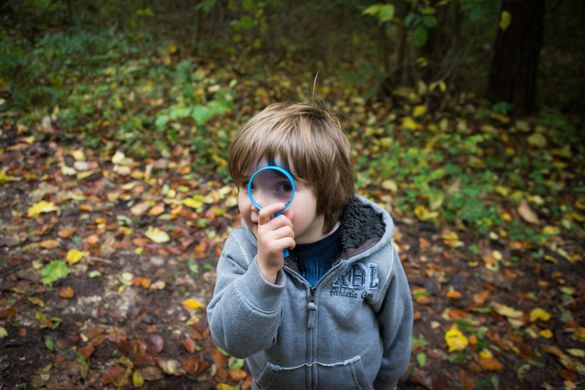
Focus on the detail - walk a daily route and notice the tiny differences which mark the changing seasons. The buds are already on the trees, watch them swell and break open, observe the leaves and flowers unfurling. Snowy day? Look for animal tracks and discover what's been out and about before you were even out of bed.
Take a longer view - chose a route through the Forest and walk it each month. Notice the changes in the air, the light, the view, the undergrowth at the woodland edge; what you can hear or see, what you can smell or touch. www.visitnationalforest.co.uk/walks
Capture the difference - choose your favourite tree or view and take a picture of it each month.
Hug a tree trunk - seek out one of the iconic National Forest Noon Columns. International artist David Nash created six marvellous sculptures, each one made from a single massive trunk of oak, all distributed throughout the Forest and reflecting the characteristics of the landscape in which they stand. At True Noon each day, sunlight moves through a slot carved into the Column and shines a beam of light on the shadow cast by the Column itself. http://nationalforest.org/document/fscene/nfcw2006.pdf
Start a nature journal - write down what you see. Sketch some of the natural features of the great outdoors. Write down what you hear: try recording birdsong in words or rhythm on the page, so that you can learn it and recognise it again.
Collect 'jewels'- seek out the snowdrops at Dimminsdale Nature Reserve; see carpets of bluebells at Yoxall Lodge; marvel at the veteran oaks at Calke Park, their tiny buds brown as a hare; enjoy the bright spring green of unfurling leaves, the dusty yellow hazel catkins, or tiny ruby flowers of the alder. Look for kingfishers at the National Memorial Arboretum, Sence Valley Forest Park or skimming at the edges of the reservoirs in the Forest.
Get your hands muddy - take the kids pond dipping or mini beast hunting. Mini beasts live in undisturbed corners of woodlands (and gardens). Remember to always replace dead wood or stones where you find them - they are probably someone's home.
Make something - treat yourself, or someone else, to a short course to learn to whittle, or make a child's stool, or forage in the Forest and cook up what you find. www.greenwood-days.co.uk ; www.woodlandsurvivalcrafts.com ; www.woodland-ways.co.uk
Plant a Tree, of course! www.nationalforest.org/sponsor/plantatree/
Join a volunteer group and help look after a local woodland www.nationalforest.org/involved/volunteering/
Free gym - The National Forest has hundreds of woodlands waiting for you to explore. Pick a woodland close to you, time yourself walking around it, and each week try and complete your walk a little faster. www.visitnationalforest.co.uk/woods
Take a Mystery Tour - find a map of The National Forest, shut your eyes, randomly pick a spot - go explore!
Eat local - eat locally produced food in season for a month. Check out the National Forest Food Guide Food Guide, farm shops, Farmers' Markets.
Join a local running club - they'll introduce you to places in the Forest you never knew existed!
Challenge yourself - set your sights on the National Forest 10K or one of the cycling sportives that run through the Forest.
Walk the National Forest Way - this new 75-mile long distance trail will be launched in May as part of the National Forest Walking Festival. Suitable for experienced and beginner walkers alike, it can be walked in separate stages. Find out more at www.nationalforestway.co.uk
Find out more about The National Forest at www.nationalforest.org
Ends
Media contact: Carol Rowntree Jones, Media Relations Officer, National Forest Company, on 01283 551211 email: crowntreejones@nationalforest.org
For background information on The National Forest see www.nationalforest.org Digital images are available: contact media@nationalforest.org
NOTES TO EDITORS:
1. The National Forest area covers 200 square miles of the counties of Leicestershire, Derbyshire and Staffordshire. Its objective is to increase woodland cover within its boundaries from an initial six per cent to about a third. No multi-purpose forest on this scale has been created in the UK for one thousand years. To date the proportion of woodland cover in the Forest has more than trebled to 19.5 per cent and in 2012 HRH the Duke of Cambridge planted the eight millionth tree in the Forest.
2. Year by year, The National Forest has been steadily turning what was once one of the least wooded areas of England into a multi-purpose, sustainable forest. The National Forest provides environmental, social and economic benefits, including landscape enhancement, creation of new wildlife habitats and major new access and leisure opportunities. It is an excellent example of sustainable development - with environmental improvement providing a stimulus both to economic regeneration and to community pride and activity.
3. To achieve these objectives, the National Forest Company leads the creation of The National Forest, working in partnership with landowners, local authorities, private business, voluntary organisations and local communities and has strong support from Government, politicians and the public. The Company receives grant in aid from the Department for Environment, Food and Rural Affairs.
4. The Independent Panel on Forestry, in its final report published in July 2012, stated: 'The National Forest exemplifies how a long term, resourced and focused agenda can increase publicly accessible woodland in an area alongside other environmental and economic benefits.'
5. In 2008, the National Forest Company and partners won the inaugural Sustainable Development UK Award, for their work in Ashby Woulds, at the heart of The National Forest.