 16 Apr 2004

Montana certainly lives up to the �big� in �Big Sky Country� when it comes to public lands: there are literally millions of acres of it. That includes state and national forests, state parks, wilderness areas, recreation areas and national monuments (more on those later), but the true centerpieces are Montana�s two national parks: Glacier National Park and Yellowstone National Park.
GLACIER NATIONAL PARK Glacier became a national park in 1910, and today it�s still a throwback to the time when Mother Nature was in charge. Its more than one million acres are filled with wildlife, dense forests, jagged peaks and alpine glaciers. And, it�s home to one of the most stunning drives in America: the appropriately named Going-to-the-Sun Road, which climbs the Continental Divide to Logan Pass Visitor Center.
Glacier National Park is a major component of the �Crown of the Continent� ecosystem, which offers major habitat for literally thousands of animal species such as grizzly bears, brown bears, wolverines, mountain lions, migratory birds and even hundreds of butterfly species. Glacier is especially known for mountain goats, deer, moose and other species.
With more than 700 miles of trails, Glacier is a hiker�s haven. Five self-guided interpretive walks with brochures and signs let visitors experience Glacier�s outdoor wonders at their own pace: the Trail of the Cedars, Huckleberry Mountain, Hidden Lake, Sun Point and Swiftcurrent Nature Trail. The Trail of the Cedars is a wheelchair-accessible path through giant, old-growth cedars. Visitors can find scores of day hikes throughout the park, but four areas in particular are popular: Lake McDonald, Many Glacier, St. Mary/Logan Pass and Two Medicine. Hikers can also camp overnight in Glacier�s backcountry with a permit from a visitor center or ranger station. Permits are issued on a �first-come, first-served� basis no more than 24 hours in advance. Other popular activities in Glacier include horseback riding, scenic boat tours, snowshoeing and cross-country skiing.
Together with Waterton Lakes National Park in Canada (its neighbor to the north, with which it shares a border), Glacier National Park became the world�s first International Peace Park in 1932. In 1995, both parks were additionally designated as a �World Heritage Site,� joining other worldwide attractions such as the Taj Mahal, Australia�s Great Barrier Reef and the Egyptian Pyramids. This honor was bestowed by the World Heritage Convention, an international organization of 147 nations that recognize sites of �outstanding universal value� to all people of the world. Waterton-Glacier was selected because of its �incredible biological diversity and majestic natural beauty.� Glacier National Park is open year-round.
For more information about Glacier National Park: Glacier National Park, National Park Service P.O. Box 128, West Glacier, MT 59936 406-888-7800 TDD: 406-888-7806 FAX: 406-888-7808 www.nps.gov/glac
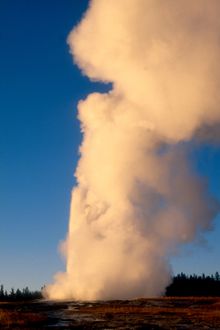
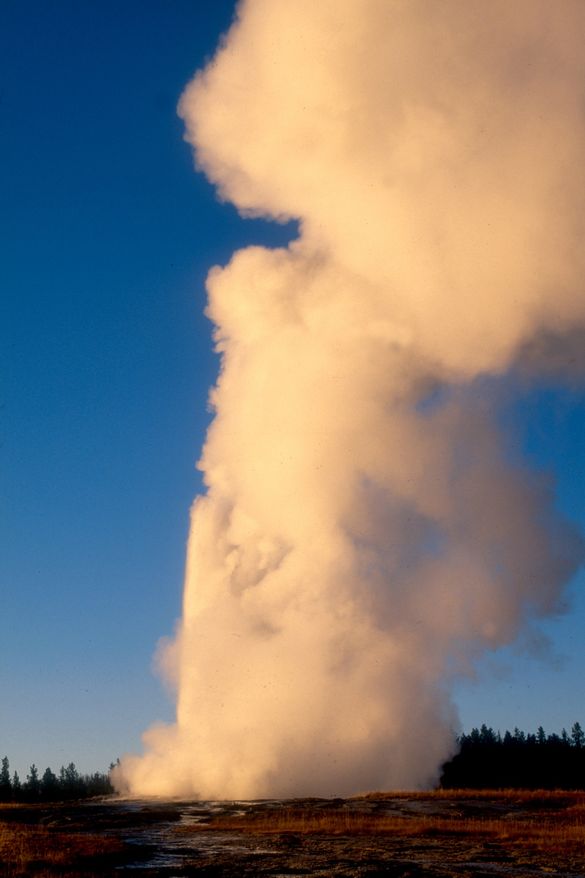
YELLOWSTONE NATIONAL PARK It was the world�s first national park. And in the minds of many, it�s still first for its scenery, beauty and wildlife. Yellowstone�s geothermal features, such as the world-famous �Old Faithful,� were the original attractions. Within the park�s boundaries are 10,000 thermal features and about 200 to 250 active geysers. That�s enough to give Yellowstone more geysers and hot springs than the rest of the world combined. Other major draws are the inspiring Grand Canyon of the Yellowstone River (featuring the 308-foot-high Lower Falls), fossil forests and Yellowstone Lake (136 square miles).
Ninety-nine percent of the park�s 2.2 million acres are still undeveloped, allowing Yellowstone to support a wide range of wildlife, including 58 mammal species (such as the ever-present buffalo and elk), 290 bird species and 18 fish species. In fact, Yellowstone is home to the largest concentration of free-roaming wildlife in the lower 48 states and the global temperate zone. About 80 percent of the park is forested, thanks to eight species of conifers and 1,050 species of native plants. Some of the most popular activities in the park include backpacking, bicycling, boating, cross-country skiing, snowmobiling, fishing (permit required), horseback riding and, of course, wildlife viewing.
Montana has three of Yellowstone�s five entrances: the North Entrance at Gardiner, the Northeast Entrance at Cooke City and the West Entrance at West Yellowstone.
For more information about Yellowstone National Park: Yellowstone National Park P.O. Box 168, Yellowstone National Park, WY 82190-0168 307-344-7381 TDD: 307-344-2386 FAX: 307-344-2014 www.nps.gov/yell
OTHER NATIONAL TREASURES IN MONTANA Montana also has five other publicly owned units of the National Park Service:
Big Hole National Battlefield (near Wisdom) - Interprets the 1877 battle fought between the U.S. Army and Nez Perce led by Chief Joseph. www.nps.gov/biho
Bighorn Canyon National Recreation Area (near Fort Smith) - Includes Bighorn Lake, formed by Yellowtail Dam. www.nps.gov/bica
Grant-Kohrs Ranch National Historic Site (Deer Lodge) - Commemorates the Western cattle industry from the 1850s through present times. www.nps.gov/grko
Little Bighorn Battlefield National Monument (near Hardin) - Site of �Custer�s Last Stand� against the Sioux and Northern Cheyenne. www.nps.gov/libi
Portions of the Nez Perce National Historical Park (locations near Missoula, Wisdom, Laurel and Chinook) - Details the history and culture of the Nez Perce people. www.nps.gov/nepe
###
Media Contact: Donnie Sexton +1 406-841-2897 donnie@visitmt.com