 03 Oct 2016

Launching in February 2017 following a £1million Heritage Lottery Fund supported project, the National Justice Museum will become the new name for The Egalitarian Trust, which currently incorporates the Galleries of Justice Museum, the City of Caves in Nottingham and the National Centre for Citizenship and the Law (NCCL).
Using the UK's largest collection relating to law, justice, crime and punishment, the National Justice Museum will include an exciting range of new exhibition areas showcasing even more of the collection. Visitors will also be able to enjoy a range of brand new fun, interactive activities and exhibitions suitable for all the family. As part of the changes, the Galleries of Justice Museum will also change its name to National Justice Museum, Nottingham and the NCCL will become 'National Justice Museum Education'.
Tim Desmond, Chief Executive for the National Justice Museum said: “This is a hugely exciting time for our charity as we bring all our work together under one title and truly become a national museum.
“Our central vision is to provide an opportunity for all to learn about the law so people can be inspired by their rights and responsibilities to make positive changes in their lives. We look forward to engaging with a diverse range of people from across the UK and beyond – whether that be through exhibitions and activities available at our museum, or through our education programmes available at legal and heritage sites across the UK.”
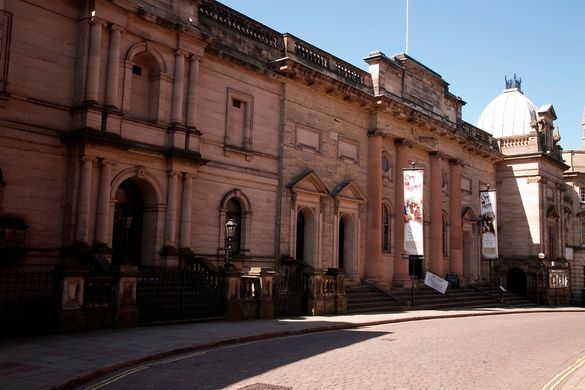
The trust was originally established 1993 following a huge fundraising effort, millions of pounds was raised to restore the site of Nottingham's Shire Hall. The Galleries of Justice Museum opened in 1995 and the NCCL followed in 2002. In 2004 the trust took over the running of Nottingham's City of Caves.
Since its origin, the organisation has won 34 awards including the prestigious Gulbenkian Prize for Museum of the Year in 2003 for recognition of the innovation of the NCCL and the Visit England Gold Award for Small Visitor Attraction of the Year in 2014.
Over the past few years The Egalitarian Trust and the breadth of its work has grown significantly. Since 2011 the trust has provided education programmes across the UK - which includes being the education provider for the Royal Courts of Justice in London. The new name reflects the national significance of the collection – which includes over 40 000 objects and archives, as well as the education work that the trust does at legal and heritage sites across the UK.
Following a brief closure from December 2016 to enable development works to take place, the National Justice Museum, Nottingham will open on Sat 11 Feb 2017.
FOR FURTHER MEDIA ENQUIRIES
For further enquiries or interview opportunities please contact Sarah Johnson on 0115 9939 827 or email sarah.johnson@nccl.org.uk
NOTES TO EDITORS
- The National Justice Museum will help people to gain a practical understanding of the law and justice system, empowering them to make positive changes in their lives and play an active role in their community.
- The museum's impressive collection consists of over 40 000 objects and archives, making it the UK's largest collection relating to law, justice, crime and punishment. The collection is made up of the following categories: Police, HM Prison Service, Legal, Technology and Law, Costume, The Rainer Foundation Archive and The Crime Writers Association Archive. Some of the museum's most well-known artefacts include: Oscar Wilde's cell door, the bath used in the Brides in the Bath murder case, gibbet irons, force feeding equipment used on suffragettes and conscientious objectors, Great Train Robbery evidence and the dock from Bow Street Magistrates Court used in cases such as the trials of Oscar Wilde, Roger Casement, the Kray's, George Smith who was responsible for the 'Brides in the Bath' murders and suffragette Emily Pankhurst.
- The museum attracts schools, families and adult visitors from across the UK and beyond including visitors or learners from Australia, the USA and China. Over 120, 000 people visited our sites in 2015/16. As well as the extensive collection, visitors come to experience the museum's grand Victorian courtrooms, 17th century dungeon, the 1800 prison cells, dayrooms and 1833 prison wing and the 1905 police station. The museum's rich history led to it being voted the most haunted building in the UK in 2014. The museum attracts paranormal groups from across the UK who run regular overnight investigations to find out more about the site's spooky history and the characters that resided within it.
- A leader in public legal education, the museum's hugely popular education activities are delivered at authentic historical and working courtrooms across the UK, including the Royal Courts of Justice in London. Education programmes encourage people to reflect on what is right and wrong, helping to create a more just society. 22,739 young people took part in education sessions in 2015/16.
- The National Justice Museum is a registered charity number 1030554. They are an independent museum and do not receive any core funding from local or national government. Funding from trusts and foundations, sponsorship and charitable donations from individuals allow the museum to deliver learning activities that raise aspirations and empower more people to make positive changes in their lives. Some of the projects that rely on charitable donations include:
o Help a Child – An early intervention project that aims to keep children away from crime by teaching them about the law and how to live within it.
o Virtual Justice – Aims to safeguard and prevent young people from becoming involved in cybercrime and harassment online.
o I Pledge – An early intervention project that focuses on the contemporary justice system.
o Creative Courtroom UK – An outreach programme facilitated by a diverse group of interns that enables children and young people to explore an alternative interpretation of the law in their own communities via a pop up courtroom.
o Transformers – Uses our collection to teach adults and families about the law, improve literacy, encourage debate, explore ideas about right and wrong and empowers people to make positive changes to their lives.
o Take to Law – A social mobility project that gives young people the opportunity to learn about the law and justice system and the careers within it.
About the Heritage Lottery Fund (HLF)
Thanks to National Lottery players, we invest money to help people across the UK explore, enjoy and protect the heritage they care about - from the archaeology under our feet to the historic parks and buildings we love, from precious memories and collections to rare wildlife. www.hlf.org.uk @heritagelottery