 23 Sep 2004

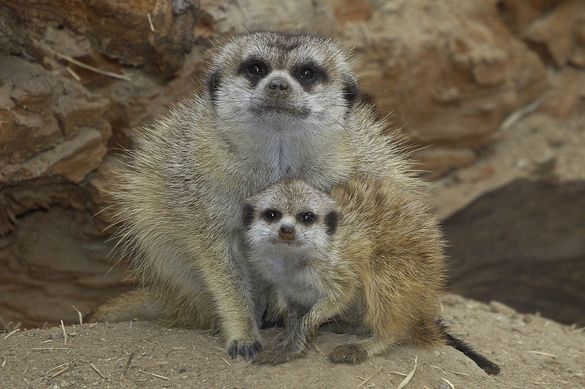
A mob has been formed at the San Diego Zoo with the addition of a baby meerkat, born on Aug. 3. The unnamed infant is a female, joining four adults (one male and three females) to form a group of meerkats for public viewing near the Kopje exhibit.
The Zoo is also home to three meerkats found at the Children�s Zoo and a pair at Elephant Mesa.
�This birth is significant for the Zoo because the baby meerkat represents the fifth member which makes them a social group,� said Mike Langridge, keeper at the Zoo. �A group of meerkats usually consist of five to 30 members and are referred to as a �mob� or �gang�.�
Weighing an estimated � pound, the baby meerkat is captivating the Zoo�s animal care staff with her energy and taste for mealworms.
�She has an endless appetite,� adds Langridge. �She�s growing and developing at a good rate and appears to be really comfortable in her new surroundings, showing signs of minor digging and vocalization amongst the other meerkats.�
Meerkats, commonly found in South Africa and the Kalahari Desert, dig burrows for protection from predators, napping and a maternity den.
They are also known as the solar panel of the animal world. On a sunny day, meerkats will use their tails as a backrest and face the sun to absorb the sunlight onto their sparsely furred bellies to warm up.
Guests visiting the Zoo can view this new mob on exhibit or on the 40-minute guided bus tour. The Zoo is open daily from 9 a.m. to 4 p.m. and guests may remain on grounds until 6 p.m.
The 100-acre San Diego Zoo is operated by the not-for-profit Zoological Society of San Diego. The Zoological Society, dedicated to the conservation of endangered species and their habitats, engages in conservation and research work around the globe. The Zoological Society also manages the 1,800-acre San Diego Zoo�s Wild Animal Park (more than half of which has been set aside as protected native species habitat) and the Center for Reproduction of Endangered Species (CRES), and is working to establish field stations in five key ecological areas worldwide.
###
Media Contact: Paul Garcia +1 619-685-3291 pgarcia@sandiegozoo.org