 31 May 2015

MIAMI SEAQUARIUM: FUN-PACKED EDUCATION
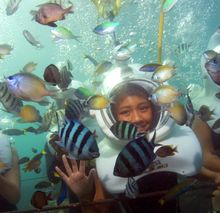
MIAMI -- What makes Mr. Rogers, Sesame Street and Mr. Wizard so popular? It's entertainment that teaches ... and it's fun! Guests at Miami Seaquarium experience spectacular marine-life-shows, presentations and exhibits while learning about animals in a hands-on, fun-filled day. Audience members get to see, hear and experience the natural abilities and beauty of animals that most people only dream of encountering. Through education, conservation and research, Miami Seaquarium provides exciting ways to inform the public about marine animals and motivate them to help protect our delicate ocean environments.
Education
Education plays a prominent role in the park's mission. Informative segments are incorporated through all shows and presentations in the park, while new educational programs are constantly developed. Miami Seaquarium officers one-day camps, Spring and Summer camps, scouting programs, home school studies, mommy & me programs, field trips, guided tours for school groups, teacher workshops and outreach programs. Overall, more than 70,000 people a year participate in Miami Seaquarium educational programs.
All of these education programs are designed to teach participants about the animals featured in the park and what role each plays in the ecosystem. Using activities, projects, games and interactive discussions, instructors inform students of the many ways they can help conserve endangered animals and marine habitats.
Conservation
Since Miami Seaquarium opened in 1955, hundreds of distressed manatees, sea turtles, dolphins and whales have been saved through the rescue and rehabilitation efforts of the park. With one of the most experienced marine mammal rescue and rehabilitation teams in the country, Miami Seaquarium has long been at the forefront of animal rescue techniques. Miami Seaquarium Animal Rescue Team includes divers, staff veterinarians and animal caretakers -- on call 24 hours a day, seven days a week. When a distressed marine animal is spotted, the Florida Marine Patrol, the U.S. Fish and Wildlife Services, or the Florida Department of Environmental Protection informs the Miami Seaquarium of the sighting. A scout is sent out to evaluate the situation and, when warranted, the rescue team is activated.
Over the past several years, there has been an increased demand for the care of baby manatees. In order to meet this need, the manatee care unit began a prenatal program. Miami Seaquarium staff evaluated a manatee mother's milk and created a formula to feed to the rescued orphans. The mixture consists of Isomil, goat's milk, water and dry multi-milk. The calves are taught to nurse from a bottle. If a lactating female is available, the baby is typically placed with her and in most cases the orphan will eventually be adopted and begin nursing from the "foster" mother.
Emphasis is placed on conservation awareness through Miami Seaquarium shows, presentations, educational programs and exhibits. The marine-life park also sponsors free environmental lectures and workshops to further promote awareness in the community
Research
Miami Seaquarium is one of the industry leaders in marine research. Currently projects are being conducted on manatees, dolphins and sea turtles in areas such as immunology, pathology, reproductive physiology and microbiology.
Joint research projects are also being done in collaboration with colleges and universities including the University of Miami School of Medicine and UM's Rosenstiel School of Marine and Atmospheric Science, Florida International University, Florida Atlantic University and Eckerd College; government agencies, such as the Department of Environmental Protection, U.S. Fish and Wildlife Service, and National Marine Fisheries Services; and other institutions including the Dolphin Research Center, Lowry Park Zoo and the Sea World Parks in Texas, California, Ohio and Florida.
One of the main goals of Miami Seaquarium is to educate the public about the dangers facing our ocean environments. Miami Seaquarium focuses on informing people about these issues with the belief that through heightened public awareness, and conservation and research efforts, future generations will be able to enjoy our oceans and their inhabitants.
Miami Seaquarium is authorized by the U.S. Fish and Wildlife Service and the Florida
Department of Environmental Protection to rescue and rehabilitate manatees and other sea life.
###