 28 Jul 2000

The continuing major capital investment by our owners, Village Roadshow, Warner Bros. and the Sea World Property Trust demonstrates the confidence they have in the future of Queensland and Gold Coast tourism.
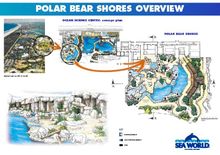
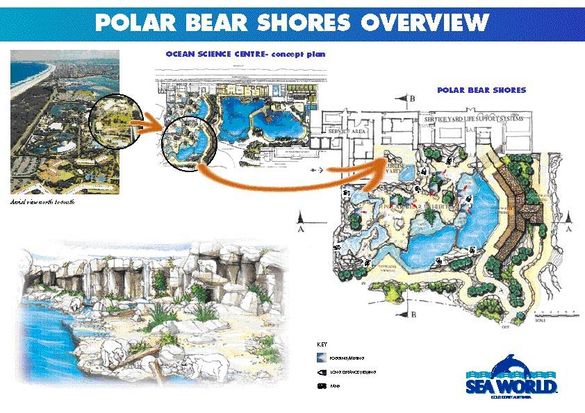
Mr Menzies said stage one of the new attraction, known as Polar Bear Shores, is due to open in December 2000. Stage two a large shark facility is planned to follow within a three year period. The Ocean Science Centre - a journey "through the extremes" from the North Pole via the Barrier Reef to the South Pole - will take up two hectares and will feature large lagoons and underwater viewing surrounded by lush landscaping.
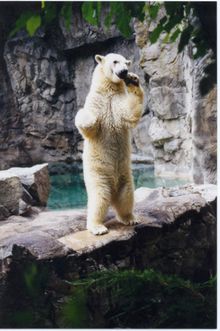
"Polar Bear Shores will lead the world in providing a naturalistic and stimulating polar bear environment utilising the latest in polar bear keeping technology and drawing on international research and knowledge. The development will feature the tundra environment of the Arctic summer in a state-of-the-art display, and will extend educational frontiers and public awareness about these massive marine mammals and the conservation issues surrounding them," he said.
Polar Bear Shores will continue Sea World's tradition of establishing professional marine zoological habitats which are as close as possible to natural environments.
"The most recent example of this is Sea World's Dolphin Cove, opened in 1997, which has set new global standards for marine mammal exhibits. Visitor feedback and recent research has endorsed this approach as the most favoured direction for new attractions."
Sea World has many years experience in the care, conditioning, enrichment and educational interpretation of marine mammals such as dolphins and seals, and has earned an enviable reputation for its professional and dedicated contribution to marine mammal conservation.
"We will draw upon this vast experience to create an innovative polar bear development which will stimulate the mental and physical well being of our animals," Mr Menzies said.
Polar Bear Shores will feature natural substrates, typical natural vegetation, rocks and logs, and will incorporate chilled water pools, a running stream, shade cover, water misters, wind generators, diving and climbing opportunities, air-conditioned bear quarters and an extensive behavioural enrichment program. The large main pool will be up to four metres deep to encourage diving, and will be intermittently stocked with fish to allow the bears to hunt for food.
Visitors to Sea World will be able to observe the polar bears' skilled and graceful underwater swimming and hunting abilities through large underwater viewing windows, and will be treated to fascinating interpretive information about the animal, delivered by Sea World educators.
"This development will allow Australian and overseas visitors to gain an understanding and learn more about another magnificent and perfectly adapted marine mammal, the polar bear," said Mr Menzies.
Polar bears are listed as vulnerable by the IUCN (International Union for the Conservation of Nature) commonly known as World Conservation Union. This means that this special "sea bear" may move onto the endangered list if the factors which are harmful to its populations in the wild (mainly habitat degradation) continue at their present rate.
Mr Menzies explained that a number of zoological parks around the world are playing a part in the conservation of this fascinating animal. For example, the Bear Taxon Advisory Group (BEARTAG) of the American Zoo and Aquarium Association (AZA) is made up of zoo professionals working with bears, and other individuals who have special expertise to share, including representatives from other conservation organisations and government wildlife agencies. (AZA) BEARTAG is responsible for developing long and short term recommendations for utilising the captive populations of bears in North America as a means to support the conservation of free-ranging bears. A North American regional studbook is maintained on the polar bear (a studbook is a breeding management tool which ensures that captive breeding is scientifically based).
Sea World on the Gold Coast, has arranged to obtain captive-bred polar bears on loan from an AZA accredited zoo in the USA, as well as China.
"The animals located at Sea World are genetically valuable to the global captive population, and we will actively participate in (AZA) BEARTAG's studbook breeding program, meeting all requirements, and therefore, contributing to the conservation of the species," said Mr Menzies.
"Sea World is very willing to meet the costs of this participation so that it can provide an opportunity for Australian and overseas visitors to learn about these unique animals and how human activities can harm their survival in the wild."
"I look forward to the opening of Polar Bear Shores, and to welcoming visitors to the park to share in this incredible educational experience," said Mr Menzies.
- ENDS -
Media information: Ilka McCouat, Communication Executive Sea World Ph: 07 5588 2275 or 0408 759 659