 23 Sep 2003

Sampling mouthwatering local delicacies is a highlight of every visit to Malaysia. The multicultural country has an enormously varied banquet of foods on offer. Spicy smells and exotic fruits greet you at every street corner. And the delectable flavors are complemented by very palatable prices.
Malaysians are strong believers in an appetizing yet balanced and sensible diet. They believe in the Cantonese origins of the yin and the yang. The yin, symbolizing cooling, is representative of vegetables, fruits and clear soups. While the yang, symbolic of heating, is important for a balance with starch foods and meats. The principle of yin and yang make the typical Malaysian diet healthy and varied.
Malay Cuisine The signature of many Malay dishes is the presence of key spice ingredients including chili, lemongrass, ginger, turmeric, cumin and curry leaf.
Satay is one of the most famous aspects of Malay cuisine, now available all over the world, but of course at its best at home. Laksa also has its origins in Malaysia and is widely available across the country.
Malay meals are almost always accompanied by rice which may be served in a variety of ways. Very popular are both nasi lemak (rice cooked with coconut milk and served with fried anchovies in hot chili paste, boiled egg and sliced cucumber) or nasi goreng (fried rice). There is also the delicious nasi ulam (rice eaten with a variety of herbs), nasi dagang (glutinous rice served with chicken or tuna curries and vegetable pickle) or nasi kerabu (rice eaten with salted fish, fresh long beans, some herbs and a fish-based sauce) favoured by Malays in the Terengganu and Kelantan states.
If rice is absent then you can bet there�ll be noodles. Some noodle favorites are mee hailam (noodles fried with thick soya sauce, shrimps, fish cakes and vegetables), mee goreng (noodles fried with a little dose of chili paste, shrimps and vegetables), mee rebus (noodles served with shrimp and peanut curry gravy soup), mee sup (noodles served with chicken or beef soup) and the tasty and rich laksa (noodles in fish curry gravy soup).
Chinese Cuisine Chinese food is one of Malaysia�s specialties. The all-famous hokkien noodle is a tasty favorite, while the Szechuan style is a winner for those preferring the fire in their food. Cooked on a revolving spit, Beijing duck very popular, as is the teochew, an appetizing dish made with noodles, clams, egg, chili and black bean. Hawker stalls are the favorite spots for Chinese cuisine. Roadside stalls usually open until midnight.
Indian Cuisine Local Indian cuisine can be categorized into Northern Indian, Southern Indian and Indian-Muslim (Mamak) cuisine. The large arrival of Indian immigrants in Malaysia centuries ago, brought a variety of spicy and sumptuous Indian meals into the country. Northern Indian dishes are mostly meat-based and rich in cream and ghee. Southern Indian dishes contain a huge dose of coconut milk, tamarind juice, yoghurt and curry leaves while Indian-Muslim cuisine mostly comprise of rice and vegetables with rich, thick curries.
Besides delicacies derived from the Malaysia�s three main races; Malay, Chinese and Indian, the cuisine also comprises fusion classes of food from cross-cultural influences such as Mamak (Indian-Muslim) and Nyonya (Malay-Chinese). Each dish tends to vary slightly, depending in the region, with each region having its own characteristic interpretation.
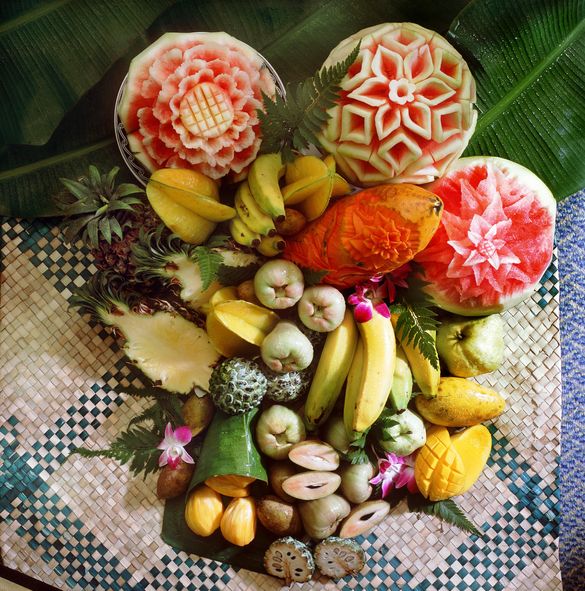
Malaysia is rich in exotic fruits. The rambutan, with its odd spiny exterior, is very fresh tasting. It is similar in taste and texture to the lychee. The mangosten, with its magnificent deep purple shade, has an alluring sweet and sour flavor, likened to a combination of strawberries and grapes. Other widely available fruits include the mango, the juicy custard apple and the watery starfruit.
And after a more than satisfying meal, another uniquely Malaysia experience lies around the corner. The potent liqueur Samsu, (up to 70% alcohol) is believed to have amazing curing powers for a variety of purposes from indigestion to rheumatism.
Bon apetit in Malaysia!
Media contact: Penny Brand Ph: (02) 9328 5441 Email: penny@gate7.com.au