 20 Oct 2003

Just like the multiplicity that fames Malaysian landscape, her culture is richly diverse. The interesting blend of customs, religions and traditions culture of Malaysia has evolved over fifteen hundred years. In the fifth century the Bujang Valley was visted by Chinese and Indian traders, bringing both Buddhism and Hinduism into the region. Years later Arab traders brought Islam cultures into Malacca. The Portuguese in turn, followed the Arab traders. This combination evolved together to create the fascinating multicultural facets of today�s Malaysia.
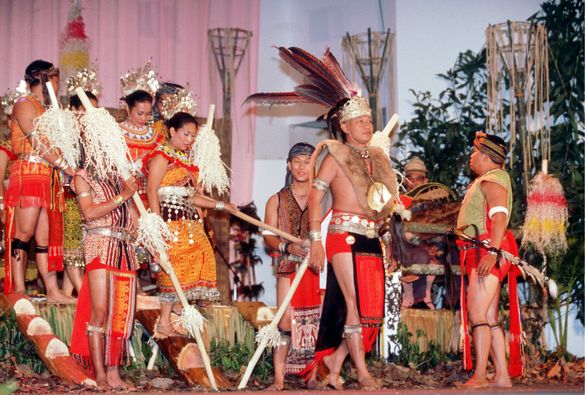
Today, Malaysia�s largest ethnic group is the Malays, accounting for more than half of the total population and language and mostly practicing the Muslim religion. Indians make up around 35% of the population and the Chinese around 10%. In addition, there are still many groups of indigenous peoples, particularly amongst the tribes of Sarawak and Sabah. The variety of religions found in Malaysia is a direct reflection of the diversity of races living there. Muslims, Buddhists, Hindus, Taoists and Christians are all actively practicing throughout Malaysia.
The east coast of Peninsular Malaysia is predominately inhabited by Malay people. It�s in this area that Malay arts, crafts and culture are most prolific. Islam is the social fabric of Malay society and they are devout followers of the religion. The kampung or village, lies at the heart of the Malay life. Traditional Malay pastimes include kite flying and top spinning.
Malaysia�s variety of gastronomic culinary delights is another aspect that has drawn from each of its constituent cultures and neighbouring countries. Chinese, Indian and Thai are the three main sources of cuisine of Malaysia. While the succulent fruit and fresh seafood add to this tantalizing variety.
The wayant kulit (shadow play) are shadow puppet performances that are of Hindu heritage. Performances can last for many hours and are often the feature of weddings, or after a harvest.
The various forms of traditional Malaysian dance highlight the multiracial nature of the country. From the menora, a Thai origin dance featuring grotesque masks, to the joget, a Portuguese origin upbeat dance by couples, the dance styles are varied. Silat - a graceful Malaysian dance, originated as a lethal martial art. The dancer performs elegant routines to the sound of a beating drum and other instruments. The candle dance is spine tingling. The dancer performs refined movements with hypnotic candles in each hand.
Traditional Malaysian music is centered on the gamelan, an Indonesian string instrument producing a muffled sound. The Malaysian drums usually accompany this. The music often has strong Islamic and Chinese influences.
Media Contact: Penny Brand Ph: (02) 9328 5441 Email: penny@gate7.com.au