 30 Oct 2015

The on-going emergence of Malawi's wildlife received another great boost recently as African Parks concluded an agreement with the Government of Malawi to manage and operate Liwonde National Park and Nkhotakota Wildlife Reserve for the next 20 years.
In one of Africa's great conservation success stories, African Parks have already transformed Malawi's Majete Wildlife Reserve over the last decade from a neglected, rarely visited reserve of few animals to a thrilling Big 5 destination. With these two latest reserves already in a more advanced state than Majete was, it won't be long before the wildlife is thriving and Malawi has 3 reserves offering some of the highest quality safari experiences in the region!
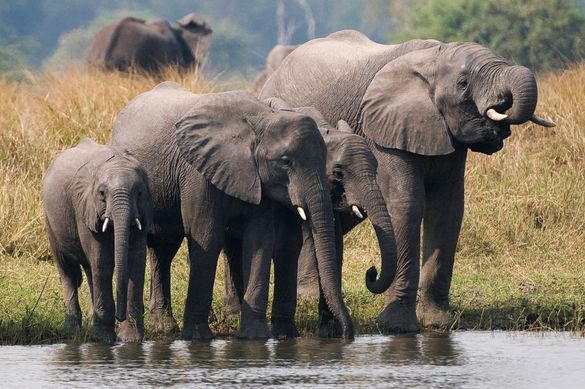
2016 will mark the beginning of a big change in the country thanks to the $18 million African Parks investment. Liwonde National Park, located in southern Malawi is 548 sqkm in size and consists of woodland, floodplains, grasslands, and lagoon. It supports the largest remaining population of elephants in the country as well as one of two populations of black rhino. Other mammal species include: hippo, hyena, buffalo, warthog, several antelope species and more than 400 bird species. Lions were once commonplace and the healthy populations of other large mammals will allow for the quick reintroduction of predators.
First actions for Liwonde include fencing the entire 130km perimeter of the park, implementing dedicated elephant patrols to push elephants back into the park to prevent conflict situations. Restocking of locally extinct species including cheetah and wild dogs are planned within the next 3 years.
In a less mature state than Liwonde, Nkhotakota Wildlife Reserve is located in the central region of Malawi and is 1,800 sqkm, lying within the miombo woodland zone. It is a major catchment area for Lake Malawi. Although a depleted park, it still has remnant populations of elephant, warthog, baboon, and various antelope species as well as 280 bird species. Well managed, it has the potential to become an important area for elephant conservation in Malawi. Black rhino, lion, cheetah and wild dog once existed but are now all locally extinct.
Priorities for Nkhotakota are the creation of infrastructure including park offices, 150km of access roads and improved protection of the reserve focusing increasing patrols to reduce anti poaching in the area. Plans are in place for translocation of a large amount of wildlife including 400 more elephants and 600 general antelope species to the reserve.
As a priority with all African Parks rehabilitation programs, initiation of community projects including scholarships, employment and major education projects to establish conservation value are of utmost importance in establishing a sustainable and profitable reserve
If Malawi had a weakness, it was that some of its neighbours had more wildlife, but this development will result in a total transformation of its wildlife and safari offering. Malawi will become one of the most complete destinations in Africa - Lake, Landscape, Culture and now Wildlife experiences of the very highest quality. Warm, welcoming and unspoilt, Malawi really is just waiting to be discovered.
FOR FURTHER INFORMATION PLEASE CONTACT:
Adele Cutler, Malawi Tourism PR
Tel: +44 (0)1664 823750 M: +44 (0) 7976 578988 adele@kamageo.com
NOTES TO EDITOR:
More information on Malawi Tourism Website: www.malawitourism.com
ABOUT AFRICAN PARKS:
African Parks is a non-profit organisation that takes on total responsibility for the rehabilitation and long-term management of national parks and protected areas in partnership with governments and local communities. With the addition of Liwonde and Nkhotakota tour portfolio, they now manage 10 national parks and protected areas in seven countries: Malawi, Zambia, the Republic of Congo, the Democratic Republic of Congo (DRC), the Central African Republic (CAR), Chad and Rwanda. The inclusion of the two protected areas also increases the land under their protection in Africa from 5.9 million hectares to 6.15 million hectares.