 27 Nov 2014

Louisiana Coast, November 2014 – The coast of Louisiana has long been known for its delicious seafood, charming residents and natural beauty … but it's also the site of events that forever changed the course of American history. Among these was the Battle of New Orleans, considered the greatest American land victory during the War of 1812. Fought in the town of Chalmette in St. Bernard Parish on January 8, 1815, this is the battle in which U.S. Major General Andrew Jackson led a team of about 5,000 soldiers – regular troops, state militiamen, volunteers from many different cultures and backgrounds, and even a band of pirates – to victory against 7,000 British soldiers. On paper, it seems impossible that such a hastily assembled army of men (many of whom had no official training and who had never fought together) could possibly triumph over a British army that seemed superior in every way. But in what some scholars have described as a military miracle and during a battle waged in such typical Louisiana locales as cypress swamps and sugarcane fields, Jackson and his troops were indeed victorious.
In just a few weeks, members of the Louisiana Tourism Coastal Coalition and other residents of this region will commemorate the bicentennial of that fateful event … and they invite guests from all over to come get a history lesson, Louisiana-style. Special events are scheduled for January 6-11, 2015.
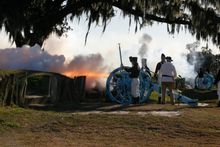
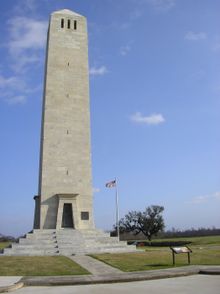
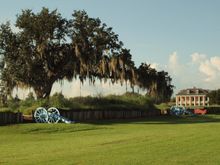
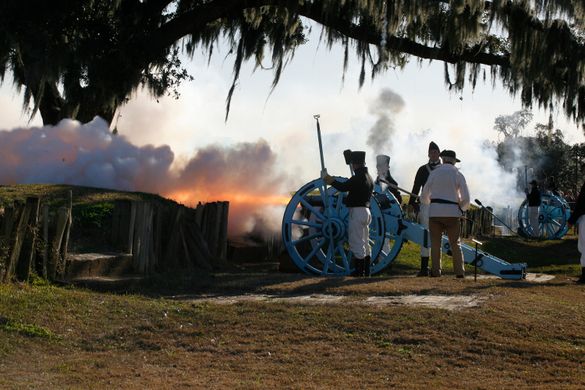
The story of the Battle of New Orleans is told year round at Chalmette Battlefield, part of Jean Lafitte National Park and Preserve. Free ranger talks take place at the park Tuesdays through Saturdays at 2:45 p.m., and visitors from neighboring New Orleans can access the site via a trip aboard the Creole Queen excursion boat, which docks at the battlefield. The National Park Service's theme for the bicentennial is “Celebrating Unity,” which acknowledges the unity among the American troops, who represented a diverse assemblage of races, religions, social classes and languages, as well as the unity between the United States and Britain, one-time enemies that ultimately emerged into true allies. If it seems that the War of 1812 and all its various battles have fallen into a state of obscurity in the past 200 years, perhaps that's a testament to the very unique camaraderie that has since emerged among the United States, the United Kingdom and Canada.
For more information about the 200th anniversary of the Battle of New Orleans, visit www.battleofneworleans2015.com. For details about everything else that makes coastal Louisiana such a fascinating place to visit or to begin planning a trip, please check out www.visitlouisianacoast.com.
10 Fascinating Facts About the War of 1812 and the Battle of New Orleans
- The War of 1812 was the result of a bitter conflict between Great Britain and France. As part of that conflict, each of the countries was attempting to block the United States from trading with the other, resulting in significant economic concerns for the still-young country. Ultimately, the United States entered the war to secure its maritime rights, reduce British influence over Native Americans, and attempt to annex Canada.
- This was the closest vote to declare war in American history. It had implications not just on European descendants who had chosen to settle in the United States, but also on Native Americans, whose land and liberty were being threatened by both the United States and Britain, and on enslaved and free people of color in the States, who were courted by the British to take up arms against the Americans.
- The war didn't start off well for the Americans, who had a very small army and no true navy. Ironically, the few victories that came to the United States took place on the water.
- It's popularly thought that the British were so busy trying to battle Napolean in Europe that they weren't as focused on what was happening in their former North American colony. But once they defeated Napolean in 1814, the British turned to their attention to winning the war in the United States.
- Two major events that took place after that turning point were the burning of the White House on August 24, 1814, during James Madison's presidency, and the Battle of Baltimore a few weeks later, which inspired Francis Scott Key to write “The Star-Spangled Banner.”
- Though the Treaty of Ghent, which ended the war, was technically signed on Christmas Eve in 1814, it wasn't ratified by the United States until the following February … which meant that fighting continued into 1815.
- The Battle of New Orleans wasn't actually fought in New Orleans but was so named because it was the battle fought for the famous city, since British troops were intent on capturing its port.
- In less than two hours during the battle, more than 2,000 British soldiers were killed, wounded, captured or missing … compared to a mere 71 American casualties (13 dead, 39 wounded, 19 missing). Among the British dead was their commanding officer, General Edward Pakenham.
- The Americans succeeded in driving the British away from Louisiana and its ports, and Great Britain was forced to recognize the United States' claim to Louisiana. For many, the battle became a prime example of American democracy and ingenuity defeating the more typically European ideals of aristocracy and entitlement.
- Andrew Jackson became an American hero whose popularity eventually led him to serve as the seventh president of the United States (and landed his image on the $20 bill!). But three other men who played roles in the War of 1812 also ended up at the White House – James Monroe (president #5), John Quincy Adams (#6) and William Henry Harrison (#9).
###
Mindy Bianca
212-724-7783
LTCC-11-November 2014