 21 Apr 2006

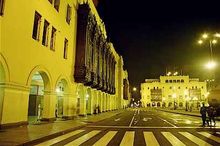
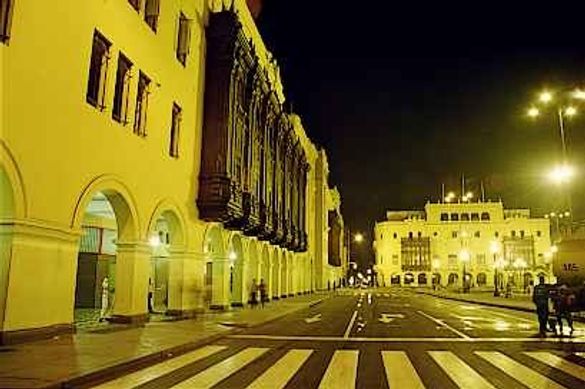
Lima, a city of pure contrasts is a true metropolis. With more than 460 years since its founding as a Spanish city, Lima has become a synonym of Peru�s mestizo heritage, one that baffles those in the know and first-time visitors alike. There are hints of its glorious past in the churches, in the beautiful, colonial carved wood balconies and in architecturally magnificent buildings such as the Government Palace (where the changing of the guard, dressed in the uniform of the original viceroy's guard, takes place every day just before 1pm), the Lima Cathedral, the Archbishop's Palace, and the splendid colonial homes around the Historic Center. Lima offers tourists a vast history to explore, superb museums, dozens of art galleries, exciting theater productions, numerous cultural exhibitions, folklore shows, modern shopping malls and recreational areas, in addition to archaeological and natural attractions.
History
The city of Lima, located on the shore of the Rimac River and the Pacific Ocean, was founded by the Conquistador Francisco Pizarro on January 18, 1535. Lima became known as the City of Kings, not only because the name is associated with the position it once held as the capital of the Spanish viceroyalty but because Pizarro had planned to discover the city on January 6th, the day of Epiphany. From the beginning, Lima was an oasis of culture and elegance in the American Indies. Just a few decades after it was founded, Lima already rivaled Mexico as the most important metropolis in the Spanish-American Empire. Baroque and Renaissance churches, mansions, palaces, universities and archdioceses filled Lima in its early days. The cultural scene hummed positively as early as the beginning of the seventeenth century, when Lima had a population of just 25,000.
Attractions
Main interest lies in the Historic Center, where one can feel the city's pulse in the bustling streets full of locals and vendors. Historical Lima should be seen on foot, taking the route along pedestrian walks to the church of San Francisco and its mysterious catacombs, the Lima Cathedral, a true colonial work of art; the Santo Domingo Convent; the Torre Tagle Palace, one of the finest examples of colonial architecture in Peru; Aliaga House, the oldest standing mansion in Lima; and then into the bustle of Chinatown in the heart of the Central Market. The infamous National Museum of Anthropology and Archeology houses an extensive collection of pre-Columbian artifacts and maintains an outstanding international reputation for its curatorial and presentational accomplishment. Also famous is the Gold
Museum, a private museum entirely devoted to displaying the legendary treasures of Peru's ancient, pre-Columbian civilizations.
Visitor tours are available on the traditional 'urbanito' buses from the Plaza Mayor (the Main Square), up to the top of Cerro San Cristobal where the 20-meter high cross that is lit in the evenings has kept watch over the people of Lima for 71 years. People believe the cross is miraculous, and many walk on pilgrimages to the top of the hill during Easter Week and on the first Sunday in May.
Sprinkled between the modern and traditional neighborhoods lie the prehispanic funeral mounds or huacas, which still conceal many secrets of the ancient civilizations that lived on the land. The untouched ancient temples and archaeological sites stand out against the bustling metropolis. In the heart of San Isidro stands the Huallamarca complex. In the ancient Quechua language, hualla means uneven, and marca means town. The name stems from the early remains of the structure and spiral ramps dating back to Inca times. One of the most famous and best conserved huaca in Lima is the Huaca Pucllana, where visitors can walk around the site and savor the best of Peruvian cuisine at nearby restaurants.
Miraflores
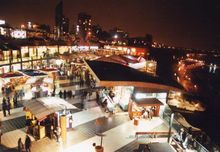
Lima�s foremost tourist area and hip hotel district is without a doubt Miraflores. This district features spacious modern shopping areas, well-maintained parks and numerous gardens full of Peruvian fauna. Besides being well known for its flower-filled parks, Miraflores is also known for its beaches, which are part of the �Costa Verde� area and draw thousands of beach goers and surfers in the summertime. In Miraflores, one will witness many cultural sites and events at theaters, cinemas, and art galleries. A visit to Huaca Pucllana, the pre-Inca mud-brick temple and archeological site is also a must. In addition, the district teems with cozy cafes, pubs, chic restaurants, a wide array of shopping, open-air concerts and flee markets that are filled on weekends with Lima�s locals.
San Isidro
Known as Lima�s �garden� district for its green zones and exclusive residential areas, San Isidro features many of the city�s finest restaurants, hotels and concert halls. Despite the recent boom in building development in the area, San Isidro has kept its aristocratic feel and centuries-old olive grove in the area of Olivar. The district also features the pre-Hispanic temple, Huallamarca, famous for the varied concerts and exhibitions held there year round.
Shopping
Lima, the most cosmopolitan city in Peru has numerous shopping centers, malls, boutiques and large department stores. A great diversity of national and international designers and brands are available at your reach. Garments made of pima and tanguis cotton, two varieties of Peruvian cotton that are the finest in the world are recommended, as well as garments made with alpaca wool that after the vicu�a wool, is considered as one of the finest fibers in the world. The Jockey Plaza Shopping Center, a modern shopping center considered the best in South America has almost 200 exclusive shops.
Lima also offers an endless choice of handicrafts. Arts and crafts vary greatly, some made of clay, cloth, wool, stone, leather, tin and wood, and painted in multiple colors. The Indian markets in Miraflores, the areas surrounding the Plaza Mayor, and Avenue La Marina are the best spots to see the extraordinary creativity of Peruvian folk artists. Handcrafted jewelry, full of inherited art and ancient tradition are available in many shops. Beautiful pieces in contemporary designs and in the more traditional filigree in gold, silver and semi-precious stones are available in many of Lima�s fine stores.
The Petit Thouars Handicraft Market offers textiles, handmade wool sweaters, ceramics, silver and gold jewelry, bomboo quenas, traditional outfits and alpaca carpets. It is located in Miraflores, on Petit Thouars Avenue. The Indio Market (Mercado Indio), located between 6th and 10th on Avenue La Marina, is a colorful market that also specializes in crafts. Shoppers can bargain for fine woolen clothing, carved wood, tooled leather cushions, stools, silver jewelry, and other curios.
Nightlife
Lima has a busy nightlife with a wide variety of activities to suit every taste. The fun begins just after sunset, at popular karaoke bars, sals�dromos (great places for tropical salsa dancing), pubs and discos, or at folk music shows where visitors ends up singing and dancing to the rhythm of the Peruvian percussion. Peruvian folk music derives from Andean heritage (huainos and carnavalitos) as well as African (festejo, land�) and European Colonial roots (valses and marineras). The party at these places lasts until dawn, oftentimes ending with a Creole breakfast of tamales, rolls with fried pork and chicken soup; or if you prefer, with the Peruvian pisco sour on the beachfront.
Lima�s restaurants offer not only traditional Peruvian dishes, but also Italian, French, Indian, and Asian and daring fusions cuisines. First class restaurants are a mandate in Peru as a few years ago the Peruvian government decreed that the most important gambling casinos should have an adjacent first-class restaurant. Therefore, first-class restaurants abound and since Peru is known for its exquisite cuisine, the offerings are endless. The majority o Lima�s best restaurants are located in Miraflores, though some can be found in San Isidro, Surco and Baranco.
For more information about planning a visit to Peru, call 1-866-661-PERU or visit www.peru.info