 25 Apr 2013

Prehistoric rainforests. Sacred mountains. Quaint villages centred on historic pubs and roadside stalls selling fresh local produce.
It's not exactly the sort of holiday experience people normally associate with Australia's glitzy Gold Coast, but just south of the Queensland border, a short drive from the Gold Coast Airport, lies a very different side of paradise.
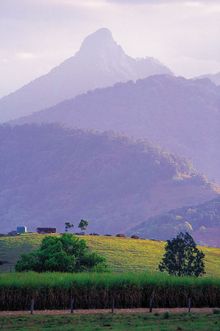
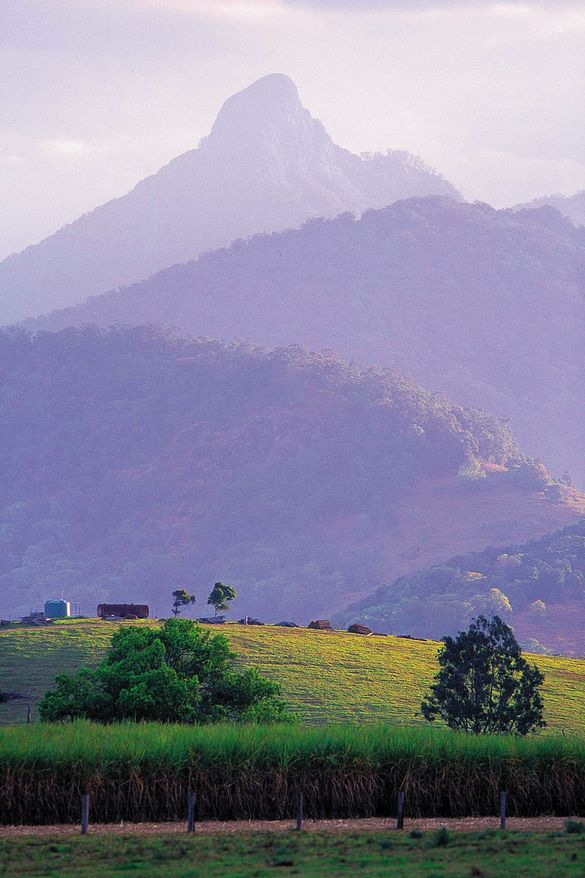
Stretching over 5000km2 of northern NSW and south-east Queensland, the Mt Warning Wollumbin Caldera encompasses the remnants of the largest and possibly best preserved shield volcano in the southern hemisphere.
Known as 'Australia's Green Cauldron', the region has been named by Tourism Australia as a National Landscape; marketed internationally as “a must-see destination for travellers who want to discover the real Australia” … and yet, few locals realise what is sitting in their own backyard.
The story began about 20 million years ago when the volcanoes that lie along what is now the NSW / Queensland border began bubbling lava. When they had finished some three million years later, what remained was mighty impressive: A rippling landscape of high peaks and valleys, which has since evolved into a biological wonderland so rich with life that the region now is home to 14 national parks with World Heritage listing.
Circling out from the towering peak of Mt Warning, the eroded remnants of this ancient volcanic caldera stretch from ByronBay to the Gold Coast and west to the foothills of the Great Dividing Range.
Deep in the valley, rich red volcanic soils and an idyllic sub-tropical climate nurture patchworked sugarcane fields, dairy pastures and abundant market gardens that produce unique regional specialties such as native fingerlimes, lemon myrtle and macadamia nuts, while the higher slopes offer the ideal micro-climate for tea, coffee and banana plantations.
Framing this picture-postcard scene of rural serenity is the age-old escarpment and the tracks of ancient lava flows, forming a majestic semi-circle of mountain ranges blanketed in mystical rainforests.
These National Parks - Lamington, Springbrook, the Border Ranges, Nightcap and Mebbin, just to name a few - form part of the Gondwanan Rainforests of Australia, inscribed on the World Heritage list in 1975. They provide some of the best bushwalking in Australia on a series of clearly marked trails ranging from a few hundred metres to the 54-km Gold Coast Hinterland Great Walk from GreenMountain to the Springbrook Plateau.
Renowned for their incredible biodiversity of Australian native flora and fauna, the rainforests are also home to rare and exotic species found nowhere else in the world. On the bushwalking tracks, you could encounter the Spiny Blue Crayfish as it travels overland from one stream to the next. Deep in the rainforests, you might spot the shy Albert's Lyrebird or hear the crack of the Whipbird. And in the pristine mountain pools, keep an eye out for the endangered Fleay's Barred Frog and the Australian Marsupial Frog that carries its young in tiny pouches like a kangaroo.
For those who prefer to explore by car, a series of scenic drives have been mapped out as part of the Rainforest Way touring route.
On any of these routes, you can stop along the way to sample unique tropical fruits from rustic roadside stalls; browse local artworks and crafts at country galleries and weekend markets; call in for a cleansing ale at a traditional Aussie pub; stay overnight in the rainforest at a cosy B&B or luxury retreat; and meet the true-blue characters who love sharing the hidden secrets of their home with those who come to visit.
The Mt Warning View Circuit takes you right around the base of the TweedValley's iconic landmark, skirting beneath the rim of the caldera walls.
Travelling from Murwillumbah to Crystal Creek, Chillingham, Limpinwood, Tyalgum, Byrill Creek, Uki and Mt Warning National Park, the 95-km loop is easily covered in a day but with so much to see and do en route, an overnight stay at Hillcrest B&B, Crystal Creek Rainforest Retreat, Limpinwood Lodge or any one of the B&Bs in and around Uki make it a much more leisurely experience.
For a real off-the-beaten-track adventure – and absolutely gob-smacking views – the 90-km Tweed Range Scenic Drive takes you up along the top of the caldera walls through the BorderRangesNational Park.
Along the mostly unsealed road (probably best suited to 4WDs), there are lots of places to get out and stretch your legs, following the marked bush tracks to ancient stands of Antarctic beech trees, along the banks of crystal clear creeks and to stunning lookouts and landforms.
Overnight bush camping is available in the National Park at Sheepstation Creek or you can 'glamp' at Silk Pavilions near Mt Burrell in luxury permanent safari tents fitted out with a king-size bed, Egyptian linens, a rustic bath … and a chandelier.
For more information on Australia's Green Cauldron, phone Destination Tweed tollfree on 1800 674 414, go to www.tweedtourism.com.au or call into the Visitor Information Centre at Tweed Heads (corner of Wharf and Bay Streets) or the World Heritage Rainforest Centre at Murwillumbah.
FURTHER INFORMATION: Karen Ransome Ph: 07-5538 7379
Destination Tweed – Media Relations Mob: 0431 958 726