 05 Apr 2014

Travel Writer: Kimberly J. Williams
Ray and Carrie Cash left Kingland, Ark., in 1935 with their seven children and headed north to Dyess Colony Resettlement Area in Mississippi County in search of a better life.
In May 1934, “Colonization Project No. 1” was established in southwestern Mississippi County and named for W. R. Dyess, Arkansas's first Works Progress Administration head, who suggested the idea of giving tenant farmers the opportunity to own their own land to one of FDR's advisors. The colony was laid out in a wagon-wheel design, with a
community center at the hub and farms stretching out from the middle. There were 500 small farmhouses, each with five rooms and an adjacent barn, privy, and chicken coop.
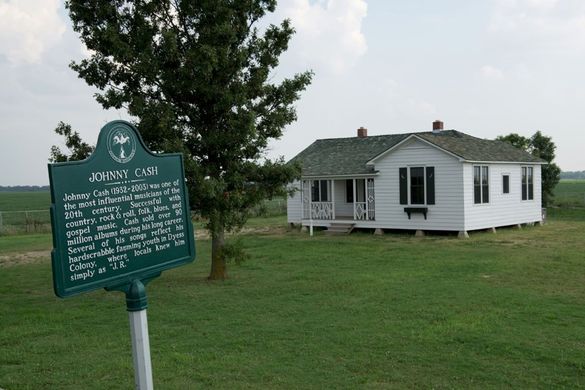
The houses were white-washed clapboard, each having two bedrooms, a living room, a kitchen, and a dining room, plus a front and back porch. J.R. Cash was three years old when he went to Dyess. He grew up there. He went to church there. He suffered his first major loss there, when his beloved brother Jack died following a sawmill accident in 1944. He would later say that many of his early songs, like “Five Feet High and Rising,” were inspired by his time in Dyess. He left the community in 1950 to join the Air Force. He would eventually become one of the most influential musicians in the world.
Arkansas State University purchased the home and began work on restoring the house as it would've been the day the Cash family first saw it. A grand reopening for the Historic Dyess Colony: Boyhood Home of Johnny Cash is planned
for late April, including the Cash home and the Dyess Colony Administration Building. The administration building was the centerpiece for one of the nation's agricultural resettlement colonies under the New Deal. The Cash home
will be furnished as it appeared when the Cash family lived there, while the Administration Building will include exhibits about the colony and the impact of Dyess on Cash and his music. The project is a joint effort between the City of Dyess and Arkansas State University. Other buildings will be restored or recreated in the future.
For more information, contact Ruth Hawkins at 870-972-2803. Or log on to http://dyesscash.astate.edu.