05 May 2026

- Developed in collaboration with HINDAMME's Mohammed Khoja and more than 26 artisans from AlUla's Madrasat Addeera
- The collection draws inspiration from the destination's ancient landscapes and legacy as a source of inspiration and creativity, translating heritage into wearable modern art
- Each piece was developed over one to two months, championing slow fashion principles
- The partnership underscores Madrasat Addeera's pivotal role in revitalising traditional arts and shaping AlUla's cultural and creative landscape
AlUla, Saudi Arabia – 5 May 2026: Renowned Saudi Arabian fashion label HINDAMME and Arts AlUla's Madrasat Addeera, a platform dedicated to creativity and traditional arts inspired by heritage, today revealed a limited-edition, slow fashion collection inspired by AlUla's more than 7,000 years of continuous human heritage and iconic natural landscapes.
Designed by one of Saudi's leading fashion names, Mohammed Khoja, and co-created with more than 26 local artisans from Madrasat Addeera, this exclusive launch champions Saudi craftsmanship and heritage with a distinctly modern take.
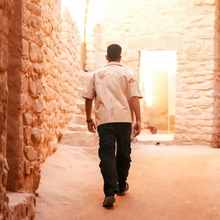
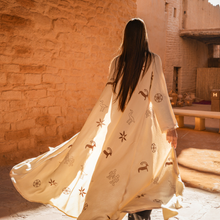
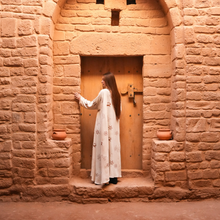
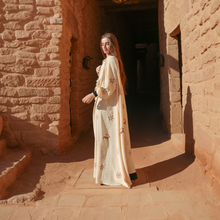
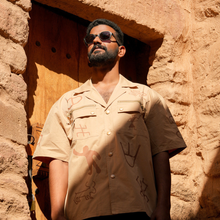
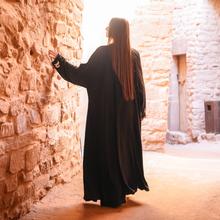
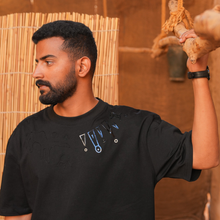
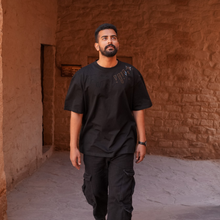
The collection features a refined selection of stylish abayas and shirts made from diverse materials capturing the essence of AlUla as the crossroads of ancient civilisations. Motifs reflect rock carvings – or petroglyphs – from AlUla's millennia-old heritage sites, such as the open-air library of Jabal Ikmah known for its Dadanitic and Lihyanite inscriptions dating to the first millennium BCE. Intertwined with the petroglyphs are illustrations of indigenous flora and fauna, from the moringa plant to the Arabian oryx, translating AlUla's natural and human heritage into contemporary wearable art.
Madrasat Addeera, located in the AlJadidah Arts District, was once home to the region's first girls' school. Today, its building has transformed into the first arts and design centre in AlUla where craft skills and practices are passed down and reimagined through immersive, hands-on training. A community-driven initiative, it provides vocational training in traditional arts to support AlUla and the region's creative economy as well as a year-round public programme where visitors of all ages can attend traditional arts workshops.
The partnership underscores Madrasat Addeera's role as a hub for heritage-driven creativity and artisan empowerment shaping AlUla's cultural and creative landscape. Khoja worked directly with the school's artisans to develop eight unique designs that authentically capture local identity and creative traditions, including block printing, hand embroidery, silk-screen printing and metalwork. Each piece took between one and two months to complete, demonstrating slow fashion principles and the meticulous labour of handmade products.
“AlUla has been a source of inspiration and creativity. This legacy, reflected across its heritage sites and natural landscapes, is brought to life through this collection by HINDAMME in collaboration with Madrasat Addeera's skilled artisans,” said Hamad AlHomiedan, Director of Arts and Creative Industries, RCU.
“This collaboration embodies our commitment to transforming local heritage and craftsmanship into a vibrant creative economy that benefits AlUla and its people. Supporting local craftsmanship and handmade products, particularly as the world becomes more digitised and globalised, is key to preserving Saudi identity for generations to come. This collection celebrates this tangible heritage and how AlUla's remarkable history continues to influence creative expression in the Kingdom and beyond.”
The HINDAMME and Madrasat Addeera collection builds upon a legacy of collaboration between Mohammed Khoja and AlUla. In 2019, the designer developed a bespoke collection inspired by the destination's history as a crossroads of ancient civilisations, which was exhibited at the National Museum of Saudi Arabia.
“AlUla has always been a profound source of inspiration for me,” commented designer Mohammed Khoja. “It is a place where history feels alive, layered and deeply present. This collection is about proving that heritage is not something we preserve behind glass, but something we evolve, wear and carry forward. The artisans were central to this collaboration. Their knowledge, intuition and approach to craft added depth and authenticity, and learning about Madrasat Addeera building as the first girls' school in the region added an emotional depth. The memory held within that space, and its transformation into a place of creation, is a powerful narrative within the collection.”
“It has been such an honour to be a part of this project,” said Mona Al Joud – Textiles Artisan at Madrasat Addeera. “There was so much to learn from someone as established as Mohammed Khoja, and it was exciting to share our knowledge and skills in exchange. This collection is a letter from the people of AlUla to Saudi and the world. A lot of love, precision and intention go into each stitch and cut. I hope that people can appreciate that every piece carries our story.”
The limited-edition collection is available at Madrasat Addeera and online at
-ENDS-
For further information, please contact:
Multimedia gallery:
High-resolution photos can be found here.
About AlUla:
Located 1,100 km from Riyadh, in North-West Saudi Arabia, AlUla is a place of extraordinary natural and human heritage. The vast area, covering 22,561km², includes a lush oasis valley, towering sandstone mountains and ancient cultural heritage sites dating back thousands of years to when the Lihyan and Nabataean kingdoms reigned.
The most well-known and recognised site in AlUla is Hegra, Saudi Arabia's first UNESCO World Heritage Site. A 52-hectare ancient city, Hegra was the principal southern city of the Nabataean Kingdom and is comprised of over 100 well-preserved tombs, many with elaborate facades cut out of the sandstone outcrops surrounding the walled urban settlement.
In addition to Hegra, AlUla is also home to ancient Dadan, the capital of the Dadan and Lihyan Kingdoms and considered to be one of the most developed 1st millennium BCE cities of the Arabian Peninsula, and Jabal Ikmah, an open air library of hundreds of inscriptions and writings in many different languages, which has been recently listed on the UNESCO's Memory of the World Register. Also AlUla Old Town Village, a labyrinth of more than 900 mudbrick homes developed from at least the 12th century, which has been selected as one of the World's Best Tourism Villages in 2022 by the UNWTO.