 28 Oct 2013

23 October 2013 - Rhino poaching has reached unprecedented levels in South Africa. Sadly, many of the rhinos massacred could have been saved had they been reached in time, and had veterinary specialists administered appropriate treatment.
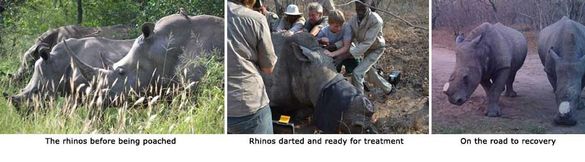
The Hoedspruit Endangered Species Centre (HESC) has launched a pilot initiative following the arrival of two rhino calves at the facility on Friday 30th August 2013. Both had been attacked by poachers in a reserve in the area. Their horns had been neatly sawed off, leaving open and exposed sinus cavities. The risk of infection in cases such as these is the over-riding cause of death.
Thankfully the team at the Centre acted fast, and quickly employed the services of two specialists, Dr. Johan Marais and Dr. Gerhard Steenkamp together with wildlife veterinarian, Dr. Peter Rogers. Their treatment protocol primarily involves ensuring that the rhinos’ wounds remain clean, uninfected, and closed off from external variables. This stimulates the formation of healthy healing granulation tissue to seal off the sinus cavities, and prevents the wounds from becoming contaminated with mud, leaves and other irritants.
To date, two intensive procedures have been conducted, involving locating the rhinos in their specially constructed camp; darting and sedating them; taking care of their wounds; and bringing them back to a state of consciousness. In the latest procedure, Dr. Marais took X-rays as well as camera images of the animals’ sinuses. Based on these images, we are confident that we are on the right track as far as the animals’ treatment is concerned.
Our hope is that we are able to develop a standard protocol for treating rhinos with similar wounds, as we believe that the survival success rate could potentially be much higher.
From blood results, we have discovered that the older rhino cow is pregnant. What an amazing story of hope should she manage to pull through, and give birth to a healthy baby after the trauma she has endured.
Christo Schreiber, curator at HESC, has reported that the 2 cows are doing well. They are eating and drinking, and are monitored regularly via a live-camera to ensure their safety and wellbeing.
The next procedure is scheduled for Thursday 24th October.
We are committed to seeing these rhinos recover to a state of full health, but are unable to continue to shoulder the full expense. As a non-profit organization, the HESC is entirely dependent on the financial support of third parties to continue operating.
To date, the cost of the rhinos’ care has surpassed the R180,000.00 mark. We are appealing to any person or company who wants to get involved to do so via our online donations portal, accessed via the following link: http://hesc.co.za/hesc_adoptions/adoptions_.php
To read more about the two procedures conducted, and to see images, visit the links below. Please note, the images are graphic and may upset sensitive viewers.
http://blog.hesc.co.za/2013/09/de-horned-rhinos-brought-to-the-hesc-for-rehabilitation/
http://blog.hesc.co.za/2013/09/rhino-rehabilitation-procedure-1-warning-graphic-images/
http://blog.hesc.co.za/2013/10/an-update-on-the-poached-rhinos/
For further information, or to get involved, please contact Adine Roode:
e-mail: info@cheetahcentre.co.za
Tel: 012 460 5605
For editors:
The Hoedspruit Endangered Species Centre focuses on the conservation of rare, vulnerable or endangered animals. Cheetah Conservation is one of their core disciplines.
The Centre is actively involved in:
- The breeding of endangered, vulnerable or rare animal species
- The release and establishment of captive-bred cheetahs to the wild
- The treatment and rehabilitation of orphaned or injured animals which are brought to the Centre
- The education of learners, students and the general public in conservation and conservation activities
- Eco-tourism
- A hands-on Student's Programme to conservation and adventure enthusiasts from around the world.
For more information, visit www.hesc.co.za, or contact 012 460 5605
www.hesc.co.za | info@cheetahcentre.co.za | 012 460 5605