 30 Sep 2004

To many, the 2004 Hurricane Season will leave a close association between hurricanes and Florida. But it�s important to note that a direct hit to a particular destination anywhere in the world by a major hurricane is a rare event. From 1899-1992, fifty-five hurricanes made landfall in Florida, according to the National Oceanic and Atmospheric Administration (NOAA). This translates to about one hurricane every two years in Florida in almost 100 years. "To have four strong hurricanes hit the same state, in the same year, is almost unheard of. The last time four hurricanes hit the same state was in 1886 in Texas. I doubt very seriously if it will happen again, at least not in my lifetime,� Max Mayfield, Director, National Hurricane Center.
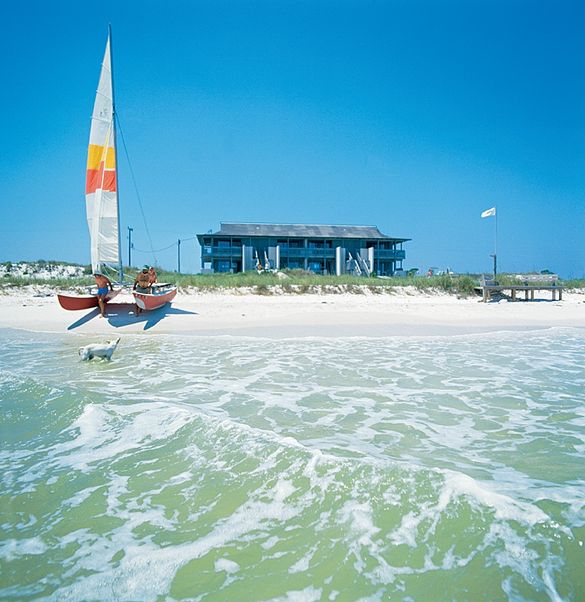
Nature. In Florida we enjoy its blessings. And sometimes we suffer its fury. But even as some parts of our state recover after recent hurricanes, we still have mile upon mile of unspoiled beaches, amazing state parks, ancient forests, lazy rivers and, of course, the best man-made wonders in the world! So come, visit Florida. Beautiful as ever, forever.
What months are considered hurricane season? Highest activity? The Atlantic hurricane season is officially from June 1 to November 30. The peak of the season is from mid-August to mid-October.
What is a hurricane? A hurricane is a tropical cyclone with a defined circulation and sustained winds of 74 miles per hour (65 knots) or greater in the North Atlantic Ocean, Caribbean Sea, Gulf of Mexico, and in the eastern North Pacific Ocean. This same tropical cyclone is known as a typhoon in the western Pacific and a cyclone in the Indian Ocean.
What is a tropical disturbance? An organized system of clouds and thunderstorms without a defined circulation.
What is a tropical depression? An organized system of clouds and thunderstorms with a circular wind circulation and maximum winds less than 39 mph.
What is a tropical storm? An organized system of strong thunderstorms with a defined circulation and maximum sustained winds of 39 to 73 mph.
What regions around the globe have hurricanes? Hurricanes develop over the tropical or subtropical waters around the world. There are seven tropical cyclone areas (basins) where storms occur: � Atlantic basin (North Atlantic Ocean, Gulf of Mexico and Caribbean Sea) � Northeast Pacific basin (from Mexico to about the dateline) � Northwest Pacific basin (from the dateline to Asia including South China Sea) � North Indian basin (including the Bay of Bengal and Arabian Sea) � Southwest India basin (Africa) � Southeast Indian/Australian basin � Australian/Southwest Pacific basin
How are hurricane categories determined and what do they mean? The strength of hurricanes is rated using the Saffir/Simpson scale in the United States. This scale assigns a storm to one of five categories based on its wind speed. Category one is a minimal hurricane and category five is the strongest. Using this scale helps estimate the potential property damage and expected coastal flooding from a hurricane.
Category Maximum Sustantined Winds 1 74-95 mph 2 96-110 mph 3 111-130 mph 4 131-155 mph 5 156+ mph
What is the difference between a hurricane warning and a hurricane watch? The National Hurricane Center in Miami, Florida has the responsibility for monitoring and issuing watches and warnings in the Atlantic and Northeast basins. A warning is issued when hurricane conditions are expected in 24-36 hours, and a watch when hurricane conditions are possible within 36-48 hours. If a warning or watch is issued one should begin preliminary preparations for potential landfall and stay tuned to radio and TV for weather updates.
What is the Eye of the storm? Rainbands? The hurricane�s core is called the Eye. The winds closest to the eye, typically averaging about 60 miles from the center of the storm, are the strongest and bring the most potential for damage. Rainbands (outer spiral bands) are the bands of clouds and thunderstorms that trail away from the eye wall in a spiral fashion and are capable of producing heavy bursts of rain and wind. The spiral bands also make hurricanes appear to cover a much larger area with damaging winds, than they really do. This is the reason why devastation during strong storms does not cover the entire area the storm passes over.
Why are hurricanes named? Who names them? The National Hurricane Center in Miami, Fla. is also responsible for naming tropical cyclones in the Atlantic basin. Hurricanes are named to provide ease of communication and reduce confusion between forecasters and the general public regarding forecasts, watches, and warnings.
What are the chances of a tropical storm affecting one particular destination during hurricane season? Do we cancel travel plans during hurricane season? VISIT FLORIDA clearly understands that some people have concerns about the possible impact that a hurricane could have on a planned vacation. Any tropical system affecting the location where one plans to vacation makes that year a notable one. However, the odds of that happening are slim. Rather, the odds are that tropical storms and hurricanes will bypass most areas that are potentially at risk. VISIT FLORIDA suggests that when making travel plans during hurricane season, the visitor check with airlines, hotels, car rental, etc. to find out how they inform their guests when a hurricane is coming, what actions they plan and what refund policies they have in place. Once again, it is important to point out that a direct hit by a major hurricane is an extremely rare event.
What do travelers do if they�re in Florida and a hurricane is approaching? Many Florida tourism offices actively work with local emergency management officials to keep visitors safe in the event of an approaching storm. There are cooperative agreements to help find accommodations for visitors who might have to be evacuated from coastal areas. The safety of Florida�s visitors is a priority!
Where can I get real-time advisories for hurricanes/tropical storms? � National Hurricane Center - www.nhc.noaa.gov � National Weather Service - www.nws.noaa.gov � National Climatic Data Center � www.ncdc.noaa.gov
How do these hurricanes/storms affect Florida�s environment?* � They help to scrub harmful algae from coral reefs, � Prune dead limbs from trees allowing sunlight to penetrate the forest floor, � Deposit sand atop and on the backside of barrier islands, which elevates them, keeping islands from becoming a sand bar. "The big changes that occur in barrier islands often occur during hurricanes," according to Orrin H. Pilkey, James B. Duke Professor Emeritus of Geology at the Nicholas School of the Environment and Earth Sciences at Duke. �Barrier islands need hurricanes for their survival�It's during hurricanes that islands get higher and wider." � Moderate global temperature. � The rain helps to refill the aquifer. It's seeping in now, and wells are rising. � The water flow in Florida natural springs will increase - it had been on the decline. � Wildlife will benefit from the increased water. Dried out wetlands are rehydrating and coming back to life. � Downed trees are good for the scrub jays, increasing the endangered species' habitat. � Hurricane season lasts only a few months. This year�s season has been more active than usual.
*Florida Department of Environmental Protection & Florida State Parks - www.FloridaStateParks.org.
Conclusion: It is important to point out that while there are areas still recovering from weather damage in Florida, many primary tourist areas have not been impacted and are open for business. VISIT FLORIDA is advising visitors to continue with their travel plans to visit these parts of Florida but call ahead to ensure their specific plans or hotels are confirmed.
FLORIDA AREA UPDATES: For more information on specific localities in Florida, click on the following regional maps: � www.VISITFLORIDA.com/destinations (map of Florida attractions, hotels, destination marketing organizations by region). � http://www.VISITFLORIDA.com/cvbs_alerts.php (regional map of Florida�s convention and visitors bureaus.)
VISIT FLORIDA INFORMATION RESOURCES: � Call us at 1-800-287-8598 or 011-941-906-4693 for international calls, if you have concerns about your destination. � VISIT FLORIDA�s consumer web site: www.VISITFLORIDA.com. � VISIT FLORIDA Tourism Industry web site: www.VISITFLORIDA.org. � VISIT FLORIDA Media web site: media.VISITFLORIDA.org.
###
Please direct media inquires to: Vanessa Welter, Director Public Relations (850) 488-5607 ext. 337 or Tom Flanigan, Director Corporate Communications (850)-488-5607, ext. 301.