 28 Mar 2015

Easter in Latin America is a wonderfully colourful affair, particularly renowned Guatemala and Mexico. But what about across the rest of the region? Specialist tour operator Journey Latin America reveals some of its favourite lesser-known Semana Santa rituals.
- Ayacucho, Peru: One of the most famous celebrations in the country, the whole of this northern town participates in the festivities. It begins on the Friday before Palm Sunday, with the enactment of the meeting between Christ and his mother, the Virgen Dolorosa, with subsequent daily and nightly processions during the week. Following the sad rites of Good Friday, Saturday takes on an entirely different tone with an open-air market in which crafts, food and music draw a huge crowd to enjoy chicha or chacta with a chew on coca leaves. A traditional belief holds that since Christ is currently dead and hasn't yet risen, there is no such thing as a sin and so... well, you can draw your own conclusions. With dawn on Easter Sunday, the religious rites begin again and culminate in a joyous celebration of Christ's resurrection.
- Various locations in El Salvador: This small Central American country has a colourful and rather thespian approach to Easter. In the town of Texistepeque, each year Easter begins with a ceremony in which men dress as devils and whip each other to highlight the universal struggle of good versus evil. The department of Sonsonate – think Ruta de las Flores – becomes a tourist attraction, starting with statues of saints within churches are hidden with bedcovers, some say to protect them from the evil that comes to earth during the absence of Christ. The streets during the week become an open air theatre, with processions and enactments in which Indian and Catholic traditions mix. In the midst of this, there is the custom to redecorate the streets with colourful carpets made of sawdust, salt, macaroni and other condiments. Any subject goes, from Biblical stories to Disney cartoons.
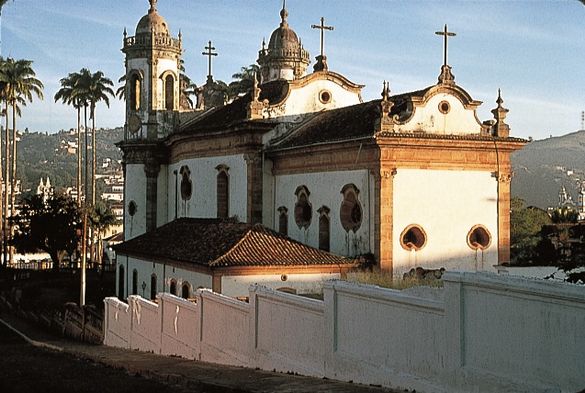
- Ouro Preto, Brazil: Located in Minas Gerais, a region known for its silver and gold mines, this delightful historical is town tucked neatly into the steep winding hills typical of the region with steps as opposed to pavements lining the streets. Usually a quiet town, it springs to life during Easter in a colourful celebration. The streets are lined with carpets made of natural material and flowers (you can even participate in the making of these) normally depicting religious themes and the processions will walk over these when going from church to church - of which they are about 13 baroque examples in the colonial centre – during the celebrations. One thing to note – the order of the churches visited changes according to whether it's an odd or an even year.
- Popayán, Colombia: A remarkable example of Easter celebrations, Semana Santa in Popayán is registered on the list of Intangible Cultural Heritage of Humanity. One of the oldest traditions in the country, the processions here are serious work. With their own vocabulary and expertise, the roles and responsibilities of each individual are precisely allocated; the route is set and rules rather complex. Involving antique elements and remarkable artistic quality, the preparations, which last for a whole year, follow instructions passed down from generation to generation.
- Santiago outskirts, Chile: Cuasimodo Celebrations. Strictly speaking, this is after Easter, but as the origins are charitably linked to it, it earned its space here. On the Sunday after Easter, parish priests in colonial times went forth to take the Holy Sacraments to the elderly and infirm that couldn't get to church on Easter Sunday. They were guarded by groups of huasos (cowboys) who protected them from bandits and were given, along the way, food and drink, usually chicha or wine, to wash away the road dust. Today, the celebration begins with a mass, followed by a procession lead by the parish priest riding in a decorated carriage, and accompanied by mounted huasos, runners, bicycles, carts, and thousands of people who make their way through town, stopping at homes along the way. The day ends with music, food and dance… and more chicha and wine, of course. The name, by the way, is not related to the fictional character in Notre Dame but derives instead from “quasi modo geniti infants” (almost like new born babies).
END
Further Information:
For more information on Journey Latin America and to see our full range of holidays, please visit www.journeylatinamerica.co.uk or telephone: 020 8600 1881
For press information or images please contact press@journeylatinamerica.co.uk
Follow us on Twitter and like us on Facebook.