 19 Oct 2013

Given the area's wealth of natural resources, it is no surprise that the Fort Myers/Sanibel area in southwest Florida is also rich in history. The Calusa Indians were the first to discover the charms of the region as long ago as 5,000 B.C. By the turn of the 20th century, Thomas Edison, Henry Ford and other prominent Americans who spent their winters here, helped put the area on the modern-day map.
Islands and Lighthouses
Much of southwest Florida's earliest, colourful history can be found on and around the barrier islands that dot the coastline. Because their beauty can be enjoyed by land or water, these islands are popular among boaters and beachcombers. They also have long been a Mecca for explorers, including Ponce de Leon who discovered Sanibel and Captiva in 1513. It is believed that Spanish pirate Jose Gaspar lived in Pine Island Sound during the early 1800's. Legend has it that the central location enabled him to establish his headquarters on Sanibel Island (Santa Isybella Island) and bury his ill-gotten gains on Gasparilla Island. Further, it's been said that Captiva Island (translated from Isle de los Captivas) was so named because Gaspar kept his ransomed female prisoners there.
By 1900, sea captains and farmers were homesteading the islands. And in 1925, inventor Clarence Chadwick converted Captiva into a key lime plantation. Today, Chadwick's plantation is the 330-acre South Seas Island Resort. This unspoiled, resort sanctuary is a prime holiday destination, complete with a marina, golf course and upscale restaurants.
For an 'island experience' and a chance to learn more about the wildlife and history of the area, Tropic Star of Pine Island offers a variety of on-the-water adventures from Pineland Marina on Pine Island. The 59-passenger 'Tropic Star' offers full- and half-day narrated nature cruises to Cayo Costa and Cabbage Key. On the way, guests encounter two natural bird rookery islands, along with dolphins, manatees and other wildlife. During the cruise, passengers learn about the ecosystem, mangrove islands and history of the area.
The passenger ferry, the 'Tropic Star,' transports visitors for a day or overnight to Cayo Costa State Park to enjoy the beaches, shelling, nature trails and swimming in the Gulf of Mexico. Alternatively two-hour cruises on the Calusa Star, a 32-passenger pontoon boat, features Calusa mound viewing on Pine Island Sound in conjunction with Randell Research Center.
Cabbage Key is a near-famous local island that offers a variety of riches, including an inn with restaurant walls, beams and ceilings plastered with $1 bills. Although the island is accessible only by boat, and the inn has only a few guest rooms and cottages, its restaurant and lounge accommodates thousands of visitors each year. The Inn at Cabbage Key is the former estate of Alan and Grace Rinehart, built in 1938. It sits atop a Calusa Indian shell mound 38 feet above sea level, offering outstanding views of the 102-acre island and surrounding Pine Island Sound. As for the dollar bill wallpaper, it's a tradition that began in 1941 when a fisherman signed and taped his last dollar to the wall. That way, when he returned, he'd have money to buy a beer. Visitors continue the custom. At about the same time that the Rineharts discovered Cabbage Key, other wealthy settlers also were discovering The Beaches of Fort Myers & Sanibel. In 1912, advertising entrepreneur Barron Collier bought the nearby 100-acre Useppa Island and developed it as a resort for the rich and famous to spend their leisure time in.
Meanwhile, the duPont family had founded Boca Grande, renowned for being rich in fish, on Gasparilla Island. Today, the island's well-heeled visitors and fishing aficionados range from movie stars and moguls to political heavyweights like the Bush family. During the winter, several generations of Bushes (including both former presidents) often gather there for the holidays. One of the island's main attractions is the Boca Grande Lighthouse Museum, built in 1890. Features include exhibits of the Calusa Indians and the Native Americans who preceded them at Boca Grande.
Additional insights to bygone island life can be found to the south at the Sanibel Lighthouse Boardwalk. Built in 1884 on the island's southern tip, the lighthouse has provided a wildlife refuge since 1950. In recent years, the boardwalk was extended to give visitors easy access to the lighthouse and surrounding cottages, connecting this beachfront landmark to a city fishing pier.
More Museums
Southwest Florida's first African-American history museum opened in 2001. The Williams Academy Museum in Fort Myers maintains exhibits and a living history classroom. This two-room white wooden building built in 1942 is steeped in history, having once served as an elementary school. It was an addition to the original academy built in 1912. Exhibit topics include chronological history, religion, education, pioneers, military and law enforcement, business and community service, and sports.
Pine Island's natural history is showcased at Museum of the Islands. Here, visitors can see the island's unique past, from the days of the Calusa Indians to the early fishing pioneers. The centerpiece is the museum's authentic palm-thatched kitchen, complete with utensils and other household items used by early settlers.
The 'Useppa Man' is the unequivocal star attraction at the Barbara Sumwalt Museum, and is among the area's most unusual attractions. Located on Useppa Island, the museum's exhibits tell the 11,000 year history of man on this coastal island. Useppa Man is a forensic restoration of skeletal remains unearthed during an archaeological dig in 1989 by the University of Florida.
Back on the mainland, the Southwest Florida Museum of History offers graphic depictions and artefacts of the area's earliest influences, beginning in 800 B.C. and including the contributions of the Calusa and Seminole Indians, and Spanish explorers. The museum is housed in the Atlantic Coastline Railroad Depot, a local landmark built in 1924 that has been thoughtfully restored. The Esperanza, a plush, private rail car from the 1930s, is one of the museum's main draws. The museum also offers educational programs, rotating exhibits and a shop stocked with historical books and materials, as well as unique gift items.
Parks & Other Attractions
Those who appreciate true curiosities will be drawn to the Koreshan State Historic Site in Estero. The site contains the remnants of a religious commune established by Dr. Cyrus Teed, founder of the Koreshan Unity in the late 1800's. After changing his name to Koresh, Teed moved his followers to this site, where he sought to build a utopian society for millions of settlers. However, the size and scope of the community Teed hoped for never quite materialised. Today, 13 of the original 60 buildings remain, including Teed's home. There is also a one-of-a-kind globe illustrating the Koreshan belief that the world is a hollow globe, with man living on the interior surface of the shell gazing at the solar system at its center.
Elsewhere in The Beaches of Fort Myers and Sanibel region, historical structures are quite charming, if a bit more conventional. In downtown Fort Myers, restored buildings are easy to spot. Because the fascinating stories behind them aren't so apparent, the Southwest Florida Museum of History offers a comprehensive Downtown Walking Tour covering the Gwynne Institute (Lee County's first modern schoolhouse), the Heitman Building (built in the late 1800's and the oldest standing building on First Street), the Bradford and Earnhardt buildings, the old post office/federal building and other architecturally significant structures.
Just beyond the perimeter of the walking tour, at First and Heitman streets along the downtown riverfront, lies sprawling Centennial Park. While the eight-acre park – complete with playground, picnic areas and fishing pier – is not in itself historic, it is home to one of the area's most beloved landmarks. 'Uncommon Friends' is considered the park's centerpiece, and it pays tribute to three famous friends and winter residents of Fort Myers; Henry Ford, Harvey Firestone and Thomas Edison. Surrounded by a fountain, the life-like bronze trio created by local sculptor D.J. Wilkins was created in 1988.
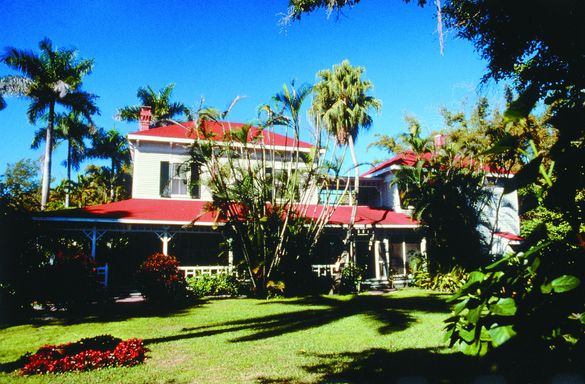
Without a doubt, the most famous homes in the Fort Myers/Sanibel area are those of winter residents Thomas Edison and Henry Ford, located on 17 acres at the gateway to downtown Fort Myers on McGregor Boulevard. For years, the Edison & Ford Winter Estates have been among the area's most popular man-made attractions, with guided tours of the homes and gardens of the icons who lived there.
For further information about The Beaches of Fort Myers & Sanibel please visit www.fortmyers-sanibel.com
-ends-
For more further information or images please contact Jules Ugo or Amelia Astley Birwtistle at Lotus UK on 0207 593 7470 or firstname@lotus-uk.co.uk
In the United States please contact Nancy Hamilton at The Beaches of Fort Myers & Sanibel on 001(239) 338 3500 or NHamilton@leegov.com
EDITOR'S NOTES: The Beaches of Fort Myers & Sanibel in southwest Florida includes: Sanibel Island, Captiva Island, Fort Myers Beach, Fort Myers, Bonita Springs, Estero, Cape Coral, Pine Island, Boca Grande & Outer islands, North Fort Myers, Lehigh Acres.