 14 Apr 2014

With its timeless countryside, quiet roads and frequent ferry crossings direct from the UK, Denmark is the perfect choice for those seeking the convenience and freedom of a self-drive holiday. The country is blessed with a picturesque, rolling scenery of unspoiled farmland, forests and heaths, not to mention mile upon mile of pristine coastline - much of which can be encountered by following the 3,600km Marguerite Route.
The Danes have long been fond of exploring this way-marked, long-distance touring route through their own bucolic backyard and now, thanks to VisitDenmark's newly-launched English-language website (www.visitdenmark.co.uk/selfdrive), British holidaymakers will find it easier to join the locals in discovering the pleasures of the open road.
With Royal Approval
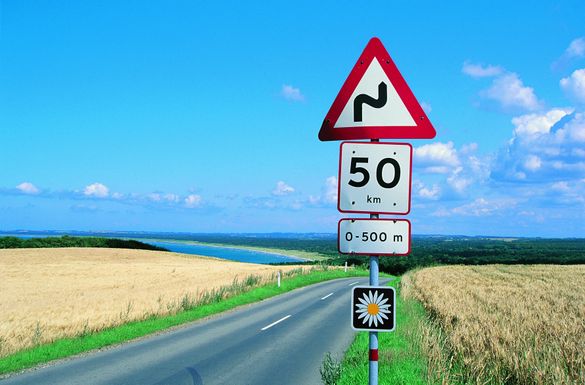
The Marguerite Route is marked along its way by characteristic marguerite (daisy) road-signs and was cleverly designed to take in some of Denmark's most scenic countryside and prettiest towns and villages without drivers ever seeing the same view twice. A major inspiration for the leisurely route was Queen Margrethe II of Denmark (affectionately known as Daisy) herself, whose favourite drives and destinations are incorporated into the journey. Until now, details of the lengthy drive were only accessible to Danish speakers, but VisitDenmark expects the new English-language website will encourage more Brits to come and discover the Queen's favourite spots at their own, unhurried pace.
Accessibility and Accommodation
To make the site as useful as possible to self-drive visitors, it includes pertinent information on arriving in Denmark with DFDS Seaways, who operate a regular overnight sailing from Harwich in Essex to Esbjerg on the West Jutland coast.
To ensure that the accommodation is as memorable as the beautiful scenery, drivers' attention is drawn to a choice of characterful recommendations, as chosen by Small Danish Hotels who offer a hand-picked selection of castles, inns, hotels and manor houses in each area.
The route itself is broken down into manageable sections as it passes through each region of Denmark, with attractions to enjoy along the way and downloadable E-brochures or Google maps available for each one.
Hidden gems of Jutland
On arrival into Esbjerg the Marguerite Route steers drivers through Jutland and on via the island of Funen to Zealand. On the West Jutland coast, the route goes past the Wadden Sea National Park, one of Denmark's most ecologically important areas that's home to birds, seals and native oysters. It also takes in Denmark's best preserved medieval castle Spottrup Borg with its towering 9-metre ramparts and double moat to withstand the most effective cannons. Nearby Nymindegab Kro is a traditional Danish inn (one of the Small Danish Hotels) whose elevated location overlooking the North Sea makes this the perfect place to stay awhile.
Further north, as the route passes through North Jutland it allows visitors a chance to get close to nature in this extensive area of dunes and heaths and reaches as far north as Skagen at the very top of Denmark where the two seas, the Kattegat and Skagerrak meet.
Away from the coast, other highlights along the Marguerite Route include the fairytale forest of Rold Skov - Denmark's largest forest, home to scenic lakes, ancient trees and rare wild orchids. Closer to Aalborg lies Lindholm Høje, home to Scandinavia's largest Viking burial ground with more than 700 well-preserved graves.
There's more natural beauty to be found among the Silkeborg lakes and on the Gudenåen River in East Jutland, where activities away from the road include swimming, canoeing, kayaking and some of the best angling in northern Europe. Take in the pretty town of Randers with its quirky replica of Elvis' home Graceland and stop further south at Vejle, often labelled as 'Denmark's cosiest town'. Close by is the historic town of Jelling where the two eighth-century runic stones hold special significance for Danes as the one erected in AD983 by Viking King Harald Bluetooth is known as the 'birth certificate of Denmark'. Denmark's second city Aarhus 'the city of smiles' offers numerous attractions including the National Open Air Museum of Urban History and CultureDen Gamle By where visitors can see what it would have been like to live and work in a 19th century Danish town.
Fairytale Funen
Funen, Denmark's second largest island is situated between Jutland and Zealand. Characterised by gently rolling hills, its largest town, Odense, was the birthplace of author Hans Christian Andersen. The south Funen archipelago of islands are linked by small bridges and ferry routes for cars providing a scenic meandering route past historic manor houses and ancient castles. These include Egeskov Castle, one of Europe's best preserved renaissance castles built on oak rafts rammed into the surrounding lake.
Liveable Zealand
The furthest reaches of the route take in the island of Zealand where green hills contrast with some of the best beaches in Denmark. Alongside the route it is possible to explore Denmark's Viking history and at Elsinore, about an hour north of Copenhagen stop at the newly opened M/S Maritime Museum which bears testament to the town's seafaring past with a seashell shaped museum inside the old dry dock. Alongside the Maritime museum is the UNESCO listed Kronborg Castle, known across the world as Hamlet's Castle. Winding its way back along the beautiful coast and overlooking the Øresund, the narrow strait of water that divides Denmark from Sweden, the route reaches the vibrant and cosmopolitan capital, Copenhagen. For fans of the TV series 'The Bridge' a short detour might include a drive across the now iconic Øresund Bridge to Malmo or complete the journey on the quiet little rustic islands of Møn, Lolland and Falster at the southern point of Denmark.
As well as providing holidaymakers with the freedom of the open road, a self-drive experience in Denmark also offers excellent value for money by avoiding the costs and hassle of flying and the luggage restrictions that entails. Drivers can therefore fill their boots with designer Danish homewares, local produce and other souvenirs to bring home - another highlight of taking the slow road along the scenic Marguerite Route.
Getting there…
DFDS Seaways provides a overnight ferry crossings 2 to 5 times a week (depending on the time of year) between Harwich and Esbjerg in West Jutland, with prices starting from £117 per person, based on two people and one car travelling one way with a sea view cabin.
Where to stay
Small Danish Hotels offers beautiful inns, modern hotels and fairy tale castles along the Marguerite Route www.smalldanishhotels.dk
Ends
For great high resolution images of Denmark, ready to download, free of charge go to: http://images.visitdenmark.com
For further press information
Email Anthea Yabsley at IDeal PR at anthea.yabsley@ideal-pr.co.uk or email Kathrine Lind Gustavussen at VisitDenmark at klg@visitdenmark.com