 08 May 2004

No other city has a park system quite like Denver�s.
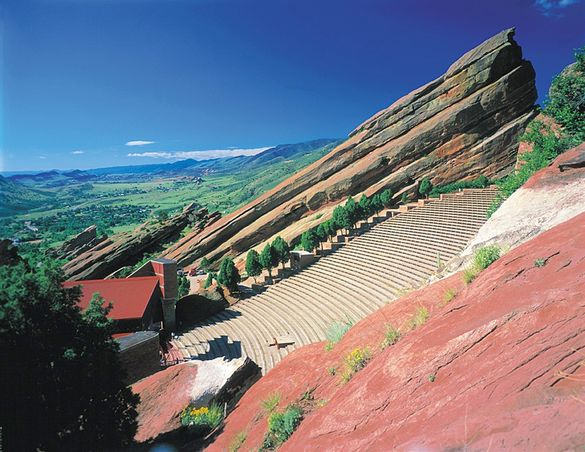
In what other city park system would you find a buffalo herd, an international ski resort, an alpine lake 13,000 feet above sea level or an amphitheatre carved out of 500-foot high red rock cliffs?
Denver�s 47 mountain parks are unique because all of them are located outside of the city�s borders -- one of them is 70 miles from the city and 8,000 feet above it.
Denver�s mountain parks were started in 1912 when far-sighted Mayor Robert Speer realized that scenic areas in the mountains near Denver had to be protected and preserved or they could be lost forever. It took an act of Congress to allow the city to buy federal land, the Colorado Legislature to allow Denver to own property in other counties and the people of the city to approve a property tax to pay for it all, but slowly Speer�s vision took hold.
Frederick Olmstead Jr., the son of the famous designer of New York�s Central Park, was hired to design the mountain park system.
Acquisitions rolled in ranging from an acre to more than a thousand acres. The parks preserved every type of landscape and life zone found in Colorado, from flat prairie to alpine tundra located high above timber line. The parks also preserved important historic sites, from 300 million year old geological formations to the grave and final resting spot of Buffalo Bill Cody. One park is completely inaccessible and was acquired just to preserve some scenic cliffs visible from Hwy. U.S. 285.
A Guide to the Best of Denver�s Mountain Parks:
RED ROCKS AMPHITHEATRE: Probably the best known of the 47 parks, this 9,000-seat, acoustically perfect amphitheatre was carved out between two gigantic red rock boulders that flank the theatre, rising 500 feet on either side. Begun in 1936, the amphitheatre has played host to many historic concerts from composer Igor Stravinsky to the Beatles. Bruce Springsteen, Jimmy Buffett and many others have proclaimed it their favorite place to perform. U2 made their concert video here and Jimi Hendrix even played it once -- as the opening act for the Monkees! The park is open year-round and is free, except when there is a scheduled performance. In June 2001, the amphitheatre will celebrate its 60th anniversary. A well-marked nature trail winds through the rocks, explaining their geologic history. The entire area was once the beach of a great inland sea that covered Colorado 70 million years ago. When the modern Rocky Mountains were formed, the beach, now compressed into soft red rocks, were pushed up at an angle. Dinosaur Ridge (visible from the park) is the site where the first large dinosaur fossils in the world were discovered. Red Rocks is 12 miles from downtown Denver.
BUFFALO BILL�S GRAVE & MUSEUM: Located on top of Lookout Mountain with spectacular views of both the snowcapped Rockies and the high plains of Denver, this is the final resting spot of the famous showman and frontier scout, Buffalo Bill Cody. A museum provides a well-rounded look at his exciting life, from Pony Express rider and buffalo hunter to the world�s greatest showman, who often performed before the crowned heads of Europe. The park is best approached by the Lariat Trail from Golden, a winding scenic highway with a dozen pull-offs offering sweeping views of the mountains and plains.
DENVER�S BUFFALO HERD: In 1914, there was only one wild buffalo herd left in America. Although they were protected in Yellowstone National Park, it was feared that one natural disaster could cause American bison to become extinct, so a small herd was donated to Denver Mountain Parks. Today, the descendants of this last wild herd of buffalo graze on both sides of Interstate 70 about 15 miles west of Denver. A special �buffalo only� tunnel under the highway allows the beasts to roam on beautiful grass slopes on either side of the Interstate. Pine forests and one of the prettiest views of the snowcapped Front Range of the Rockies can be found at the car pull-offs at the site. A second buffalo herd roams in Daniels Park, south of the city.
ECHO LAKE PARK: One of the prettiest mountain lakes in Colorado, Echo Lake is found 10,000 feet above sea level at the base of Mount Evans. It is here that the highest paved highway in North America (second highest in the world) begins to snake its way upward to the 14,260 foot summit of Mount Evans. Due to snow at this altitude, the road to the actual summit is open only from June to Labor Day, but the lower elevation of Echo Lake is accessible -- and beautiful -- at any time of the year. Excellent fishing and picnic sites can be found here, as well as an abundance of hiking trails. An unusual octagonal log cabin operated by Denver Mountain Parks has a gift shop and restaurant.
SUMMIT LAKE: The highest city park in the world, Summit Lake lies at 13,001 feet near the summit of Mount Evans. The lake can be frozen solid even in June, and offers simply spectacular views of rugged cliffs and jagged snow-cragged peaks and ledges. There are two herds of Rocky Mountain goats and big horn sheep on Mount Evans and they can be seen almost every day in the summer along the road to the summit near Summit Lake.
WINTER PARK: The City of Denver owns this gigantic international ski resort, but leases it to a private operator for payments of about $2 million a year. Winter Park and sister mountain Mary Jane have 121 trails and 20 lifts, making it the fourth largest ski area in Colorado, and one of the most popular. An exciting way to travel to the mountain is by taking the Ski Train, which leaves Denver�s Union Station every weekend in the winter. Burrowing through 34 tunnels, the 700-passenger Ski Train (the largest passenger train in America) takes two hours to climb from the plains of Denver up through dark forests, clinging to narrow ledges above roaring ice-crusted rivers, until arriving at Winter Park, just a hundred yards from the lifts.
For a free 154-page color guide to Denver, call (800) 393-8559.
###
Media Contact: Jill Strunk +1 (303) 571-9451 jstrunk@dmcvb.org