06 May 2020

Churchill's Top Secret WWII Landing Craft
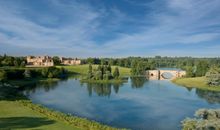
Tested on Lake at Blenheim Palace
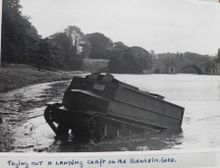
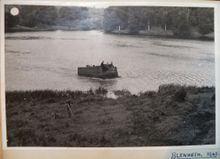
A series of photographs from private family albums has revealed Blenheim Palace was used as a secret testing ground for landing craft in the run-up to D-Day.
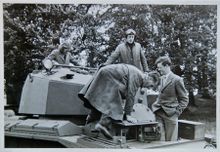
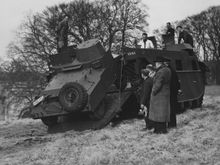
The images show two separate amphibious vehicles being put through their paces on the iconic lake at the UNESCO World Heritage Site.
It's believed Blenheim Palace, the birthplace of Sir Winston Churchill, was chosen due to its proximity to Oxford where the Morris-Commercial Cars, which built the vehicles, was based.
The Estate's relative privacy and the fact it was so familiar to Churchill himself were also likely to have played a part in the decision to use it for testing.
The fascinating photographs are featured as part of Blenheim Palace's online celebrations for VE Day, alongside a virtual tour of their Winston Churchill exhibition and extracts from his famous speeches.
“The images offer an absolutely fascinating glimpse into Blenheim Palace's clandestine role during the Second World War,” said Blenheim Palace's Researcher Antonia Keaney.
“The secrecy surrounding the trials was such that, even today, it is extremely difficult to find out many details of exactly what took place and when,” she added.
Operation Neptune was a British initiative to develop its own landing craft ahead of Operation Overlord.
It was thought Churchill was particularly interested in the programme as he did not want to be entirely beholden to the US to provide all the amphibious vehicles for the historic Normandy landings.
The images show two different prototype craft; the Argosy and the Neptune. One photo even features the 11th Duke of Marlborough, then Lord Blandford, and his sister Lady Rosemary on board one of the vehicles.
Neither vehicle eventually took part in the landings, although the Neptune did go on to see service in the Middle East; however they are most remembered for the role they played as rescue vessels during the devastating East Anglia floods in 1953, which left 307 people dead and 40,000 homeless.
The lake was also used as a secret location to trial the so-called 'HMS Conumdrum', a 250ton floating drum which was used to lay miles of oil and fuel pipelines under the English Channel to France in support of Operation Overlord, the Allied invasion of Normandy in June 1944.
In addition to its role as a secret testing site, in September 1940 Blenheim Palace became the temporary headquarters for MI5 after their London base was bombed. Pupils from Malvern College were also evacuated to the Palace in 1939.
- For full details go to blenheimpalace.com/ve-day.
For more information please contact Gemma Else on 07342 020 534 at gelse@blenheimestate.com or Drew Cunliffe at drew@flamingo-marketing.co.uk.
About Blenheim Palace
Home to the Dukes of Marlborough since 1704, the Oxfordshire Estate was designated a UNESCO World Heritage Site in 1987.
Set in over 2,000 acres of 'Capability' Brown landscaped parkland and designed by Vanbrugh in the Baroque style, it was financed by Queen Anne, on behalf of a grateful nation, following the first Duke of Marlborough's triumph over the French in the War of the Spanish Succession.
At the time the victory was hailed as the greatest British military success since Agincourt.
Blenheim Palace is also the birthplace of one of Britain's most famous leaders, Sir Winston Churchill and it was his father who described the vista on entering the Estate from the village of Woodstock as the 'finest view in England'.