 03 Apr 2012

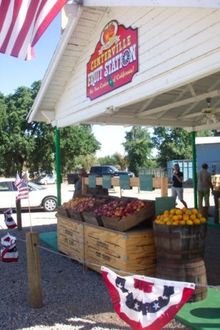
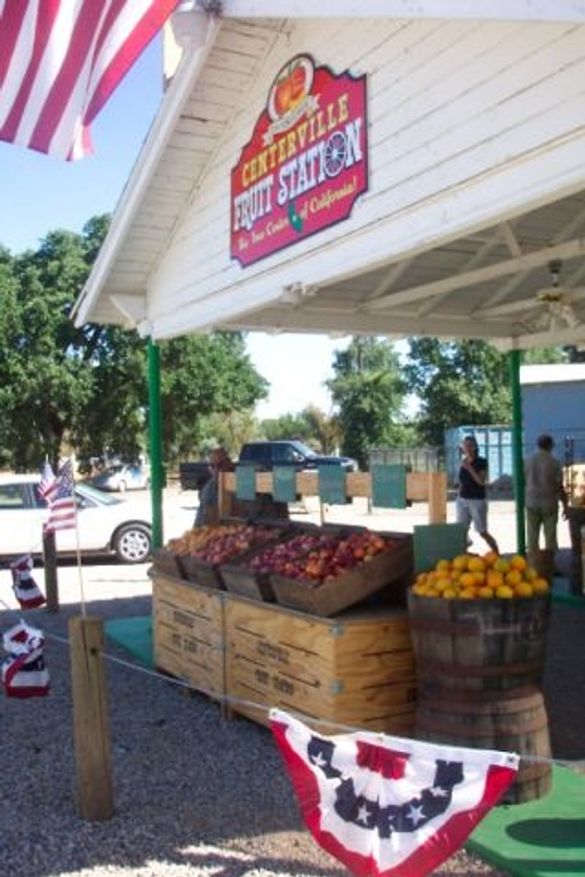
STOCKTON, CA - Millions of people have eaten a meal from this area in California, yet it's hardly mentioned in San Francisco's trendy fork-to-table restaurants. Movie-goers have marveled at the "big sky" scenery, yet this isn't a Hollywood back lot, its river adventures aren't in a theme park, and its farmers markets and roadside fruit stands aren't props for a smart phone television ad. It is the Central Valley, the California most people have never met; the off-the-beaten path experiences seasoned travelers are always searching for, and a rich, fertile land often passed through, traveling from point A to point B in California.
The 400-mile long Central Valley, called "the greatest garden in the world", supplies 25% of the food Americans eat. Its stunning beauty has been the backdrop for more than 300 films since 1919, creating the America filmgoers know. Its attributes include the largest living thing on Earth, three national parks, 200 miles of the Pacific Crest National Scenic Trail, three state universities and one of the busiest rail corridors in the United States. Yet most travelers headed for California cannot trace its invisible borders on a map. It's only slightly smaller than the state of West Virginia, stretched between the California coast and the Sierra Nevada mountain range.
Meet California's Central Valley:
The same way the American midwest used to be dismissed as "flyover" country, the Central Valley of California is too often overlooked as a "drive-through" region. The northern half is referred to as the Sacramento Valley, and the southern half as the San Joaquin Valley. But to well-informed travelers, the region is a beloved escape from the big cities for wonderful weekend getaways and holidays with small-town hospitality, values and a slowly disappearing charm.
Far from a sleepy little farming area, the Central Valley is home to three of the ten largest of California's 58 counties. There are quaint farming towns that seem unchanged through the decades, and a palpable small-town friendliness in even the largest communities. But visitors will also find cities and counties embarking on pioneering civic, environmental and technological projects, world-class artistic and cultural facilities, symphonies, theater companies, museums, virtually unlimited opportunities for outdoor recreation, spectacular scenery, one-of-a-kind cafes and diners, roadside produce stands, bargain shopping, and zany festivals with themes are so festive, simply considering the names pulls a smile.
Bragging rights:
California's Central Valley has a number of firsts, biggest and mosts:
- Highest summit in the contiguous U.S., Mt. Whitney, 14,495 feet, Sequoia Valley
- Home to the number one agricultural county in America, Fresno
- World's largest and oldest known tree, "General Sherman", 275 feet high and more than 3000 years old. No other living thing on Earth exceeds its volume. Sequoia National Park
- More bicycle paths per mile of road than any city in America, Davis
- More artists per capita than anywhere else in the country, Madera County, Yosemite gateway
- The 100th birthday of one of California's earliest guest ranches, Wonder Valley
- Called the "Zinfandel capital of the world" with wineries dating back to the 1880's, Lodi
- Best of the West's largest charitable event funding more than 100 charities, the Annual Asparagus Festival (April), Stockton
- More art murals per square mile than in Florence, Italy, Madera County
- 300 films shot in the Central Valley area since 1919
How to get here:
Visiting the Central Valley is easily accessible through a wealth of traveling options; travel to the area by car, plane, organized tour, or enjoy a scenic train ride through lush grasslands, farms, and countryside. Getting acquainted with farmland, prairies, deserts, rivers, and mountains by train is another way to enjoy the breathtaking landscape. Fly into one of three airports—Sacramento International Airport (SAC), Fresno International Airport (FAT) and Stockton Metropolitan Airport (SCK) with service to and from Las Vegas. Interstate 5 connects Los Angeles and Sacramento through the Central Valley. It is also accessible from Highway 80 and Highway 99, whose nickname is "California's Main Street."
Where to stay:
The Central Valley's lodging choices change the concept of "staying the night along the way" to places which are destinations themselves. Sleep at a sprawling 100 year-old ranch that was a hideout for outlaws or a bed and breakfast home nestled among the groves of a working citrus farm. Get a new perspective on photography at a spot owned by the family of John Muir, or stay in a private hot springs resort. Choose a houseboat with room for 12 or a pine cabin on a lake; an English-inspired inn room or bungalow, California's only five-diamond jewel of a hotel, a motel aptly named for the I-5 interstate because of its proximity, or a glimpse of the Gold Rush era in a farmhouse regularly featured on television. Lots of lodging choices hang out the welcome sign for pets.
For more information:
The California Central Valley website, www.visitcentralvalley.com; offers links to all area cities and destinations, visitor guide information, a list of festivals, downloadable maps and driving directions. A new mobile smart phone app, the NorCal Guide, is an indispensable tool for travelers who find themselves curious about all that's around them. For traveler details, call toll free (U.S.) 800-514-5539 or email info@visitcentralvalley.com.
(end)
Media contact: Susan Wilson, swilson129@cox.net, 602-996-4242