 24 May 2019
Tags: Responsible Travel, World Oceans Day, marine conservation, Conservation, travel with purpose, not-for-profit, conservation travel, wildlife travel

In celebration of World Oceans Day 2019, The Long Run shares five stories of pioneering members making waves in protecting the world's oceans.
“World Oceans Day is more pertinent than ever. If we don't all act fast, there may be no pristine beaches, marine wildlife, nor coral reefs left to marvel at.”, says Delphine King, Managing Director of The Long Run.
A report supported by the UN (IPBES) recently revealed that 66% of the marine environment has been significantly altered by human actions. The environmental crisis is a human problem, and everyone has a part to play, including the travel industry.
The Long Run, one of the world's leading sustainable travel movements, believes that people should be at the heart of conservation efforts. Without buy-in from investors, locals, indigenous groups, charities, scientists, and businesses, it's impossible to make a difference.
By embracing the Long Run's 4C model — balancing conservation, community, commerce and culture — Long Run members are exemplary travel destinations. From Tanzania's first marine protected area to clean-ups in Alaska's icy waters, each of The Long Run's 40 members is living proof that travel can do good.
For World Oceans Day, here are five pioneers using tourism to protect some of the world's best-loved shores.
Putting an end to hunting, Indonesia
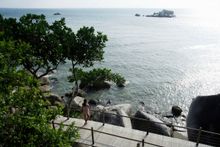
Despite its vulnerable status, little is known about the abundance, distribution and behaviour of dugongs in Indonesia. Thankfully, new efforts from Long Run members Nikoi and Cempedak are changing that. For years, Cempedak has worked with the indigenous Orang Laut (sea nomads), to gain buy-in for conservation and sustainability projects. Keen to protect the dugongs that grace the waters surrounding Cempedak and its neighbouring islands, the team have been speaking with a 5th generation dugong hunter. After months of discussions and building community relations, Cempedak has successfully converted this dugong hunter into a dugong guide. Cempedak will pay Musa a regular income and tips to guide guests through the waters he knows so well. Musa will also play a key role in helping the conservation team track, monitor and protect any dugong that passes through.
Find out more at https://www.thelongrun.org/nikoi-island/
Creating plastic free schools, The Maldives
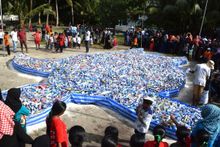
Long Run member Six Senses Laamu has sustainability ambitions stretching far beyond its tiny paradise island shores. As the only resort in the Laamu Atoll, its more pertinent than ever for the resort to build strong community partnerships. Regular Eku-Eky (meaning together in Dhiveli) meetings bring together representatives from councils, schools and the local police to discuss sustainable development. One outcome of these has been creating plastic-free schools. In partnership with the Laamu Atoll Council, Six Senses Laamu donated USD18,805 to the Zero Plastic Waste Initiative at Schools project in 2018. The funds provided 25 water filters to all 21 schools and preschools across 11 islands in Laamu Atoll. This donation ensures clean, reliable, plastic-free drinking water to 3,724 students – eliminating over 700,00 single-use plastic bottles every year. The scheme contributes to the Maldives Ministry of Education's Farukoe initiative to make every school in the Maldives plastic-free.
Find out more at https://www.thelongrun.org/six-senses-laamu/
Converting shark-finning camps, Indonesia
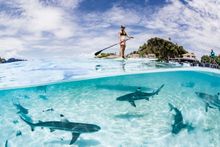
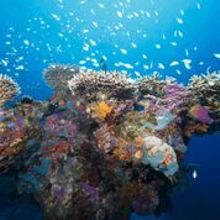
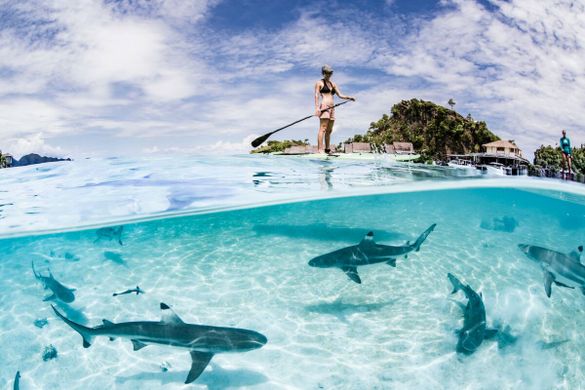
Indonesia's Raja Ampat hosts more varieties of hard and soft coral than any other place on earth; the diversity of marine species is unrivalled. Despite its natural wealth, this underwater Eden hasn't been without its problems. Shark finning and destructive fishing habits destroyed reefs and decimated the shark population in the early 2000s. Desperate to turn back this destruction, Cornish diver Andrew Miners leased an ex-shark finning camp from the local community to create a dive resort, Misool, to fund conservation efforts. After lengthy negotiations with local adat (traditional chief) leaders, the team of conservationists established a 300,000-acre Marine Reserve (nearly twice the size of Singapore) including two no-take zones linked by a restricted-gear blue water corridor. Between 2007 and 2013, biomass increased by 250% and a 2012 study revealed there to be 25 times more sharks inside the reserve than outside of it.
Find out more at https://www.thelongrun.org/misool/
Improving the lives of local fishers, Tanzania
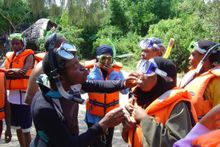
On a small, paradise island off the coast of Tanzania, Chumbe Island Coral Park was set up by Sibylle Riedmiller in 1991. Her main aim was to preserve the island's unique marine ecosystem and to use it for environmental education. Today, Chumbe Island is home to 90% of East Africa's hard coral species and 503 reef fish species. The result is the world's first privately protected marine park. In 2012, Chumbe's success in protecting the reef while improving fish stocks for local fishers outside of the no-take zone was acknowledged by the UN General Secretary in the Rio +20 Report. After conservation, education has always been the second pillar at Chumbe, and outreach efforts to schools, fishers, local communities and government officials have helped to reduce poaching significantly. After extensive investment in education, including taking hundreds of school children snorkelling, since 2016, zero incidents of fish harvesting have been reported.
Find out more at https://www.thelongrun.org/chumbe-island/
Organising icy clean-ups, Alaska
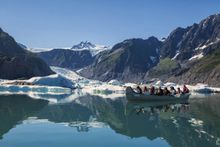
It's not just tropical marine environments that need protection; for one Long Run member conservation efforts don't stop, even when the world around them freezes to a stand-still. Kenai Fjords Glacier Lodge is situated within the 1,700-acre Pedersen Lagoon Wildlife Sanctuary, a biologically rich estuary ecosystem in Alaska. Surrounding the Sanctuary is Kenai Fjords National Park — a 670,000-acre park established by the United States National Park Service to protect the Harding Icefield, one of the largest in the country. Kenai's complex web of life, including harbour seals, clown-face puffins and sea otters, thrives off the unique conditions where the glacier streams meet the sea. With climate-change already having a direct impact on this shoreline, conservation efforts are more urgent than ever. The lodge works with the National Park Service to monitor species of concern, like the black oystercatcher. Despite being miles from anywhere, marine debris is an issue here, too. Throughout the year the team and guests take part in clean-up activities to ensure the sanctuary remains litter-free.
Find out more at https://www.thelongrun.org/kenai-fjords-glacier-lodge/
Notes to Editors:
The Long Run is a sustainable, not-for-profit travel movement helping business, nature and people work together for a better future. The community is global in scale and growing, and collectively supports over 80 cultures, 30,000 species, supports over 3,500 jobs, and safeguards over 21 million acres of nature. www.thelongrun.org
For more information, interview opportunities and images, contact media@thelongrun.com