 26 May 2021

26th May, 2021
Canoe Into the Spirit of Canada
One of Canada's most recognizable icons, the canoe is much more than a mere vessel – it represents an integral part of the country's cultural identity, the determination of long-ago explorers, colonial expansion and Indigenous resilience. According to Jeremy Ward, curator of Ontario's Canadian Canoe
Museum, “Whether the stories they tell are of ancient connections to waterways, the latest high-tech innovations at the Olympics, or they are expressions of cultural reclamation, pride and endurance of Indigenous peoples today, canoes let us form new understandings of connections to
our environment, other people and ourselves.” Today, the canoe is most widely associated with recreation and a favorite activity for visitors eager to
discover Canada's rugged natural beauty.
Did you know? Canoes are open boats paddled from a kneeling position with a single-blade paddle, versus kayaks, which are closed boats paddled from a sitting position with a double-blade paddle.
Birth of an icon: While the history of the canoe stretches back millennia, with roots tied to many regions of the world, its construction was perfected by the Indigenous peoples in Canada. Before the 19th century, the Indigenous of the Eastern Woodlands (stretching from the northeastern coast of present-day US and the Maritimes, to west of the Great Lakes) used the canoe as their primary means of water transportation; during the fur trade, voyageurs adapted the traditional vessel as a means of forging Canada's rivers and waterways.
Meaning and function: According to the Bill Reid Centre, Pacific Northwest canoes are both a sophisticated art form and a symbol of cultural identity. The canoe is the single most important physical manifestation of the culture. They exist at the nexus between technology and living beings and are spiritual objects which garner great respect.
Varying styles: The different shapes, sizes and materials of canoes reflect the region's diverse Indigenous cultures and their relationship with the land. Indeed, each nation has its style of canoe, which speaks to clan and community, and takes the form of exquisite art. Each year,Indigenous peoples of the Pacific Northwest coast (from Oregon to Alaska) typically embark on Tribal Canoe Journeys, a traditional canoe voyage along ancestral waterways to a host territory; the event (cancelled for 2021) culminates in several days of celebrations.
Canoe for you: Residents and visitors can learn about the history of the canoe and hop inside one to fjord the country's waterways, with several canoe museums, canoe-making courses, single- and multi-day canoe tours, and endless expanses of wilderness ideal for self-guided canoeing. New
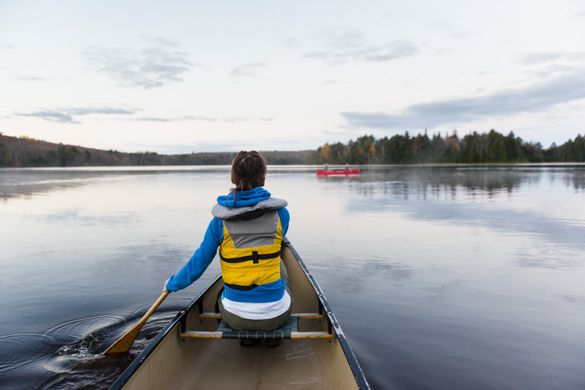
to the canoe? It's easy to get started: simply grab a pair of canoe paddles (either plastic or wooden, with a grip handle at one end), don your life jacket, and head for calm waters, sticking close to shore to start. While many Canadians don't take formal lessons before hopping into their canoe, you can opt for a quick primer course with Paddle Canada, which oversees canoe, kayak and stand-up paddleboard instruction across the country.
New Brunswick
Part of the Maritime region whose Indigenous peoples spent their lives canoeing, New Brunswick offers several traditional canoeing experiences.
Build your own: On the banks of the tranquil Miramichi River in Doaktown, Miramichi Canoes manufacture traditional cedar rib and planked canoes. In addition to selling their handcrafted vessels, the company offers five-day workshops that invite guests to stay at the onsite family homestead and learn how to build their own woodcanvassed canoe.
Historic vessel: In Fredericton, the Beaverbrook Art Gallery houses the Grandfather Akwiten Canoe, crafted by the Wolastoqiyik First Nations in
the 1820s. Thought to be the oldest existing birchbark canoe in the world, it will remain at the gallery until a cultural centre is built on the land of the St. Mary's (Sitansisk) First Nation.
Alberta
The province treats guests to epic wilderness views, glimpses of local wildlife and fascinating nsights into the history and culture of canoeing.
Wild ride: Wild Current Outfitters hosts smallgroup canoe adventures in Jasper National Park. Guests float past snow-capped peaks, marvel at sea wildlife – and often bears, elk, deer, wolves and moose – and wind down lakeside with homemade treats and drinks.
Back in time: Haskin Canoe in Edmonton offers a series of canoe tours that invite guests to paddle along the North Saskatchewan River in a replica
voyageur canoe. Guests learn about the river's history while keeping eyes peeled for local wildlife. Take the tour at sunset to drift amid the fiery colours of day's end.
British Columbia
The province's supernatural beauty is home to some of the world's best canoe experiences, including a canoe-only lake and multi-day excursions into the heart of the wilderness.
Riverine paradise: Situated on the western slopes of the Cariboo Mountain Range, Bowron Lake Provincial Park offers a quintessential Canadian canoe experience – in fact, Outside Magazine named it one of the 10 best canoe trips in the world. The 116-kilometre route comprises six major lakes and connecting streams, rivers and portages. Pathways offers several excursions into the park's waterways with no experience required.
Canoe-lovers only: In Wells Gray Provincial Park, Murtle Lake boasts the largest canoe-only lake in North America – and that means plenty of safe, open space for novice and seasoned paddlers to cruise the water. With no motorized boat access allowed, visitors will find quiet, placid surroundings interrupted only by the dip of the paddle in the water and the call of distant birds.
Northwest Territories
Canoe, camp and learn about Indigenous history on one of the world's longest rivers.
Beneath the midnight sun: The Indigenous-owned and operated Mackenzie River Canoe Expeditions leads guests on a multiday paddle, including B&Bs in riverside Indigenous communities; storytelling with Elders from the Dene First Nation; and views of the dazzling northern lights and the North's
famed midnight sun.
Yukon
Whether paddling with the ghosts of Gold Rush prospectors or floating under a night sky flaming with the northern lights, the Yukon's canoe adventures are steeped in nature and history.
Night paddle: Drift under the haunting northern lights with Terra Riders, which leads four-hour Aurora Canoe Tours on Lake Laberge. Stop at
a prime viewing area, where a fire pit, hot chocolate and toasted marshmallows will warm you as the sky ripples with electricity.
Gold, unrushed: Terra Boreale leads week-long canoe trips designed for paddlers seeking an immersion in the wilderness. On this historically influenced tour, you'll follow in the steps of gold seekers from 1898, stopping along the river to visit old wood camps and sternwheelers that sank centuries ago.
Ontario
Home to more than 250,000 lakes, Ontario is a dream destination for paddlers seeking exhilarating rapids or calm waters.
City escape: Toronto's Culinary Adventure Co. takes guests on a paddle in a voyageur canoe from the city's harbour to the Toronto Islands. Guests get a meal of wild-foraged ingredients, paired with local artisan cheeses and charcuterie, beforefloating back to the city amid a fiery sunset and glittering skyline views.
History repository: The Canadian Canoe Museum (CCM) in Peterborough contains more than 600 canoes, kayaks and paddled watercraft that tell a story of exploration and fortitude from coast to coast. While the museum is temporarily closed, check out the CCM From Home portal activities,
stories, videos and more.
Saskatchewan
The Churchill River formed a significant part of the voyageur “highway” between the 18th and 20th centuries, connecting the Hudson Bay watershed with the Clearwater, Athabasca and Mackenzie rivers.
Exploratory voyage: Churchill River Canoe Outfitters has guided trips in the region for more than 40 years. Trips are available for novice and experienced canoeists.
In the footsteps: Paddle in the path of Canada's most celebrated conservationist, Grey Owl, a reclusive woodsman and trapper whose legendary life in the backcountry was depicted in the 1999 film Grey Owl. CanoeSki Discovery Company leads four-day canoeing tours on Kingsmere Lake to Grey Owl's cabin deep in the boreal forest.
Nova Scotia
From the dramatic cliffs of northern Cape Breton to the sheltered waterways of Prospect and Tangier, the coast is best seen from the water.
Canoes for all: Leave the city behind and navigate into Kejimkujik National Park and National Historic Site backcountry with Whynot Adventure Outfitter. The tour operator offers multi day paddling adventures for all skill levels and interests, including private adventures, women-only excursions and family-friendly trips.
Readers wanting more information should go to www.explore-canada.co.uk
Media seeking story ideas, images should go to www.destinationcanada.com/media
Photo Credit :Algonquin Canoe and Log Cabin Adventures, Voyaguer Quest/Destination Canada
For more information please contact Nim Singh, Media & PR Manager, Destination Canada singh.nim@destinationcanada.com (not for publication)