 24 Nov 2022

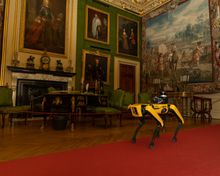
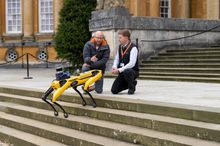
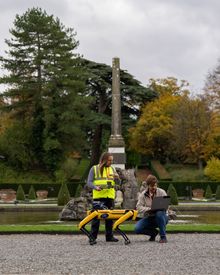
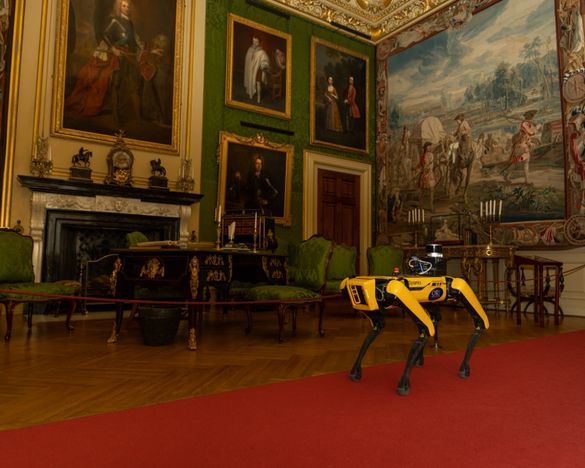
Blenheim is trialling the use of robots to gather data on the health and biodiversity of its estate.
The UNESCO World Heritage Site is being used by Oxford Robotics Institute and Oxford Biology to test an autonomous ecosystem monitoring programme that uses robots to gather information about species diversity via imaging sensors.
Founded in 2010 the Oxford Robotics Institute is an independent interdisciplinary institute within the Department of Engineering Science at University of Oxford.
The Blenheim trial forms part of an ongoing innovation partnership between the two historic institutions which is celebrating its three-year anniversary in 2022.
“We are excited to be working with ORI on this pilot scheme,” said Blenheim's Head of Innovation David Green.
“The estate, with its ancient woodlands, heritage sites and parkland, provides a hugely diverse environment. It's effectively a 'living laboratory' where new research and technologies can be trialled and tested.
“Our goal is to use innovation to solve real-world problems across the estate and working together with experts like the ORI will allow us to do that much more effectively.
“As we face up to the challenges of climate change it is essential that we protect the estate's unique natural heritage. By monitoring its ecosystem we can accurately track changes and help to mitigate them,” he added.
The partners are also working on creating a digital 3D model of the Palace linked to climatic, environmental and building fabric monitoring devices which will help to predict the potential impacts of climate change.
Other joint projects in the Blenheim-University of Oxford innovation partnership involve biologists, heritage scientists and biotechnologists developing new ways to identify, map and explain the location and effects of lichen and other biological growths on the Palace's façade.
A third project will utilise drones to create high resolution 3D imagery of the Palace's stonework to identify sections containing iron and develop innovative, remote, and non-invasive methods to monitor them.
“Oxford Robotics Institute's mission is to develop the technology necessary to allow robots to be useful in challenging environments,” said Professor Nick Hawes, Director of the Oxford Robotics Institute.
“A major part of our development process is testing our innovations in the real world, as part of field trials. Having the amazing Blenheim site just up the road allows us to quickly test new systems in environments from fields and forests, to cafes and courtyards, and this allows us to get further faster with our scientific aims,” he added.
Issued on behalf of Blenheim Estate. For more information please contact Ollie Young at ollie@flamingo-marketing.co.uk
About Blenheim Estate
At Blenheim Estate Land we know that our land is precious and finite, but cared for properly its benefits can be limitless. Yet today there are fresh challenges like climate change, an aging population and increasing urbanisation.
So our approach - spanning a number of projects - needs to be as sophisticated, enduring and holistic as those issues we face.
By adopting new methods of valuing our natural capital we can view our land resources as part of an ecosystem. An ecosystem whose benefits extend to the air we all breathe, the green transport solutions that connect our communities, the physical and mental health we enjoy, and the quality of the food we consume.
About the Oxford Robotics Institute
The Oxford Robotics Institute is an interdisciplinary division within the University of Oxford.
It is dedicated to researching robotics, artificial intelligence, systems engineering, and other related fields. The ORI is a subsidiary of the Department of Engineering Science.
The ORI is built from collaborating and integrated groups of researchers, engineers and students all driven to change what robots can do for us.