 19 Apr 2006

Bird Watching in Peru
Visitors to Peru will discover the most diverse species of birds in the world. Home to 1,804 varieties, of which 120 are endemic, 220 are restricted species and 73 are endangered species, Peru has more types of birds than all of North America and Europe combined. Holding the world records for the most species in a single place (650) and the highest number seen in a single day (361), Peru is second to Brazil in the number of endemic birds and also second to Indonesia in the number of bird species with restricted geographical ranges.
Peru possesses an extraordinary ornithological diversity that continues to astonish nature enthusiasts. New species are discovered every year in Peru�s cloud-forest regions and Amazon jungle; as well as in the rugged mountains and inter-Andean valleys. No fewer than 42 new species of birds in Peru have been described to science in the last 30 years.
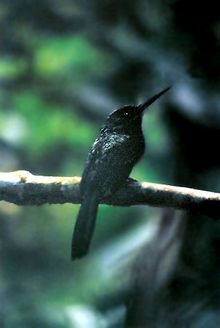
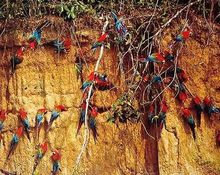
Bird lovers have many options for witnessing these beautiful creatures. Rainforest lodges in Peru offer superb birding, each with a list of over 550 species. From exotic hummingbirds (118 species), cotingas (33 species), and antbirds (142 species), to flocks of hundreds of macaws at clay licks, over 60 mixed species flocks, and rare endemics like the White-winged Guan and the flightless Junin Grebe; even the most seasoned birdwatcher could never be bored.
Bird watching enthusiasts should not miss the following sites when visiting Peru:
Tambopata Candamo Reserved Area
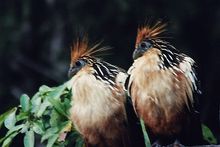
In the Tambopata Candamo Reserved Area, located in the states of Madre de Dios (Province of Tambopata) and Puno (Provinces of Carabaya y Sandia), ornithologists working in the 5,500 hectare TRZ since 1976 have recorded 595 different bird species, the highest count on earth, and equivalent to 1/6 of all bird species known to exist on the South American continent. Parrots, parakeets, motmots, trogons, jacamars, kingfishers, hummingbirds, tanagers, antbirds, woodcreepers and flycatchers are all common, along with the more sought after large macaws, toucans, harpy eagle, guans, trumpeters, screamers, tinamous and hoatzins. In fact, several species of macaws, toucans, and both spix's and piping guans can be easily seen right from the porch of your room.
Manu National Park
In the Manu National Park, a UNESCO World Heritage Site located west of Puerto Maldonado in southwest Peru, the bird species represent 25% of all the birds known in South America and 10% of all the species in the world, containing as many as 1,000 bird species in total. Furthermore, three Endemic Bird Areas are represented within the park: the Southeast Peruvian lowlands, home to 15 restricted range species; the Eastern Andes of Peru, with 11 restricted range species; and the Western Andes of Peru with 30 restricted range species. Inside the specialized park, areas for tourists and visitors exist, including lodging facilities and guided excursions. Visitors can get to Manu National Park by one of two ways. The first is a terrestrial trip or chartered plan from Cusco, via Paucartambo, to the area of the park where you then continue with the excursion by river. The second is to arrive by air to Puerto Maldonado, and then go by river to the designated tourist and visitor areas inside the Park.
Pacaya Samiria National Reserve
Pacaya-Samiria is in northeastern Peru on an alluvial plain between the Mara�on and Ucayali river systems. Most visitors access Pacaya-Samiria through the nearby city of Iquitos. Pacaya Samiria covers an area of 2,080,000 hectares, and is the largest national reserve in the country. Considered the jewel of Peru's northern Amazon jungle, Pacaya Samiria is home to an abundant and varied wildlife. Endangered species are protected inside this reserve, among them, paiche (Arapaima gigas) the biggest river-fish of the world; pink dolphin; manati (Trinchechus manatus) amazonic mammal; "huapo colorado" monkey (Cacaju calvus); "maquisapa" monkey (Ateles panicus) and the otter (Pteronoura brasiliensi).
Paracas National Reserve
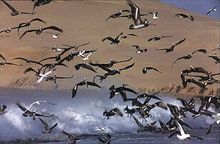
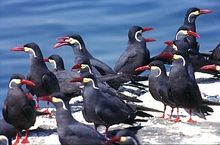
The Paracas National Reserve, located in Ica in the province of Pisco, is the only marine reservation in Peru and is considered to be one of the strangest and richest ecosystems in the world. The 335,000 hectare reserve contains several endangered species of birds, including parihuanas or flamingos (Phoenicopterux tuber). The region is also home to migratory birds, the Humboldt variety of penguins (Spheniscus humboldt), condors (Vultur gryphus), gulls, pelicans, red head turkeys buzzard, and a unique species, the black ostrich.
For more information about bird watching in Peru, call 1-866-661-PERU (in the U.S.) or visit www.peru.info.