 14 Aug 2014

Today it is hard to imagine just how brutally the Berlin Wall divided the city into two halves. It ran through the streets, squares, rivers and canals. It cut off inhabitants from relatives and friends, from university and jobs, even from the nearest cinema and the countryside surrounding the city. The border zone, which ranged from 30 to 500 metres across, had to be kept clear of anything blocking the monitoring activities of the East German border troops. This meant that many buildings in the path of the Wall were destroyed, creating “non-places” that were inaccessible to Berliners on both sides of the Wall. 25 years later, Berliners have reclaimed these places. The former no-man's land has seen new apartments and shops spring up as well as flea markets, beach bars and clubs and numerous new parks creating even more green space in the city. The new face of the city has been shaped by investors from Germany and abroad, by the city of Berlin, and sometimes by creative residents on their own initiative.
Wall Art and Urban Utopias on the River Spree
A particularly vibrant mix of new uses can be seen along the Spree between the Oberbaumbrücke and the Ostbahnhof. The river itself was part of the Wall between Friedrichshain (in East Berlin) and Kreuzberg (in West Berlin). (They have now been joined together into the new district of Friedrichshain-Kreuzberg.) The shore on the Friedrichshain side was part of no-man's land, but shortly after the opening of the Berlin Wall, the East Side Gallery was painted on the east side of the Wall by over one hundred artists from all over the world. The symbol of hatred and division was turned into a 1,300 metre long work of art that is now a favourite shot for photographers. The narrow strip between the East Side Gallery and the river was turned into a riverside park. The nearby O2 World, an arena that can hold up to 17,000 spectators, was built on wasteland in the area next to the former no-man's land. The O2 World has welcomed stars such as Robbie Williams, Lady Gaga and Kylie Minogue this year alone.
Meanwhile, a vibrant club scene has taken hold on both sides of the river. Around Warschauer Brücke, between Jannowitzbrücke and Treptower Park, the beats have them dancing all night at Yaam, Watergate and Club der Visionäre. A little further along the shore in front of Michaelkirchbrücke is a particularly unconventional project. The famous techno club Bar 25 had made its home along this stretch of the riverbank after reunification until it was forced to close in 2010 when the land was sold. The Bar 25 operators (who were also involved in the founding of Kater Holzig, another club known across the city) sought out a financially strong partner, took part in the tender process and, to the surprise of many observers, got the contract to develop the area. Currently the Holzmarkt project is being built on the former no-man's land to serve as a new creative village with studios, a club and park along the Spree. This is a city where urban utopias come true.
The makers want to bring together business, culture and nature. The planned start-up incubator Eckwerk will be a “creative village” and a public green space called the Mörchenpark. Eckwerk will be a laboratory for sustainable, technology-related companies and will provide housing for researchers and students. The plans were drawn up by Kleihues and Graftlab, two internationally renowned Berlin architectural firms. The creative village will include a theatre, a club, a restaurant and a hotel. And Berliners will be invited to garden, keep bees and grow vegetables in the Mörchenpark. Construction has begun and a new Berlin idyll is taking root: room for creative projects, with a club nearby for fun, embedded in an environment full of home-grown flowers and vegetables. It all sounds pretty utopian and typical of Berlin.
The scenery along the banks of the Spree is also constantly changing outside the city centre: between Treptow and Kreuzberg, in the middle of a hotspot for alternative culture, stands an abandoned East German border watchtower. White Trash, a cult bar that recently moved here, is, along with other clubs and the Badeschiff, one of the trendsetters of a “New Berlin”. International guests are now flocking to this historic site.
Potsdamer Platz: Splendor Restored
The border zone along Potsdamer Platz cut a gash up to 500 metres across what was once one of the busiest squares in Europe, although the air raids during World War II had levelled almost everything there. Visitors who climbed one of the viewing platforms erected along the west side of the Wall during the 1980s were treated with views of a massive, dreary wasteland. Director Wim Wenders captured the melancholy of the place in his film Wings of Desire.
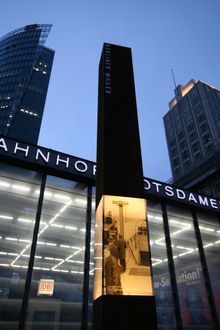
After unification, Potsdamer Platz became the largest construction site in Europe where modern works by star architects such as Renzo Piano and Hans Kollhoff were built whilst maintaining the old layout of the city blocks. The corporate headquarters of Deutsche Bahn, a shopping centre, the Film Museum, several cinemas, theaters, hotels and restaurants as well as the Sony Center with its trademark tent roof have restored Potsdamer Platz to a lively centerpiece in the new Berlin. The Berlinale film festival takes place here every year, bringing Hollywood to the city on the Spree. The reconstruction of Leipziger Platz, across from Potsdamer Platz, is not yet complete, but an important component will be finished in the summer of 2014 when the Mall of Berlin opens. This giant shopping center is being built on what was once the site of Wertheim, the largest department in Europe at the time.
Banks, Embassies and Mauerpark Karaoke
Even Berlin's most famous landmark, the Brandenburg Gate, was marooned in the middle of no man's land. Pariser Platz in front of the gate was left in ruins after the war and was levelled. This is the spot where U.S. President Ronald Reagan made his famous appeal to the Soviet president: “Mr. Gorbachev, tear down this wall!” Once this actually happened, the embassies that once stood on Pariser Platz have gradually been restored. Today, the square is home primarily to banks and embassies, including the French and U.S. embassies. State guests enjoy staying in the rebuilt luxury hotel Adlon and the significant cultural institution of the Academy of Arts has also made its home at this top-notch address.
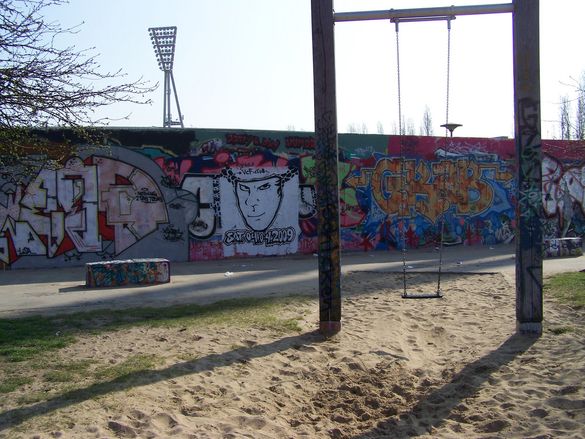
The Mauerpark offers a very different picture of the city: this park has been set up in the former no-man's land between Prenzlauer Berg (in the East) and Wedding (in the West). This part of Berlin seems well removed from the halls of power nearer the Brandenburg Gate and is instead especially colourful and lively. The Mauerpark's lawns for playing games and sunbathing, flea market and famous karaoke have made the park a popular meeting place for Berliners and their guests. The people of Berlin largely have themselves to thank for this place, because it was the residents who urged the development and enlargement of the Mauerpark for the past quarter century. There are places like this where visitors can experience first-hand how Berlin has reinvented itself as a lively, cosmopolitan metropolis since the fall of the Berlin Wall.
More special places are featured in the visitBerlin blog.