 07 Feb 2023
Tags: Canada, Explorecanada, Indigenous, indigenous art, indigenous culture, Culture

7th February, 2023
Be Mindful : Where to see Indigenous Art across Canada
“Art is interwoven in every aspect of who we are as Indigenous People: through our relationship to the land, the waterways, through our ancient oral histories [and] through our relationships to one another.
— Mique'l Dangeli, PhD, Indigenous visual and performing artist
It has been said that art is life and life is art, and that is never more true than the art made by Indigenous Peoples in Canada, which unites form and function, actual and spiritual, past and present. Travellers visiting Canada can deepen their experiences by engaging in the art and artists during their visits.
Age-old and current-day: People have been making things that were both beautiful and useful for millennia – all the way to the last Ice Age, between 80,000 and 12,000 years ago. While no artifacts from the pre-historic period have been recovered, there are examples of ancient surviving artwork. Red-ochre petroglyph paintings on rocks – found in Ontario – are estimated to be 5,000 years old. A small carved human figure, found near the mouth of the Lower Fraser River in BC, is thought to be approximately 4,000 years old. A carving of a smiling human head found on the St. Lawrence River in southwest Quebec was created between 5000-3000 BCE. And some totem poles date back 2,500 years.
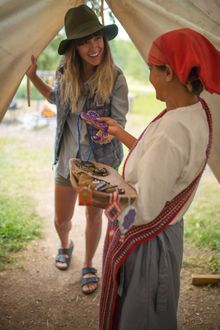
Myriad cultures, multiple traditions: More is known about post-contact or “historic” art. This includes the art of the Mi'kmaq in Nova Scotia, which featured moose hair embroidery and porcupine quillwork on birchbark and basketry. The Ojibwa of subarctic Ontario and Manitoba are noted for quillwork and beadwork in geometric and floral patterns on clothing, bark and basketry. Ojibwe medicine men (or shamans) were responsible for much of the rock art produced in the latter provinces, on which they recorded their spirit encounters well into the 20th century. The subarctic Cree, who lived as nomadic hunters in the harsh climes of northern Saskatchewan and Alberta carried goods on their person; therefore, items of clothing, especially painted and embroidered coats, moccasins and mitts, were a focus of personal artistic expression. The Dene Nation likewise decorated personal gear and clothing, including caribou and moose hide embellished with porcupine quills, moose hair embroidery, beads and commercial threads. The Huron, who resettled from Ontario to Quebec in the late 1600s, produced trade goods such as hide and yarn shoulder pouches and bags – predecessors to the more recent loom-woven and beaded bandolier bags. The art of the Blood, Blackfoot and Assiniboine – situated in the grasslands of Saskatchewan Manitoba, Alberta and parts of BC – is similar to that of their eastern subarctic and western Great Lakes neighbours, as westward migration, the fur trade and advancing European settlement brought eastern influences to prairie culture. The most prominent architectural artform was large tipis, which required the hides of up to 40 buffalo.
Why it matters: During the early 19th century, attempts to phase out traditional Indigenous culture – such as the introduction of residential schools – threatened Indigenous artistic traditions. However, during WWII, Indigenous art experienced a resurgence – an important milestone for Indigenous People and society as a whole. Without diverse perspectives, museums and other cultural centres often perpetuate a singular view of history – namely from the settler perspective. The revitalization of Indigenous art can be a key step towards reconciliation by promoting learning, understanding and respect of different cultures, and helping to reframe shared narratives. According to Dr. Mique'l Dangeli, an Indigenous visual and performing artist who holds a PhD in Northwest Coast First Nations art history and works as a professor and curator, “Art plays an integral role in the process of reconciliation as it is a way in which people, nations, and cultures can 'say what goes unsaid'.”
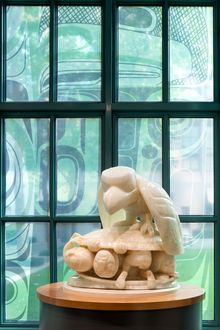
Know their names and find their work: Travellers interested in Indigenous art will surely encounter the these and other Indigenous artists who have made a significant contribution to art in Canada. Bill Reid (January 1920 – March 1998) a Haida artist, has earned international respect and high-profile commission or his celebration of Haida culture. Notable pieces include the four-tonne Raven and the First Men at the Museum of Anthropology and a whale called The Chief of the Undersea World done for the Vancouver Aquarium in Vancouver, BC. His work can also be seen at the Bill Reid Gallery of Northwest Coast Art, also in Vancouver. Norval Morrisseau (March 1931 – December 2007), an Anishinaabe artist, is widely recognized as the grandfather of contemporary Indigenous art in Canada. A member of the Indian Group of Seven – a collective of seven Indigenous artists who formed the Professional Native Indian Arts Incorporation in the early 1970s – he is best known for sharing traditional stories, spiritual themes and political messages. Today, his work can be seen in the Royal Ontario Museum in Toronto, Ontario, the National Gallery of Canada in Ottawa, Ontario, and the Art Gallery of Windsor in Windsor, Ontario, among others. More recently, Christi Belcourt (September 1966 – ), a Métis artist, creates acrylic paintings that have captured the eye of haute-couture fashion brand Valentino; she's also been featured on the cover of Canadian Geographic.
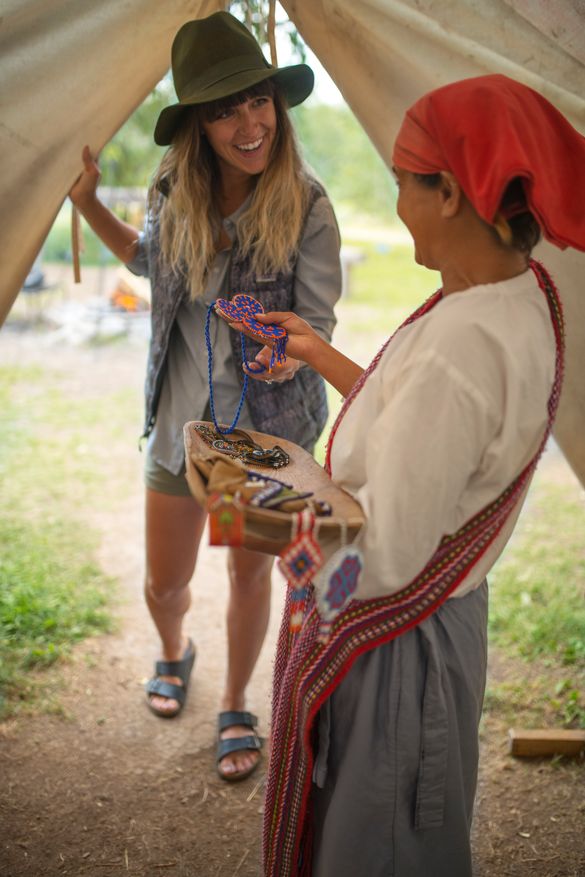
Make it real, make it count: Indigenous carvings, jewellery, prints and clothing make for unique souvenirs and gifts. Keep in mind: Indigenous designs and symbols are not interchangeable between cultures. Further, it's important to confirm that the piece you're purchasing is authentic and that the artist is being fairly compensated. There are a few ways to go about this. First, source artwork from museums, galleries or directly from the artist. If you fall in love with a piece of art in a store, check the label to identify the artist's name and their nation; you can also ask for artist information from store staff. The internet can be a good resource for learning about artists in the region and ways to purchase their art. Finally, Destination Indigenous has a helpful guide on Indigenous arts, crafts and gifts, as well as a blog post on businesses, galleries and brands sharing songs, stories and sculptures.
WHERE TO FIND INDIGENOUS ART IN CANADA
To explore and appreciate artwork from over 600 communities of First Nations, Inuit and Métis Peoples across Canada, visit these galleries, museums and shops:
BC
- Museum of Anthropology, Vancouver: This iconic attraction, located on the grounds of the University of British Columbia, houses nearly 50,000 traditional and contemporary pieces. It's known for its sizable Northwest Coast collections, including the finest collection of works by Haida artist Bill Reid. A must-see is the exhibition Shake Up: Preserving What We Value, whose multimedia installations, contemporary art and objects investigate the connection between cultural knowledge and natural seismic events.
- Squamish Lil'wat Cultural Centre, Whistler: A partnership between the Squamish and Lil'wat First Nations, this glass-enclosed structure is located on six forested acres and encompasses a gallery, longhouse, theatre and museum.
- Wind Spirit Gallery, Powell River: Owned by renowned Haida artist April White, this charming gallery is located in a refurbished 1920s home and displays and sells watercolour and acrylic paintings, as well as hand-pulled serigraphs, jewelry and argillite carvings.
- Roy Henry Vickers Gallery, Tofino: Owned by artist Roy Henry Vickers, this gallery is housed in a traditional Northwest Coast longhouse with a carved cedar plank exterior and doors of beaten copper. Inside, visitors will find limited-edition prints, paintings, calendars and cards, as well as totem poles and carvings.
Saskatchewan
- Remai Modern, Saskatoon: This museum of modern art features 11 gallery spaces showcasing a vast collection of Indigenous artwork. Current exhibitions include In the Middle of Everywhere – Artists on the Great Plains (through March 19, 2023), which explores the region's physical, social and psychological contours.
- Wanuskewin Gift Shop, Saskatoon: This shop features curated collections of items from local and rural artists, with products spanning jewelry, Pendleton blankets, mukluks, moccasins, and sweet and savoury items made with Saskatoon berries. The shop is an extension of Wanuskewin Heritage Park, a historic site that was home to the Northern Plains People for millennia.
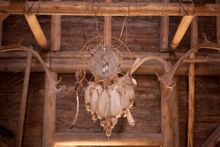
- Buffalo People Arts Institute, Regina: This non-profit is devoted to reviving traditional art forms, including the buffalo, whose hide was used as an art canvas and whose bones and horns were adopted for décor.
Alberta
- Transformation Fine Art, Calgary: This appointment-only gallery in the Grain Exchange Building is run by Sophia, whose unique cultural background – Inuit and Greek – influenced a keen perspective. Her gallery is Canada's first Inuk-owned Inuit art gallery.
- Moonstone Creation Native Gallery, Calgary: This hub for Indigenous art is owned by Cree artist Yvonne Jobin. Here, visitors will find sculptures, paintings, ribbon skirts and shirts, take-home beading kits and more. It also produces online classes that teach beading, sewing moccasins and drum-making.
- Whiskey Jack Art House, Edmonton: This gallery and boutique supports Indigenous artists and cultural experiences, with contemporary and traditional artwork displayed and sold alongside Indigenous-made jewelry and products such as tea, honey, jams and blankets.
Quebec
- Montréal Museum of Fine Arts, Montréal: The oldest art museum in Canada, the MMFA features extensive Inuit and First Nations art collections. The Inuit Art collection takes up an entire level, and illustrates how the Inuit identity draws on ancient legends and modern-day changes to a traditional way of life. Early and contemporary Indigenous art is showcased in the Founding Identities gallery, which explores First Nations culture in relation to European contact.
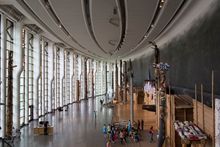
- Canadian Museum of History, Gatineau: One of Canada's oldest public institutions, this vast museum includes a First Peoples Hall that presents over 2,000 historical and contemporary objects, images and documents telling the stories of Indigenous Peoples from across Canada, as well as the enduring impacts of European contact.
- Huron traditional site, Wendake: For centuries, the Huron-Wendat people have made and traded snowshoes, tools, furs, corn, flour, beans, meat and other goods. Their entrepreneurial spirit is deeply rooted in Huron-Wendat culture, and can be seen today in modern-day Wendake – a two-kilometre by two-kilometre village that houses over 100 businesses.
Ontario
- National Gallery of Canada, Ottawa: The gallery's Indigenous Art collection features divergent artistic practices that operate outside established western canons of art and art history. The experience of forced assimilation, cultural repression and displacement are defining characteristics of these art forms.
- Art Gallery of Ontario, Toronto: The AGO's Indigenous collection spans artistic movements across several centuries, from Haida master carver Charles Edenshaw to contemporary Mohawk artist Shelley Niro. The gallery is currently focused on collecting new Inuit art pieces, especially those that express the current state of affairs in the far north.
- McMichael Canadian Art Collection, Kleinburg: The McMichael collection of First Nations art has expanded significantly over the years, and focuses on activities in contemporary rather than traditional art.
Manitoba
- Qaumajuq, Winnipeg: This first-of-its-kind centre houses the largest public collection of contemporary Inuit art in the world. It holds in trust close to 14,000 pieces of artwork, including carvings, drawings, prints, textiles and new media. The museum's inaugural show, Inua (through February 2023), brings together works created by over 90 Inuit artists.
- Canadian Plains Gallery, Winnipeg: This gallery promotes and sells a broad range of art, including carvings, jewelry, stone paintings, caribou hair tufting, talking sticks and flutes. It also provides traditional dance demonstrations, singers, and photography.
- Urban Shaman Contemporary Aboriginal Art, Winnipeg: This artist-run centre supports emerging, mid-career and established Indigenous artists through exhibitions and associated programming, workshops, residencies and curatorial initiatives.
Yukon
- Carcross/Tagish First Nation Carving Centre, Carcross: Visitors can watch master sculptor Keith Wolfe Smarch work with younger artists to create Tlingit clan poles, masks and other artwork. Contact the centre directly for public hours.
- Carcross Commons, Carcross: This vibrant retail village features Tlingit-inspired murals, totem poles and boardwalks, as well as a museum, galleries and local artisans' boutique. It's open between May and September.
- Northern Cultural Expression Gallery & Studio, Whitehorse: In this working studio, guests can meet the artists and watch them create carvings, prints, paintings and silk-screened clothing. Artists include students, instructors and alumni from the gallery's arts programs.
Readers wanting more information on holidays in Canada should go to www.explore-canada.co.uk
For regular Facebook posts @ExploreCanadaUK
For more media information please contact Ms Nim Singh, Media and PR Manager, Destination Canada care of singh.nim@destinationcanada.com (not for publication)
Images: Please credit accordingly
Rocky Mountain Art /Travel Alberta
Huron Art/Tourism Quebec
Canadian Museum of History /Destination Ontario
Bill Reid Gallery/Destination British Columbia